The question of where to stay in Kampot is more consequential than it sounds. The town is spread out in ways that are not obvious on a map, and the experience of waking up at a riverside bungalow 8km north of town is genuinely different from waking up in the old French quarter two minutes from the market. Not better or worse - different, in ways that matter depending on what you’re here for.
This guide organises around the area first and the property second. Understand where you want to be, then choose a bed there.
Zone 1: the old quarter and town centre
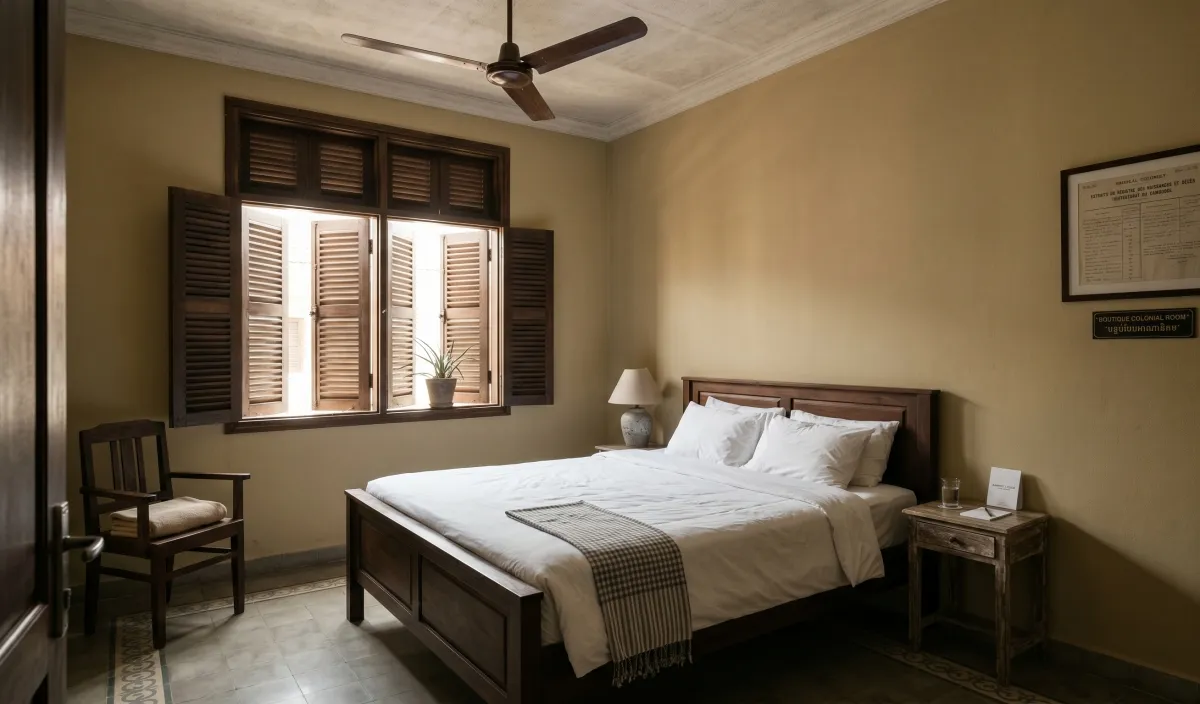
Who it suits: anyone who wants to walk everywhere. First-time visitors, solo travellers, people on shorter stays who want access to restaurants and the market without thinking about transport.
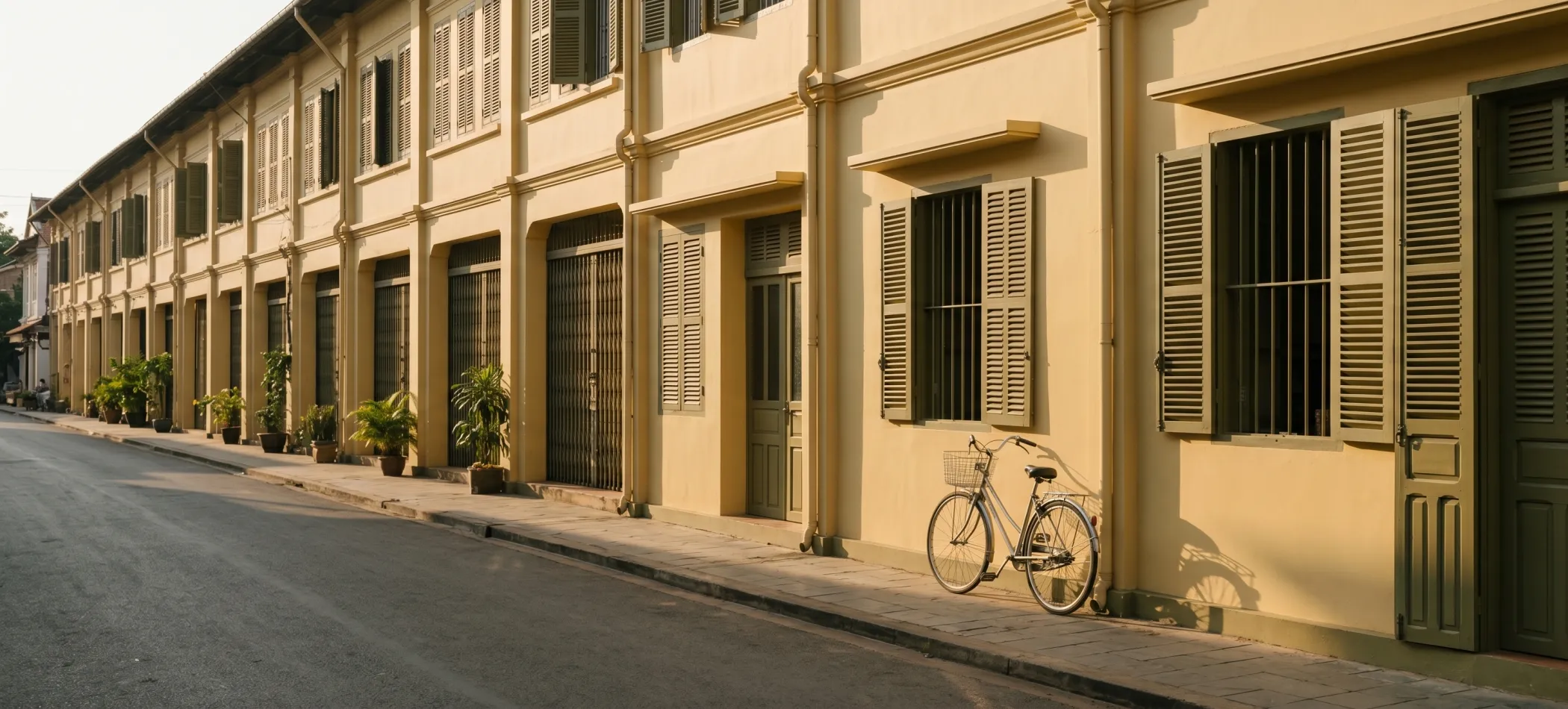
The old quarter - the streets of French colonial shophouses between the Durian Roundabout and the river - is the most walkable and most characterful part of Kampot to stay in. The market is a five-minute walk. The best cafés are close. The riverfront promenade is on your doorstep. You can arrive without a plan and find dinner without a tuk-tuk.
The neighbourhood is also lit by strings of yellow lights in the evenings, has been gently restored without being gentrified, and contains the highest concentration of genuinely interesting architecture in the whole province. You will walk past shuttered shophouses and restored colonial facades every time you go anywhere, which is a pleasant daily texture.
The noise level is moderate rather than loud - Kampot is not a party town in the Sihanoukville sense - but if you need absolute quiet, the streets around the market and the main riverfront road are busier in the evenings than anywhere on the riverfront north.
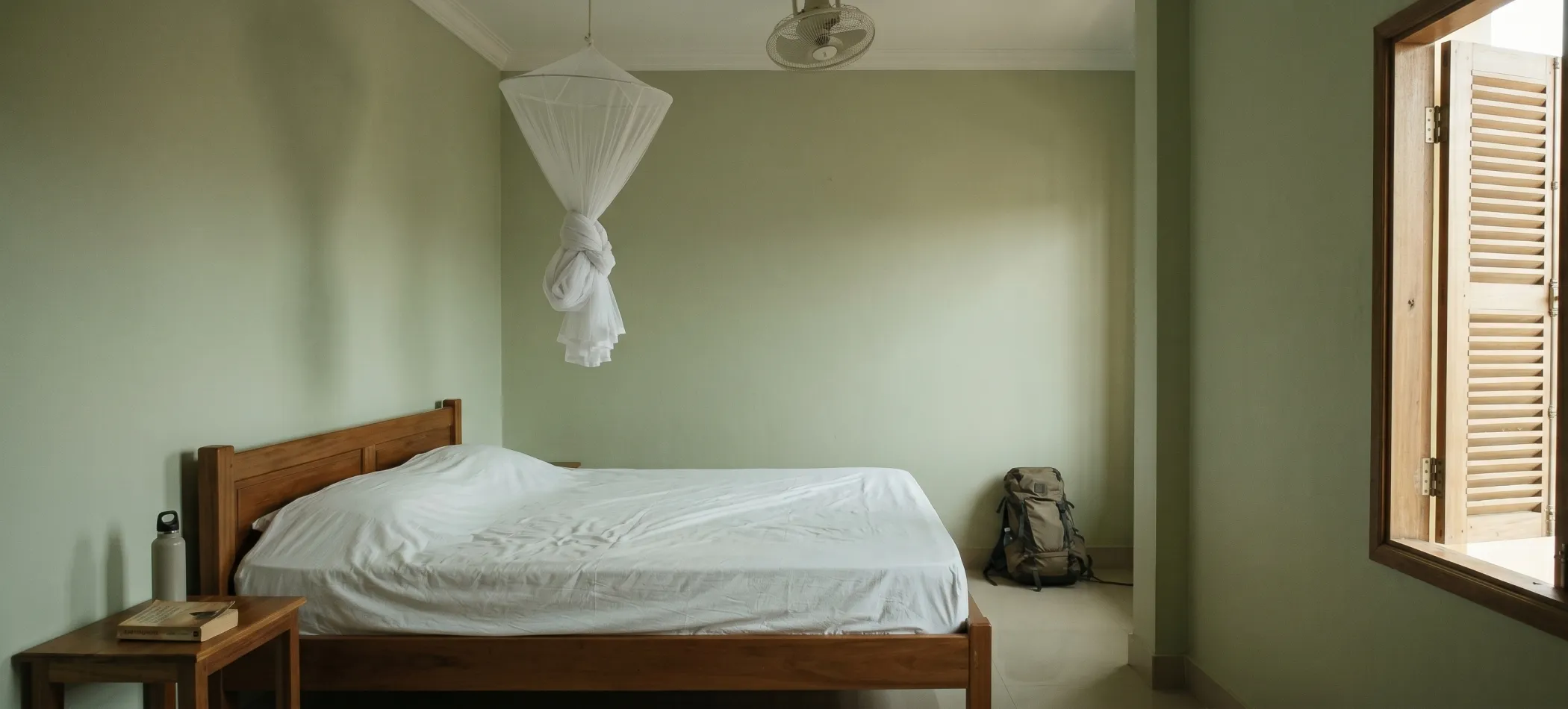
What to consider: in-town accommodation skews toward smaller rooms and guesthouses. The most notable exception is Hotel Old Cinema, a conversion of a 1930s-era cinema into a boutique hotel with pool, restaurant, and a Wes Anderson-adjacent design sensibility that has become the most talked-about place to sleep in Kampot. It is in the old quarter, within easy walking distance of everything, and the reviews are consistently strong. For something smaller and more spartan, The Columns - a row of restored colonial shophouses - offers elegant simplicity at lower prices.
Zone 2: riverfront north
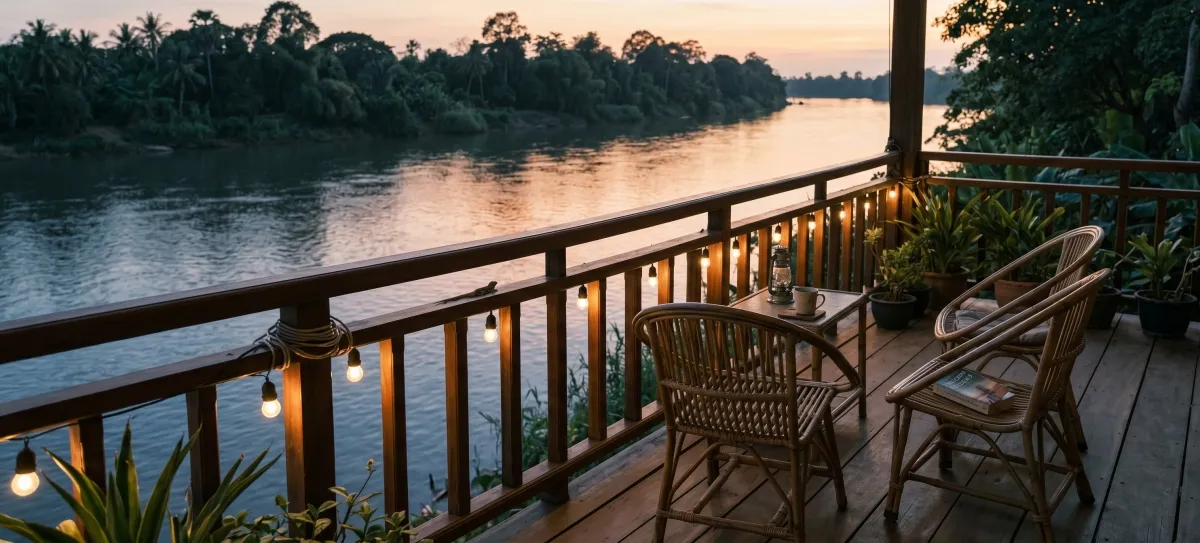
Who it suits: people who came to Kampot specifically to be by the river. Those with their own scooter. Longer stays where the remoteness becomes atmosphere rather than inconvenience.
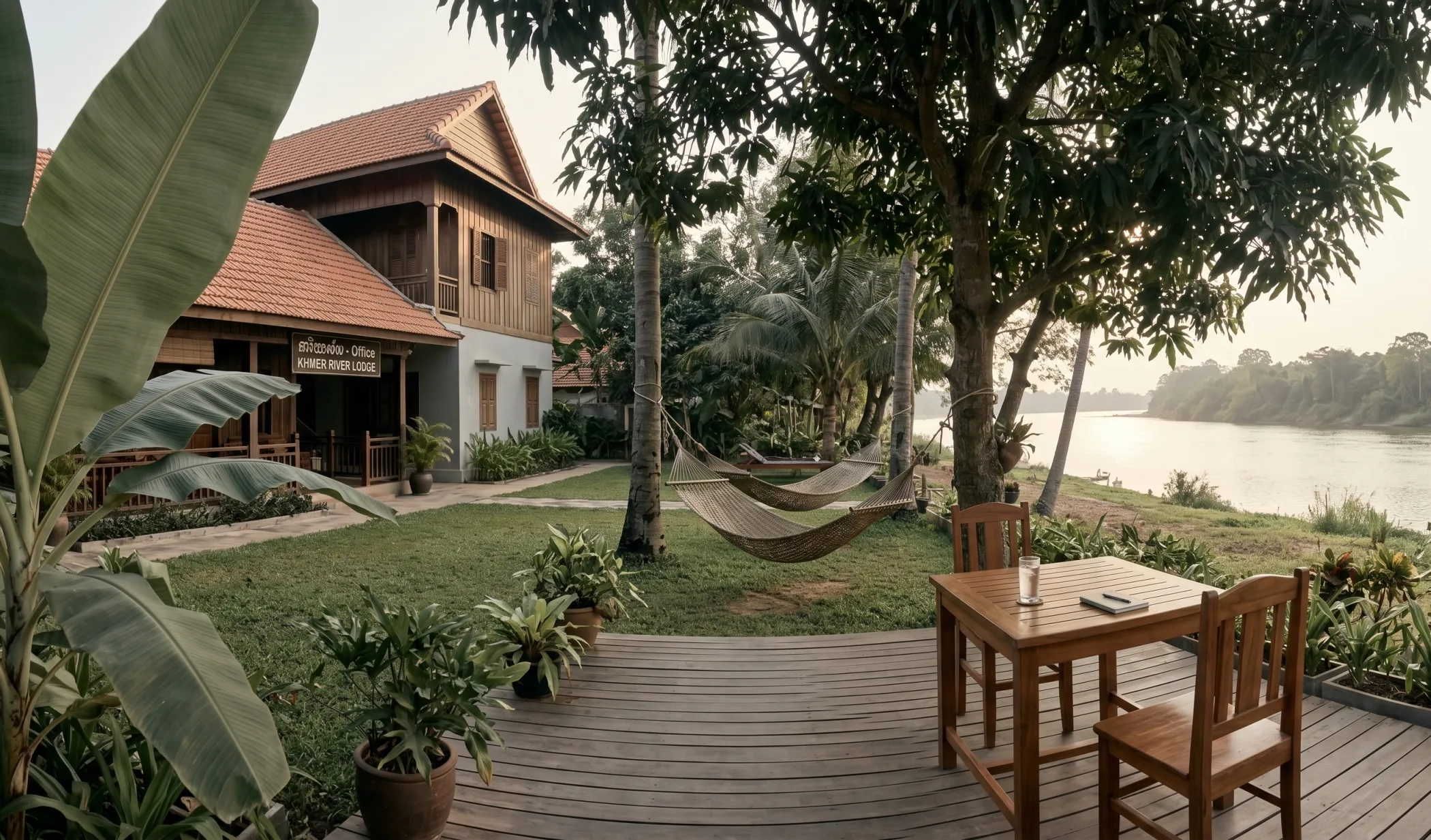
The road running north from the old bridges along the west bank of the Praek Tuek Chhu is where Kampot’s bungalow mythology comes from. This is the stretch people picture when they imagine hammocks and river views and ceiling fans and waking up to a mist on the water. The reality largely matches the picture: properties here are set among trees and rice fields, some right on the water, many with pools, and the river does look like that in the early morning.
The trade-off is distance. Properties along this road range from 3km to 9km north of the old quarter, which translates to a $2–$3 tuk-tuk ride or a 10–15 minute scooter trip every time you want dinner somewhere that isn’t your guesthouse. If you’re on a scooter, this is easy and the ride is pleasant. If you’re not, the cost of transport for every meal and errand adds up, and the isolation that feels romantic on day one can feel limiting by day four.
Most riverside properties have their own restaurant, which is partly the point - you are expected to eat where you sleep. The food at the better properties is good. But it is not the same as choosing from thirty restaurants in the old quarter based on what you feel like that evening.
What to consider: properties here vary from very basic (fan-only bungalows, shared bathrooms) to genuinely lovely mid-range resorts with pools and riverside decks. At the budget end, Samon Village offers rustic Khmer-style bungalows with a popular riverside bar; the shower heads are coconut shells with holes, which is either charming or not, depending on your tolerance for that kind of thing. At the mid-range, Villa Vedici is consistently recommended for its large gardens, two pools, and river views without being too far from town - it sits roughly 6km north of the old market, which makes it manageable.
Zone 3: riverfront south and Fish Island
Who it suits: those who want river views with a slightly different character - quieter, further from the main guesthouse strip, and with a sense of having found somewhere less obvious.
The area south of the new bridge, including the stretch of river around what is locally called Fish Island (not an island - a bend of the river surrounded by fields, accessible by the road south), is less visited and less developed than the north road. Properties here tend to be smaller, quieter, and slightly further off the circuit that most visitors follow.
The same trade-offs apply as the north riverfront, but with more emphasis on the quiet-and-isolated end of the spectrum. Several longer-term residents and families end up out here, partly because the landlords are more likely to do monthly or long-term leases, and partly because the scenery - rice paddies, coconut palms, the river bending out of sight - is some of the most rural-feeling within easy reach of town.
It is not the right choice for a three-day visit unless you specifically know you want to be away from people. It is an excellent choice for the second or third extended stay, once you know what Kampot is and have decided you want more of the quieter version of it.
Zone 4: the countryside east
Who it suits: people with their own transport who prioritise peace and rural character over proximity to anything. Longer stays, families, those who work remotely and treat the town as a destination rather than a base.
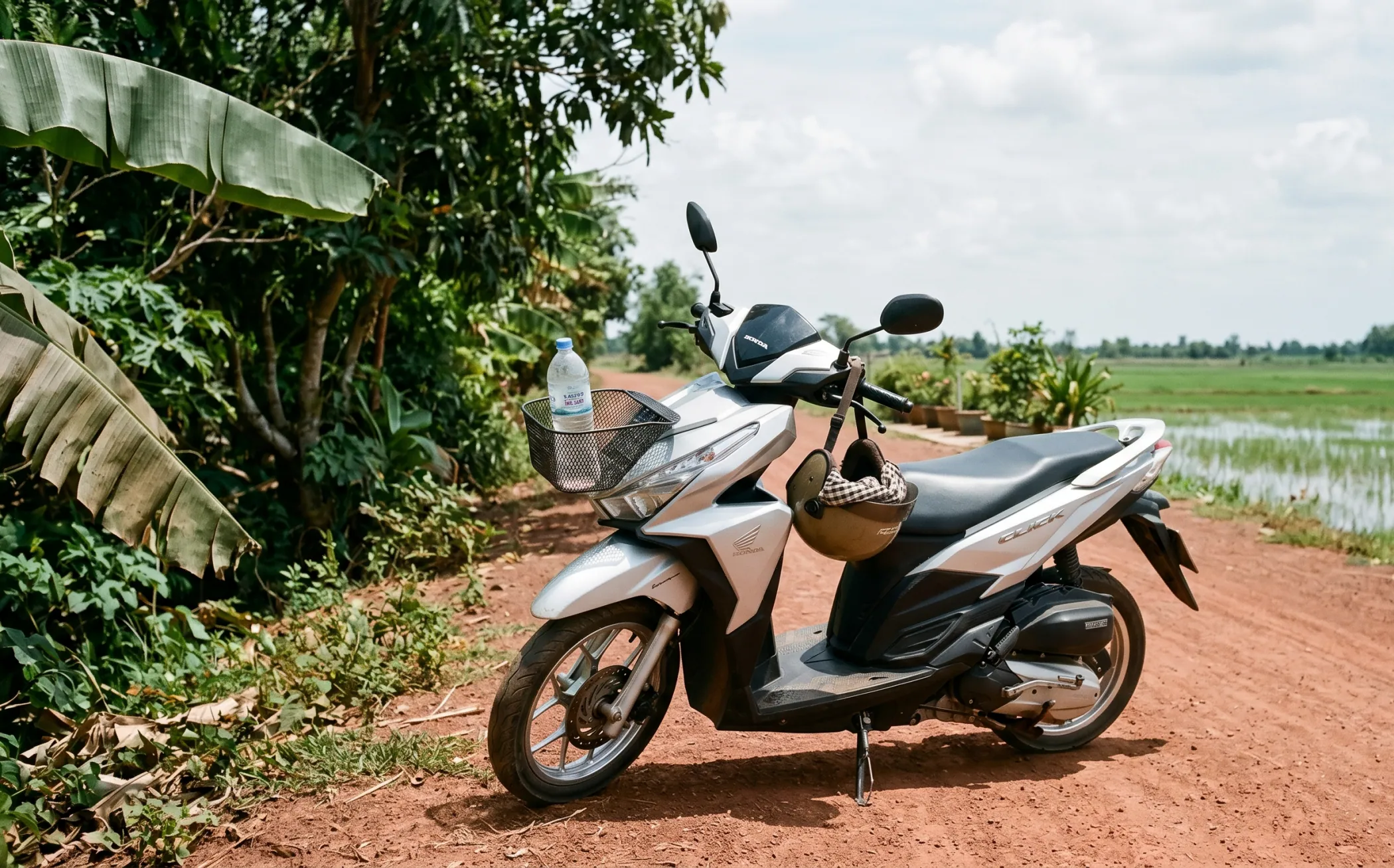
The road east of Kampot past the new bridge - the direction of La Plantation and the pepper farms - enters a landscape of flat paddy fields, salt marshes, and small villages that looks very little like a tourist destination, which is the point. Houses and villas out here are genuinely rural: set back from the road among mango trees, with views of the Elephant Mountains to the north and the plains stretching toward Kep in the east.
Getting to town from here without a scooter is a 15–20 minute tuk-tuk ride each way. With a scooter it is pleasant and takes ten minutes. The road is good and the landscape on the way is worth paying attention to, which makes the commute part of the day rather than an inconvenience.
Accommodation in this zone is mostly private rental - houses and villas rented monthly rather than nightly - rather than guesthouses. If you are planning a stay of a month or longer and want space, a garden, and real separation from the tourist infrastructure of town, this is where the best value in Kampot tends to be. A two-bedroom house with a garden runs $400–$600 a month. Finding these requires Facebook groups and word of mouth rather than Booking.com.
Zone 5: the Bokor road and resort territory
Who it suits: families with children, those who want pools and amenity-rich resorts, people who are happy treating their accommodation as the main event and doing day trips from there.
West of town, toward the base of Bokor Mountain, a cluster of larger resort properties has developed over the past decade. These are a different category from the bungalow guesthouses of the river road - proper resorts with multiple pools, organised activities, kids’ clubs, and restaurants that can service the whole stay without requiring transport.
Komsan Kampot Resort is the most consistently recommended in this category for families, with river access, kayaking, multiple pool areas, and the kind of activities programme that keeps children occupied. The reviews from families are genuinely enthusiastic.
The trade-off is that you are 15–20 minutes from the old quarter and the market, and the area does not have much walking-distance character. If you are travelling as a family and your primary need is a comfortable, safe base for children with enough to do, this zone delivers. If you are here to engage with Kampot as a place - the market, the old quarter, the specific texture of the town - the in-town or closer riverfront options serve that better.
The honest summary by stay type
Three days or fewer, first visit: stay in town. The old quarter puts you within walking distance of everything that makes Kampot interesting. You can get out to the river on a day trip. Hotel Old Cinema if the budget allows; a colonial-quarter guesthouse if it doesn’t.
A week, with a scooter: the riverfront north opens up as a genuine option. The ride to town is short enough that the isolation becomes pleasant rather than limiting. Pick something with a pool for the afternoons.
A week, without a scooter: stay in town or very close to it. The transport costs and the friction of being tuk-tuk-dependent for every meal will accumulate in a way that tips the balance against the riverside bungalow experience.
Two weeks or more: the countryside east starts to make sense. A private rental with space, a garden, and a monthly rate gives you a different quality of stay - more like actually living somewhere than visiting it.
Travelling with children: the resort zone near Bokor gives you infrastructure that the other zones don’t. For families with young children who need pools, structured activities, and a base where everything is handled, the resort model is the right call.
One final note: Kampot’s best accommodation is often not on the major booking platforms. Some of the most-loved guesthouses and private rentals are found through the Kampot expat Facebook groups, through recommendations from your guesthouse on arrival, or simply by walking the streets of the old quarter and asking. The formal listings on Booking.com and Agoda cover the obvious options. The less obvious ones require more legwork, and are usually worth it.
Book something sensible for the first few nights. Then ask around when you get there.