Most towns in Cambodia that had French colonial architecture don’t have it anymore. The Khmer Rouge years emptied urban centres, and when Cambodia stabilised and cities rebuilt, they rebuilt with concrete and corrugated iron rather than with what had been there before. The old was pulled down or left to collapse; new buildings went up in its place. This happened in Battambang and Phnom Penh and Siem Reap and most of the provincial capitals.
Kampot is different. When other towns were rebuilding, Kampot was not - for reasons that have partly to do with its decline after Sihanoukville replaced it as the country’s main deep-sea port in the 1950s, and partly to do with the particular slowness of its development in the years after the wars. By the time Kampot began attracting outside attention, awareness about heritage architecture had arrived with it, and the shophouses and colonial facades and administrative buildings were preserved rather than demolished.
The result is the largest concentration of French colonial architecture in southern Cambodia outside Phnom Penh - a town whose streets look, in certain lights and from certain angles, the way they looked in 1940. This is not a museum. The buildings are inhabited. The market is in the market. The people using these spaces have been using them for generations. What you are walking through is a living town that happens to have kept its face.
Why Kampot kept its buildings
Cambodia was a French protectorate from 1863 to 1953. During that nine decades, the French built the infrastructure of modern administration throughout the country - roads, railways, post offices, hospitals, and the colonial-era architecture that still defines parts of Phnom Penh, Battambang, and Kampot. In Kampot, which served as both a major port and a regional administrative centre, the French investment was substantial. The town received government buildings, a railway station, a fish market, the governor’s residence, and the characteristic shophouse streets that characterise Indo-Chinese colonial commercial districts everywhere from Hanoi to Penang.
When independence came in 1953 and Kampot’s strategic importance began to decline, the town went quiet rather than developing. The buildings stayed. The Khmer Rouge period (1975-1979) emptied the town, as it emptied every Cambodian town, but did not systematically destroy Kampot’s architecture in the way it destroyed the National Bank in Phnom Penh. When Cambodians returned after liberation, they returned to buildings that were structurally intact, if neglected, and lived in them.
The slow development of subsequent decades meant that the economic pressure to demolish and rebuild never arrived with the same force it arrived elsewhere. By the early 2000s, when foreign visitors began discovering Kampot, the architecture that had been ignored became the thing that made the town interesting to the outside world. That interest created its own economic logic for preservation.
Where to start: the Durian Roundabout
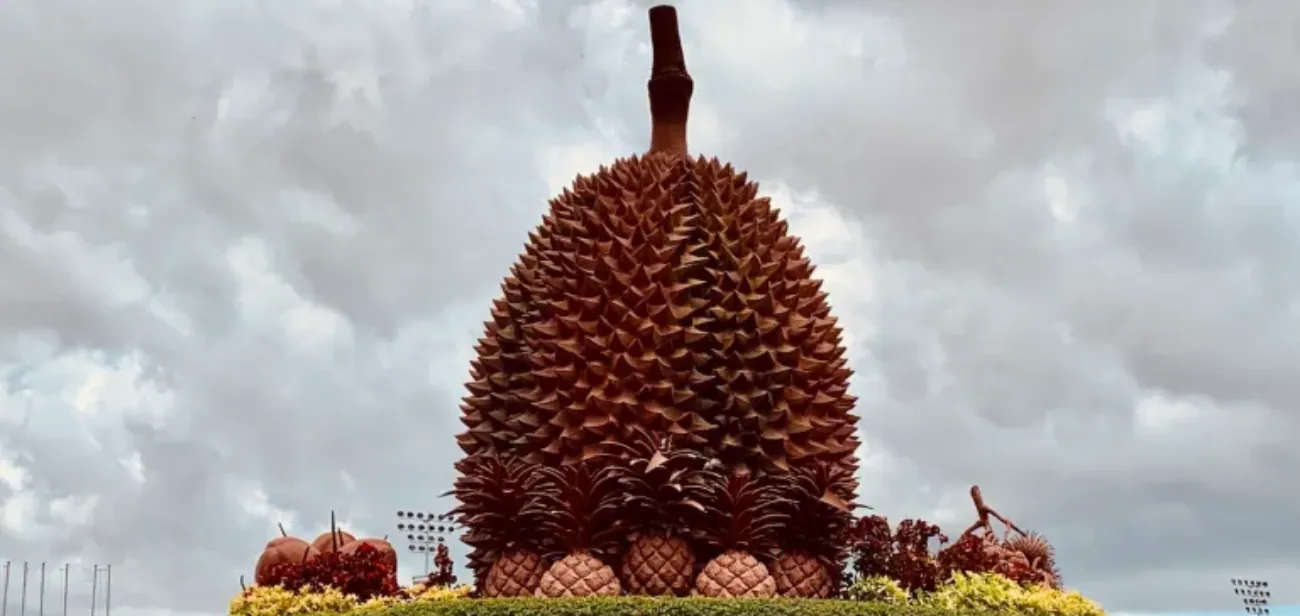
The Durian Roundabout is the correct starting point - a large concrete durian fruit on a plinth at the main intersection of the old quarter, earnest in the way that civic sculpture in provincial towns tends to be earnest, and charming for exactly that reason. The durian is Kampot’s most famous fruit and the monument is Kampot being straightforwardly proud of it.
The roundabout also functions as an orientation point. The river is east, a five-minute walk. The old market is north, a two-minute walk. The main shophouse streets run west and south. From here, you can see enough of the town to understand its structure before you start walking it.
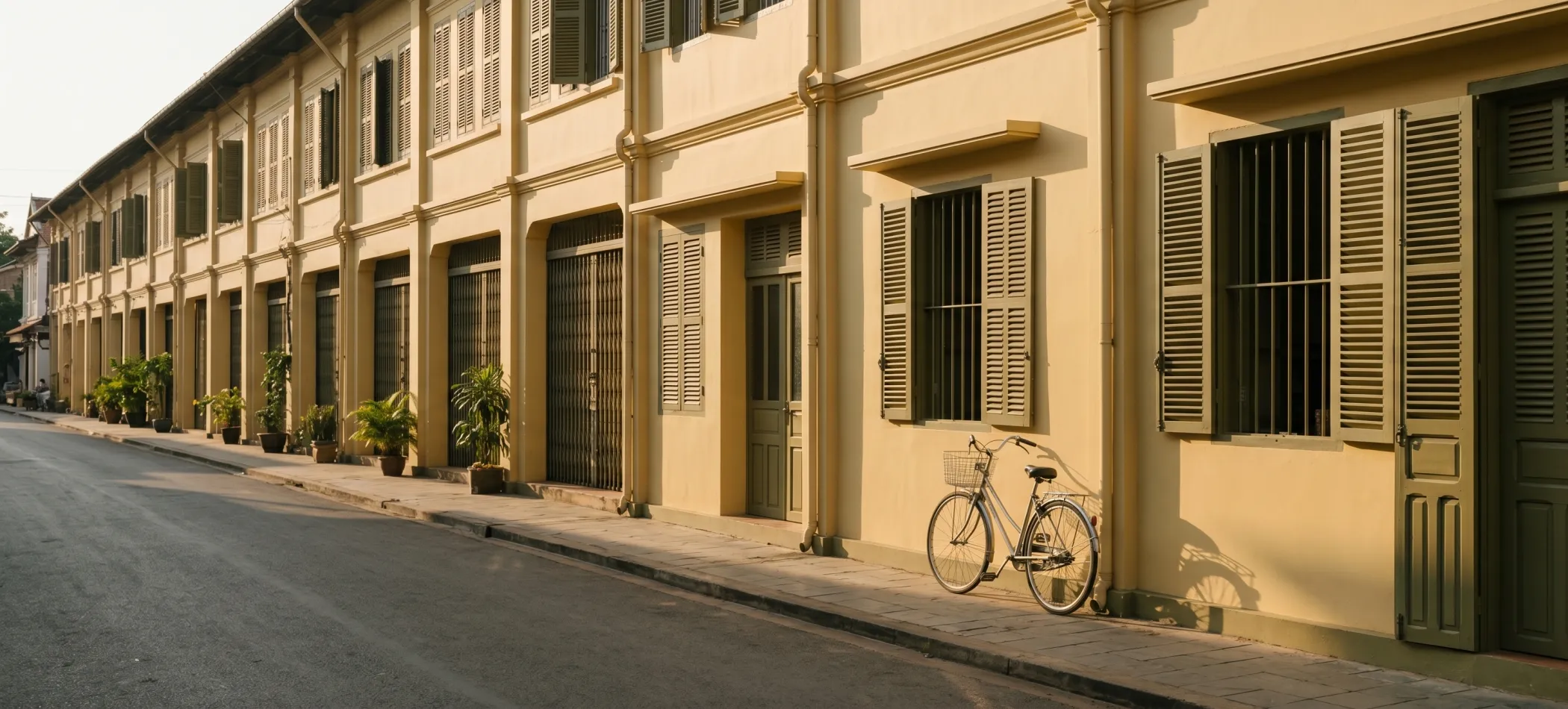
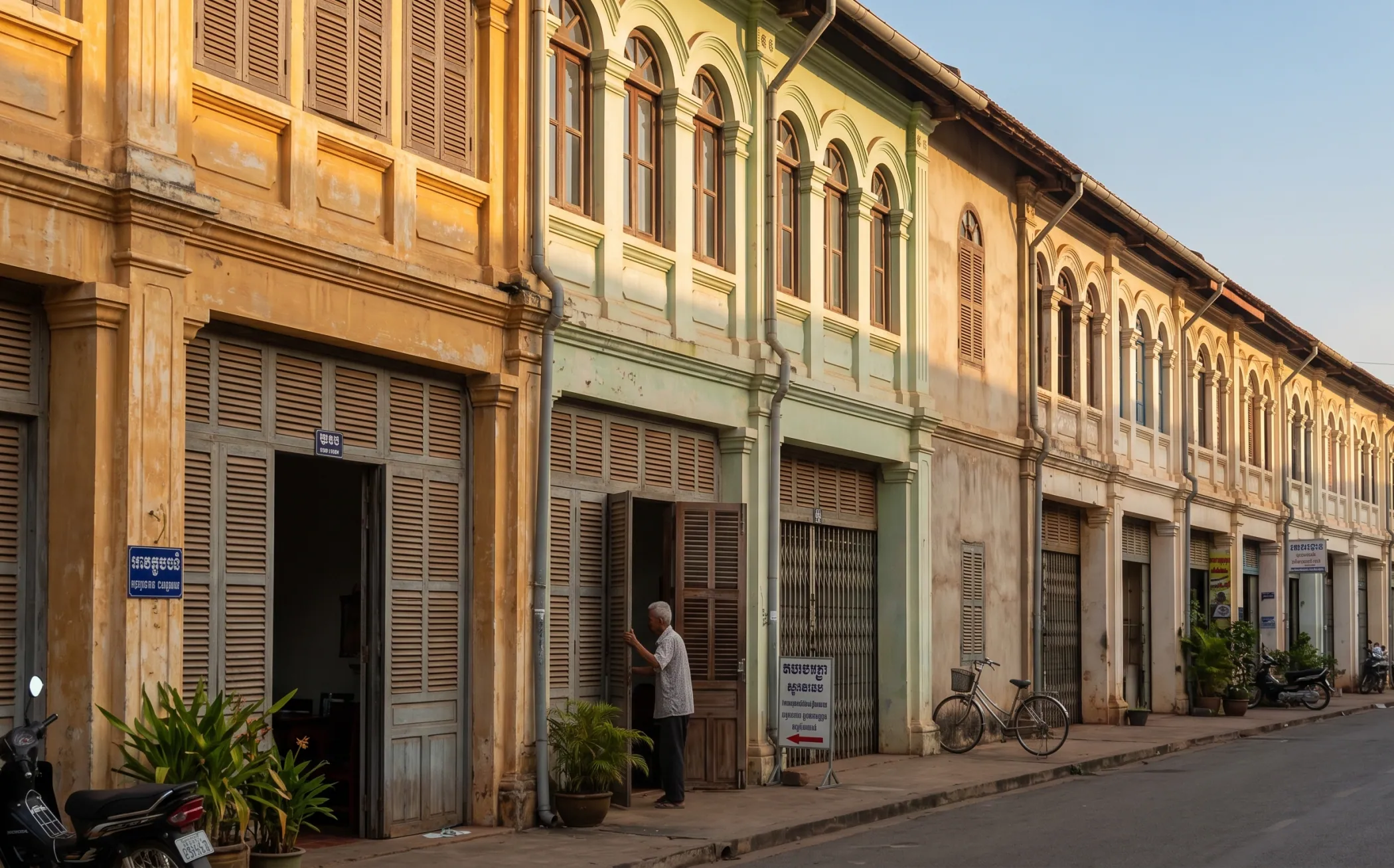
A note on timing: the old quarter rewards early morning. Before 8am, the light on the shophouse facades - the yellow and green and faded terracotta that French Indochinese buildings settle into over decades - is cooler and more revealing than the flat overhead light of midday. The market is busy. The tuk-tuks are not yet running. The streets belong mostly to the people who live in them, which is the version of Kampot worth paying attention to.
The shophouse streets: what you’re looking at
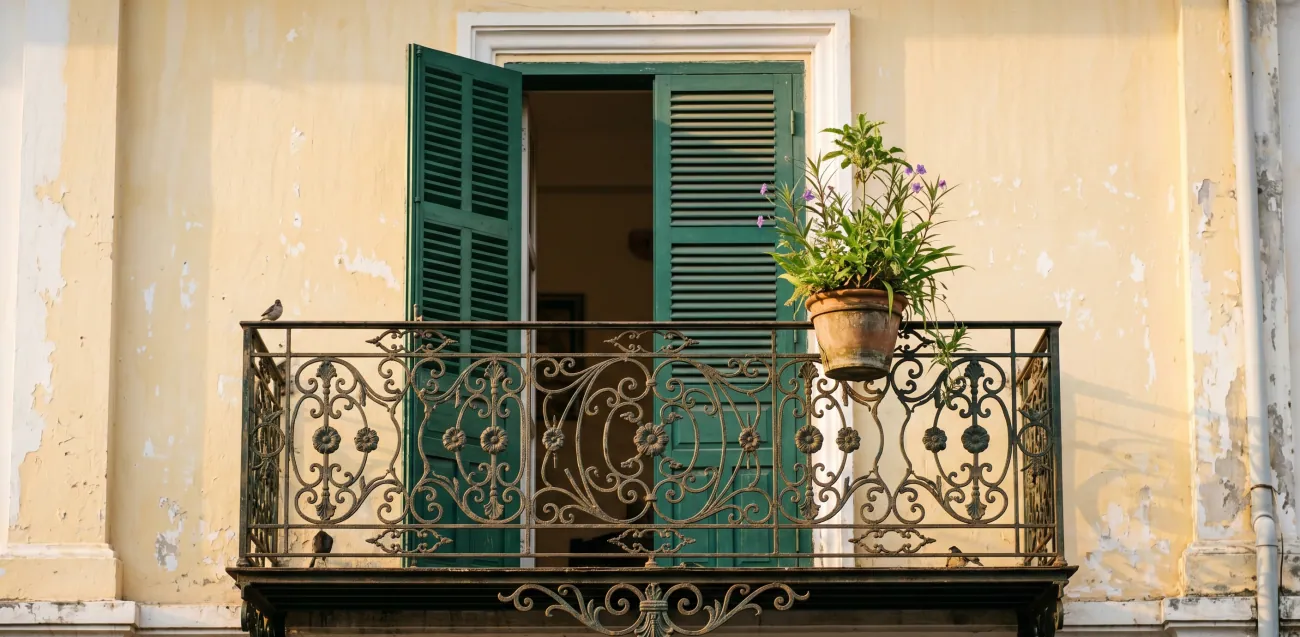
The streets between the Durian Roundabout and the river, and the parallel streets running south toward the museum, are where the shophouse architecture concentrates. Walk slowly and look at the details: the colonnaded ground floors designed for shade and commerce, the shuttered upper windows with their French proportions, the occasional carved cornices and moulded plasterwork that distinguish the more ambitious buildings from the simpler ones.
The shophouse form is not purely French - it is a hybrid of European commercial architecture and the tropical climate logic that says ground floors should be shaded, upper floors should catch breeze, and the building should work as both home and business simultaneously. In Kampot, many shophouses still work this way: a family runs a restaurant or a shop at street level and lives above it. The continuity of use is what makes the quarter feel alive rather than preserved.
What has changed is the tenant, not the form. Shophouses that once held Chinese merchant traders now hold cafés, guesthouses, and restaurants. Hotel Old Cinema - the boutique hotel built inside a restored 1950s cinema - is the most ambitious example of this adaptive reuse: the Art Deco facade in yellow and turquoise with its original columns and mouldings intact, the interior transformed into something that honours the architectural ambition of the original. Even if you are not staying there, walk past it and look up.
The fish market and the riverfront
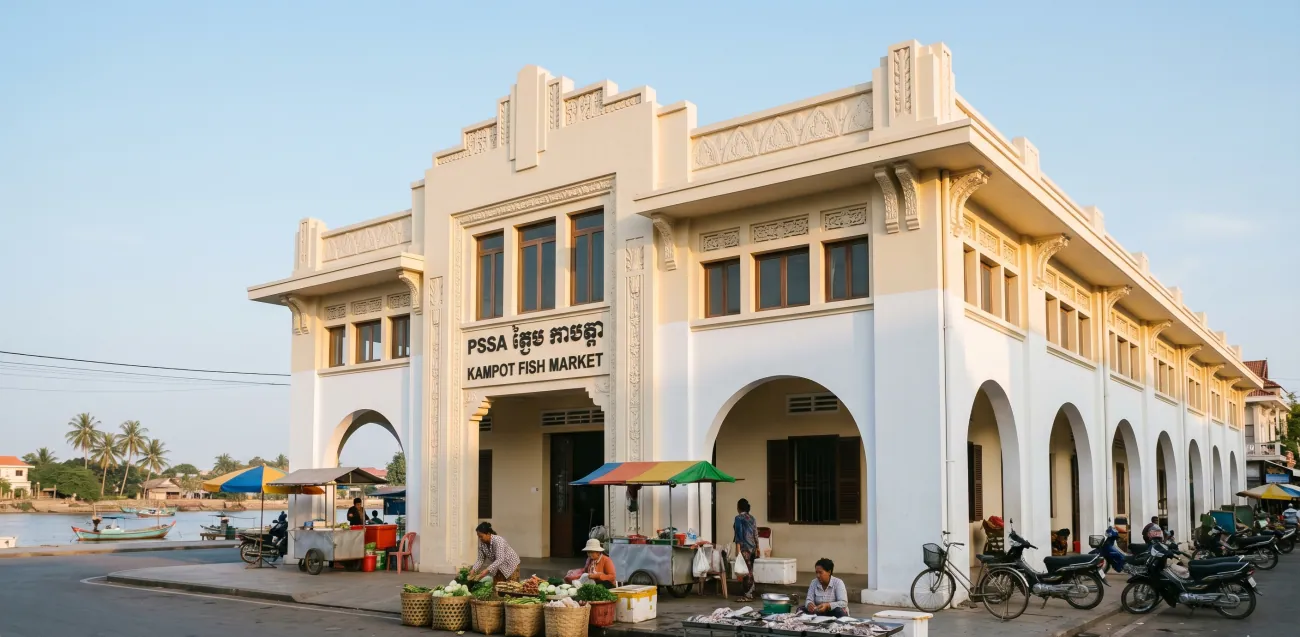
The fish market building on the riverfront is the single most architecturally striking structure in Kampot. Built in 1934 as an open-air marketplace for the area’s fishermen, it is Art Deco in a specifically Indochinese register - the clean lines and bold forms of 1930s modernism adapted for heat, humidity, and a trading economy. An Australian restaurateur bought and restored the building in 2013, and it currently operates as a commercial space with a restaurant; the building itself is the reason to visit regardless of who occupies it at any given time. Stand back and look at the proportions, then walk around the perimeter to see how the structure meets the river at the back.
The riverfront road south of the fish market is where several of Kampot’s most significant colonial buildings cluster. The National Bank of Cambodia building is one of the most beautifully restored - its facade manicured, its proportions evident, still operating as a government building and therefore not accessible inside. Come after 5pm when cars are not parked in front and the facade is fully visible. Photographs through the gate are fine; the security guards are accustomed to people stopping.
The Provincial Museum and the Governor’s Mansion
The Kampot Provincial Museum is inside the Old Governor’s Mansion, south of the Old Market on the edge of the river. Entry is $2. The building is a carefully restored example of French colonial residential architecture - large verandas, wooden shutters, heritage floor tiles and plasterwork - and the restoration itself is worth the price of entry before you even look at the exhibits.
The collection is modest: six large panels tracing the history of the province, 38 historical photographs, a dozen archaeological pieces from the pre-Angkorian period, and several artefacts from the colonial era. The photographs are the highlight - among them the oldest known photograph of Kampot, taken in 1886 by Adhémar Leclère, a French administrator and ethnographer who documented Cambodia in the early years of the protectorate. Exhibits are in Khmer, French, and English.
The museum opened in January 2015, funded largely by a grant from the International Association of Francophone Mayors, with part of the money spent restoring the Governor’s Mansion itself. It is worth an hour - less for the exhibits than for the context it provides for what you see when you walk back out into the street.
Hours: Tuesday, Wednesday, Thursday, Saturday and Sunday (closed Monday and Friday). Morning and afternoon sessions - check the door for current times as they vary by season.
The Railway Station and the Old Market
The Kampot Railway Station on the southern edge of the old quarter is another colonial-era structure worth a detour - less visited than the riverfront buildings, and more atmospheric for it. The train runs on a limited schedule between Phnom Penh and Kampot, and on quieter days the station has the particular stillness of a place that once mattered greatly and now operates at a different pace.
The Old Market building north of the roundabout has an Art Deco concrete facade constructed in the 1930s - simpler than the fish market building but occupying the same architectural moment. The market itself is a working Khmer market where the town’s residents buy produce, dry goods, and prepared food in the early morning. The architectural interest and the practical interest coincide here: the building is worth seeing and the market inside it is worth exploring, ideally before 8am when it is at its busiest and most itself.
The best time to walk, and what changes
The old quarter looks different at different times of day. Before 8am it belongs to the people who live in it, and the light on the shophouse facades has a quality that is specific to the low-angle morning sun - the yellows and greens and weathered terracottas become more saturated, the shadows from the colonnades more dramatic, the whole street more legible as a designed thing.
By mid-morning the heat begins to press and the tourist economy activates. The tuk-tuks run. The cafés fill. The architectural experience becomes a shared one in a different way.
Late afternoon - between 4pm and the onset of dusk - offers a second window. The light from the west catches the riverfront facades differently from the morning, and the fish market building in particular, facing east over the water, takes on a colour in late afternoon that it doesn’t have at any other time.
Go twice if you can: once early, once late. The buildings are the same buildings. What they look like changes.
What’s been lost: the honest note
Not everything that should have been kept has been kept. Several colonial buildings in the old quarter have been demolished or replaced in recent decades as development pressure has increased. Some are in advanced states of decay. The preservation that happened is real and should be acknowledged; so is the loss.
The things that make the quarter distinctive are not infinite. The shophouse facades that exist now exist because circumstances conspired to preserve them - the right combination of slow development, eventual awareness, and external economic interest in what they represented. Those circumstances will not repeat. What is there now is what there will be.
Walk through it before it changes further. Walk through it slowly. The details - the peeling paint in layers, the moulded plasterwork above a doorway, the shutters that still close properly after eighty years - are the evidence of a particular moment in this town’s history that will not exist the same way for much longer.
That is not a reason to be sad about it. It is a reason to pay attention while it is there.