Every guide to Kampot says the same thing about the rainy season: come between November and February, avoid May to October, the rest is heat and downpours. This is not wrong. It is also not the whole picture.
The rainy season in Kampot is six months long. What happens during those six months is not uniform, not unpleasant across the board, and in some specific ways genuinely better than the dry season that everyone recommends. The landscape is green in a way it isn’t in February. The town is quiet in a way it isn’t in December. And the light, particularly in October when the rains are slowing and the rice is tall and the mountains are washed clean, is the light that makes people reach for their cameras.
This is a guide to what those six months are actually like, organised by when they happen rather than by a single “rainy season” label that flattens six very different months into one.
What “rainy season” actually means in Kampot
First, a number that reframes the question: Kampot receives around 2,023mm of rain per year. That sounds like a lot, and it is. But it also mostly falls in specific windows, not continuously across six months. The practical experience of the rainy season in Kampot is not six months of constant rain - it is six months during which rain is possible at any time, likely in the afternoons, and certain during the peak months.
A second useful piece of context: Kampot is significantly drier than the Cambodian coastline to the north and west. The Elephant Mountains that sit above the town act as a partial rain shadow, meaning Kampot receives considerably less rainfall than Sihanoukville and the Cardamom coast, where annual totals exceed 4,000mm in some areas. For a coastal-adjacent town in Cambodia, Kampot is relatively moderate.
The temperature, for what it’s worth, barely moves. Year-round daytime highs in Kampot sit between 30°C and 32°C. The cool dry-season mornings are real, but the idea that the rainy season is dramatically hotter is a myth - it is more humid, not meaningfully warmer.
May and June: the rains begin, the town is still fine
The shift from dry season to wet is gradual. In early May, afternoon showers start appearing - typically an hour or two of rain, usually between 2pm and 5pm, after which the sky clears and the evening is fine. The mornings in May and June are often clear and fresh. The rivers begin to rise. The paddies fill.
This is, honestly, a reasonable time to visit Kampot. The crowds have thinned from the December-February peak and the March-April heat. Accommodation is cheaper. The landscape is beginning to green. If you plan outdoor activities for the morning and treat the afternoon rain as a natural siesta - which is what most residents do - the inconvenience is minimal.
What shifts is Bokor Mountain. The summit road starts to see regular cloud from May onwards. The views that make the drive worthwhile disappear behind mist, and the atmosphere of the place, while different in cloud, is not the version most people came for. If Bokor is the main reason for the trip, April is the last reliable month for it.
July and August: the proper wet season, honestly
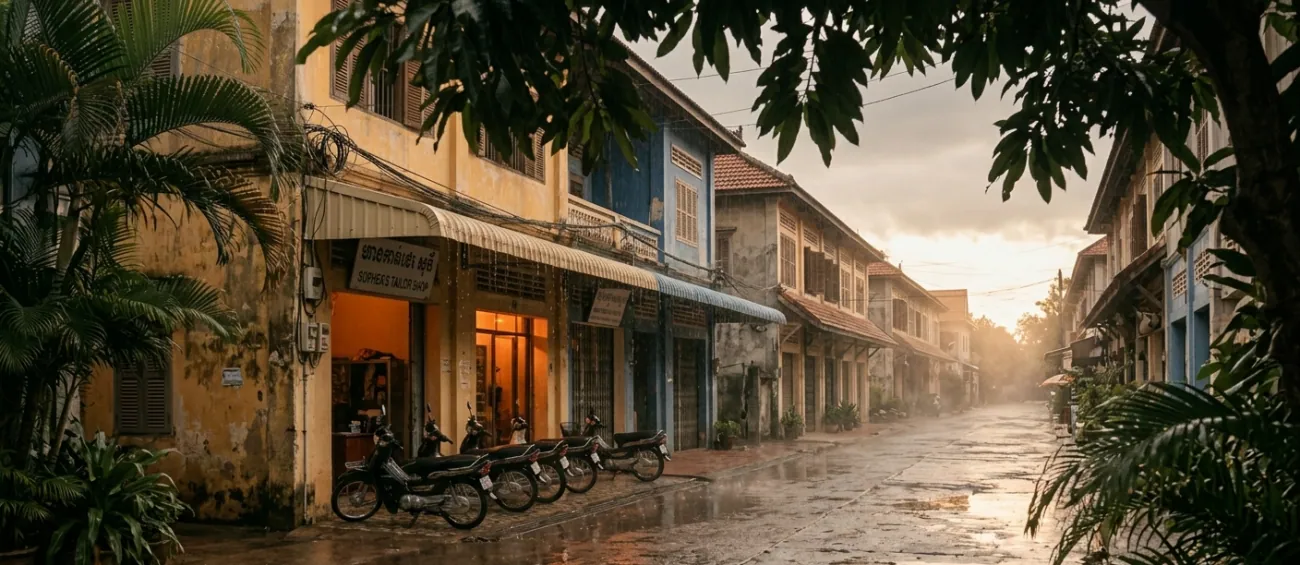
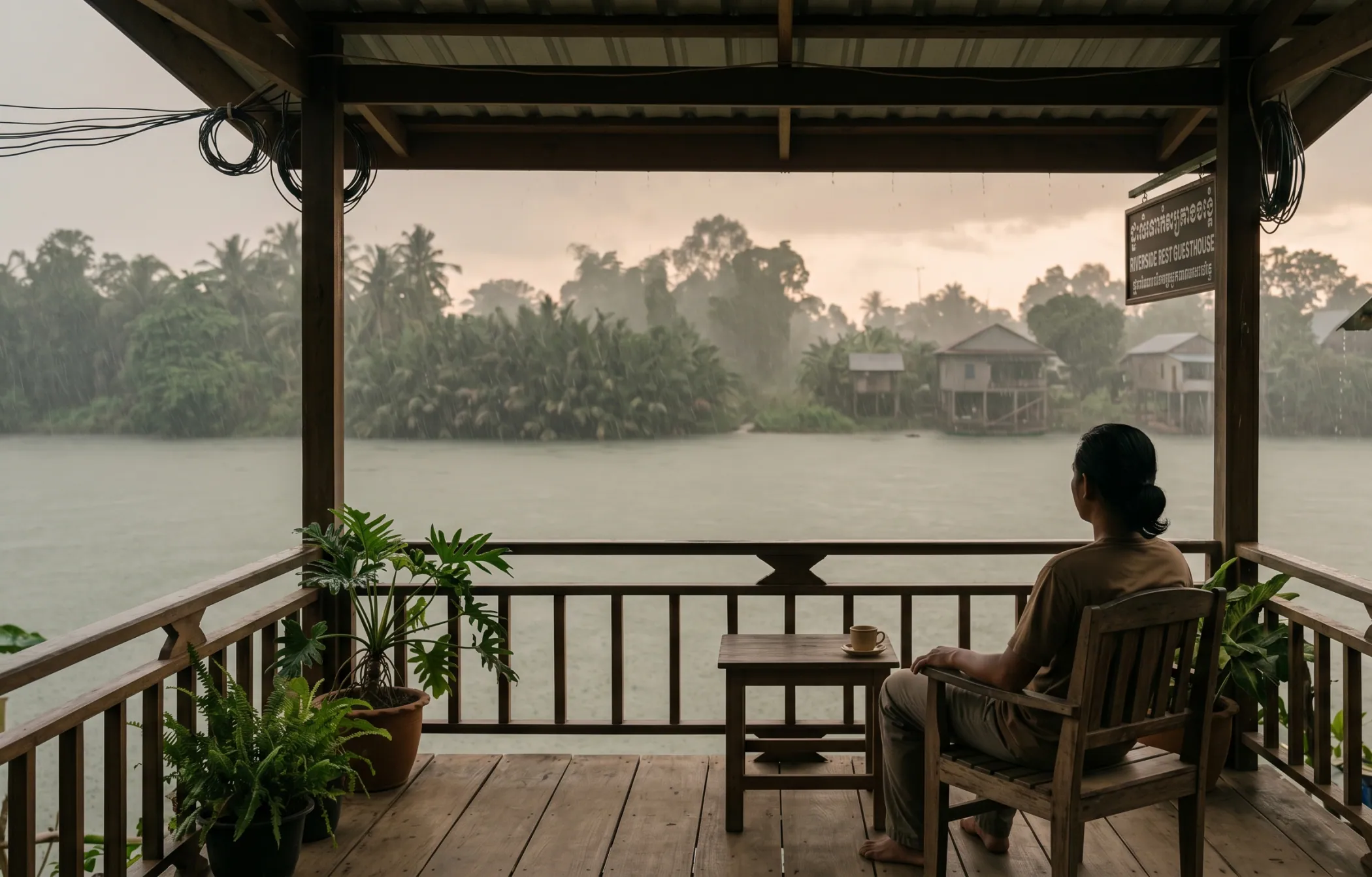
This is the stretch where the rainy season stops being a minor inconvenience and becomes the defining character of the place. July and August bring the heaviest rainfall of the year - Intrepid Travel’s Kampot data puts August peak rainfall at around 410mm, which is a substantial monthly total. Rain during these months falls with more frequency, more duration, and occasionally more intensity than the shoulder months.
What this means practically: afternoon plans become provisional. A route that is straightforward by scooter in the dry season - the road to La Plantation, the drive east toward Kep - becomes muddy and slow in heavy rain. The river rises noticeably. Some of the lower-lying riverside properties experience minor flooding in particularly wet years.
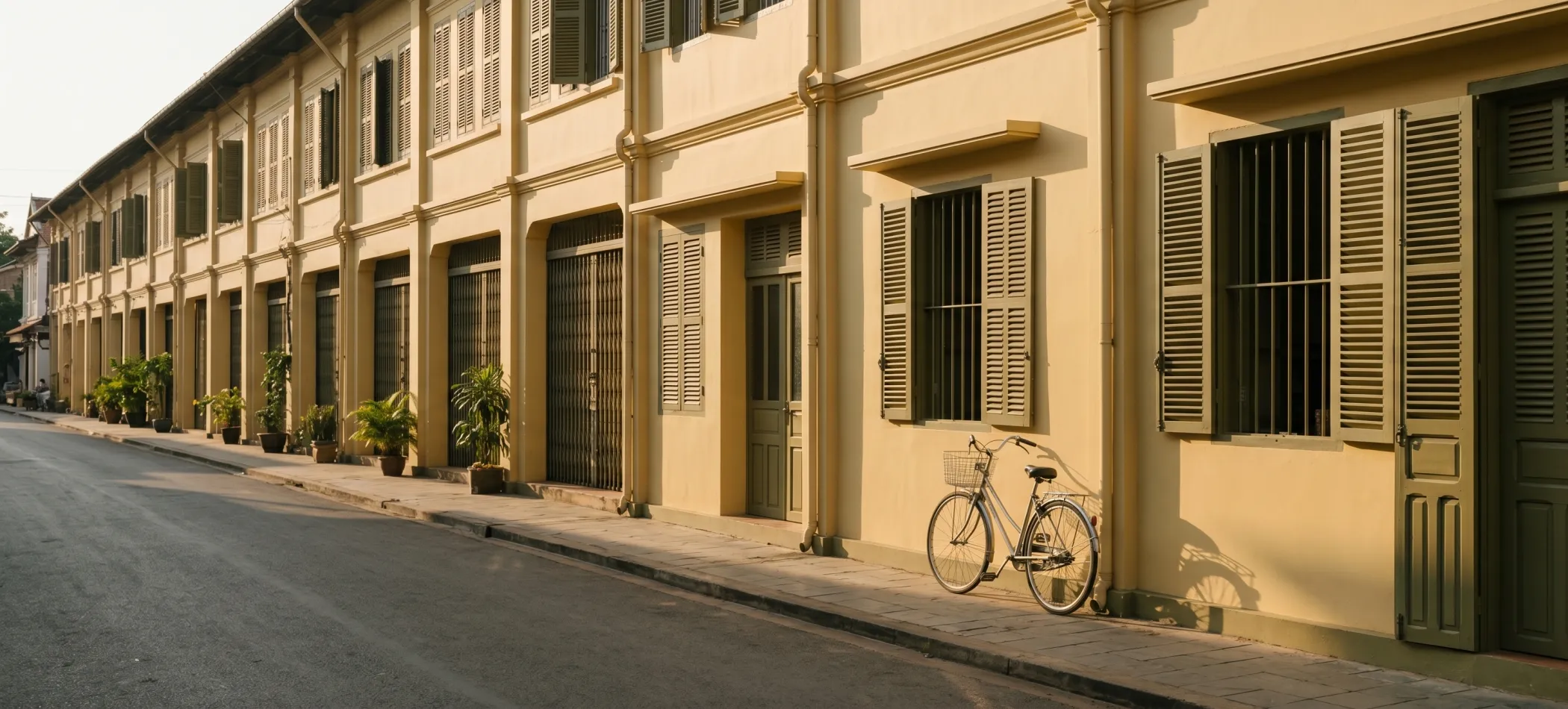
What it does not mean: that everything is ruined. Mornings in July and August are often fine. The town itself - the cafés, the old quarter, the market - is perfectly accessible throughout the rain. You adapt your schedule: outdoor activities in the morning, the restaurant or the cafe or the hammock in the afternoon.
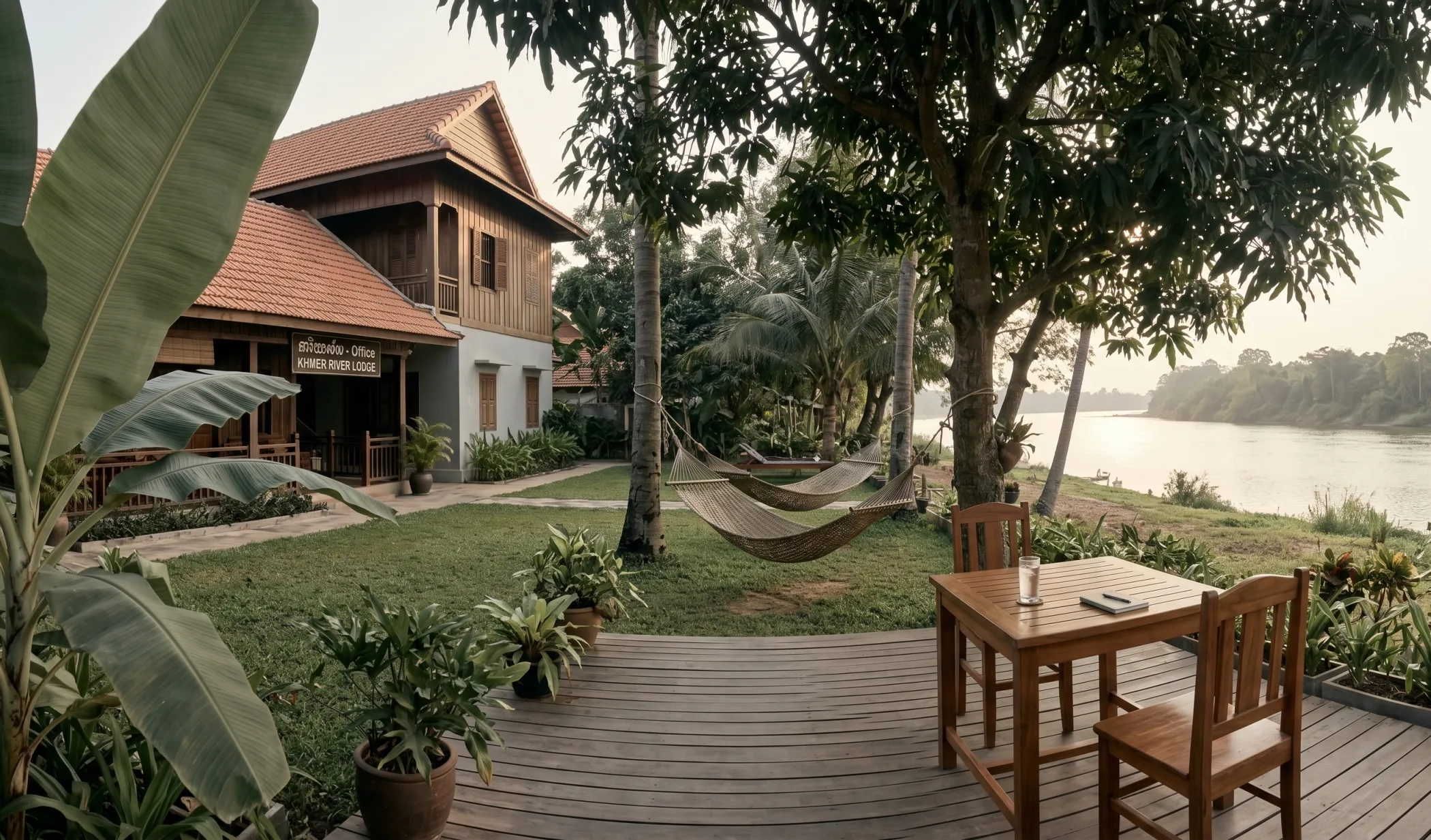
The town at this time of year is the quietest it gets. The restaurants and guesthouses that fill completely from December to February are running at perhaps a third of capacity. The people who work them have time for a conversation. Prices are lower. The energy is slower, more local, less curated. For a certain kind of traveller - the one who wants to be in a place rather than at a destination - this is not a bad time to arrive.
September and October: peak rain, the best rice fields, the turn
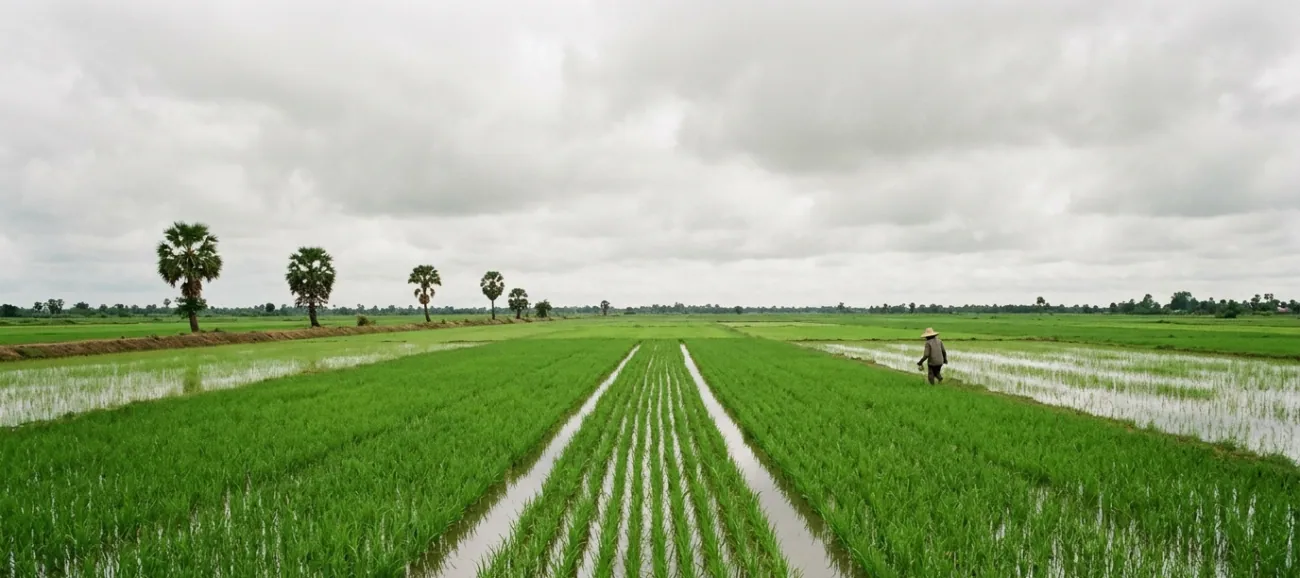
September is technically the wettest month in Kampot by the numbers - an average of 304mm across 20 rainy days. That is a lot of rain days for a month that has 30. In practice, many of those days see afternoon rain rather than all-day rain, but September is not the month to come if you need reliable outdoor conditions.
What September and early October offer in exchange: the landscape at its most striking. The rice fields east of town - the flat paddies between Kampot and La Plantation, the countryside toward Kep - are a particular shade of green in September that does not exist in any other month. The vines are heavy. The mountains behind the town are dark with cloud and occasionally dramatic in the way that monsoon light can make things dramatic. If you have any interest in photography, or in simply looking at a landscape, the wet season is when the south of Cambodia looks like itself.
The towns empties further. The tourist infrastructure goes into a kind of soft hibernation - not closed, but unhurried in a way that the high season doesn’t allow.
Then, around late October, something shifts. The rains begin to ease. The cloud cover starts to break more frequently. The air, which has been thick with humidity for months, starts to feel lighter. The rice ripens and the harvest begins - the fields turn from deep green to gold over a period of weeks, and the countryside around Kampot enters what is arguably its single most photogenic month of the year.
The turn: late October and November
Late October into early November is the period that almost no travel writing mentions, partly because it falls between the two camps - not officially high season, not officially low season - and the algorithmic content that dominates travel publishing does not know what to do with something that requires nuance.
This is, by several measures, the best time to visit Kampot.
The rains have eased but the landscape is still lush. The rice harvest is underway. The Elephant Mountains are sharp and clear. The temperature is as close to comfortable as it gets in this latitude - the daytime heat is real but the evenings cool noticeably. The crowds from December have not yet arrived. Accommodation prices are still at off-season rates for the first weeks of November before they begin to climb.
The pepper farms are active. La Plantation and BoTree Farm are at their most interesting in the harvest period, when the vines are being picked and the sorting tables are busy. The countryside has a purposefulness to it that the dry season, when the fields lie fallow, doesn’t quite have.
What costs less, what’s easier, what you give up
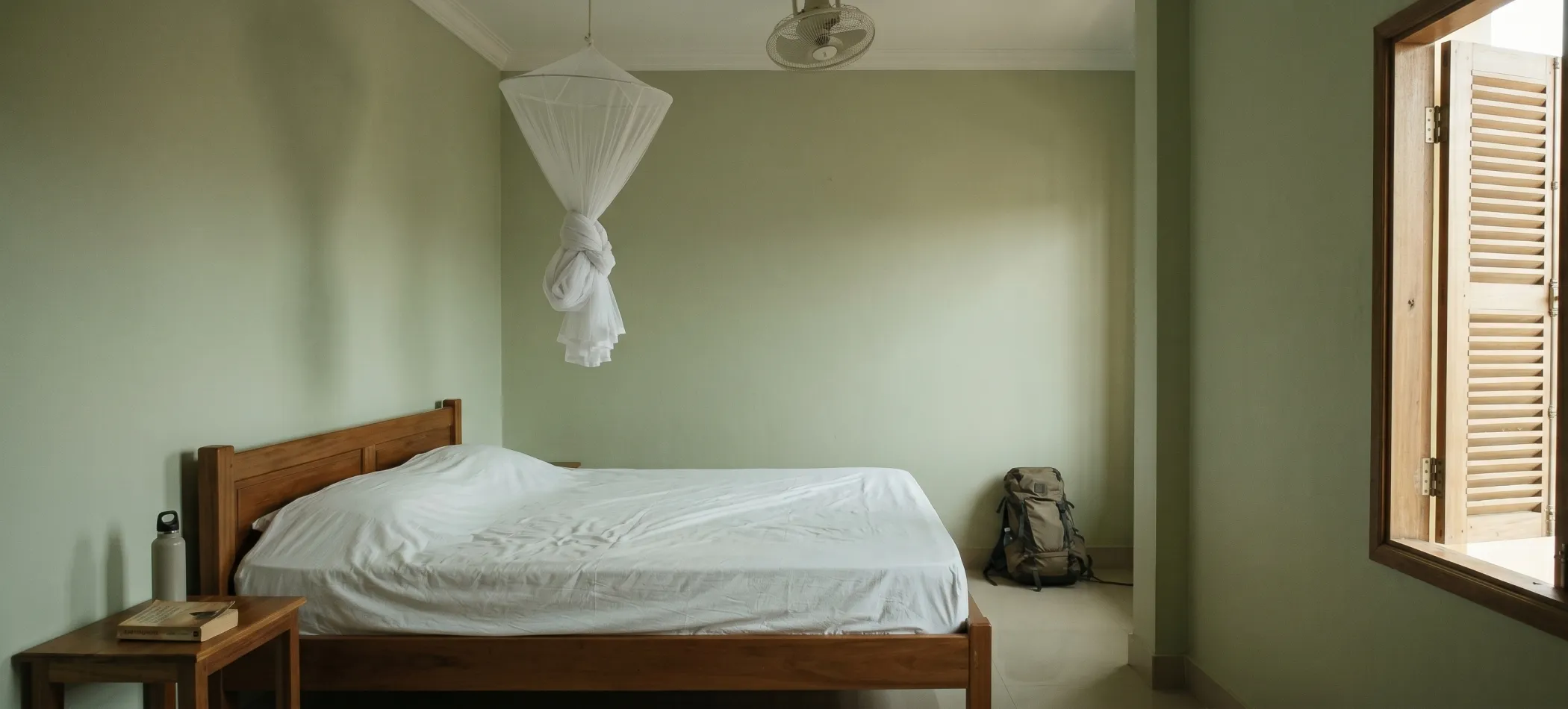
What costs less: accommodation drops 20-40% from peak season rates throughout the wet months. The guesthouses and bungalows on the river road that fill immediately in December are bookable without advance notice in July. A room that costs $60 in January often goes for $35–$40 in August. The wider cost of living in Kampot follows the same pattern - the off-season is where the real numbers live.
What’s easier: getting a table anywhere, finding a guesthouse without advance booking, having a conversation with the people who run the places you visit, moving through the market without navigating tourist groups.
What you give up: reliable outdoor conditions. Bokor Mountain in clear weather. The pepper farm road without mud. Kayaking without checking whether the current is running too fast. Kep beach on a sunny afternoon. The social energy of a town at full capacity.
The trade is honest, and the people for whom it makes sense are a specific type. They are not the people planning a once-in-a-decade trip who need everything to go right. They are the people who are curious about a place as it actually exists, rather than as it presents itself to visitors - which is a different thing, and in Kampot’s case, a genuinely interesting one.
The rain falls. The town carries on. The rice grows green in the fields east of town and turns gold in October and the harvest makes the whole countryside smell of something that is very difficult to describe to someone who hasn’t been there.
Come in November if you want the best of everything. Come in October if you want the landscape. Come in July if you want the town to yourself. Just don’t let the word “rainy” do all the work of deciding for you.