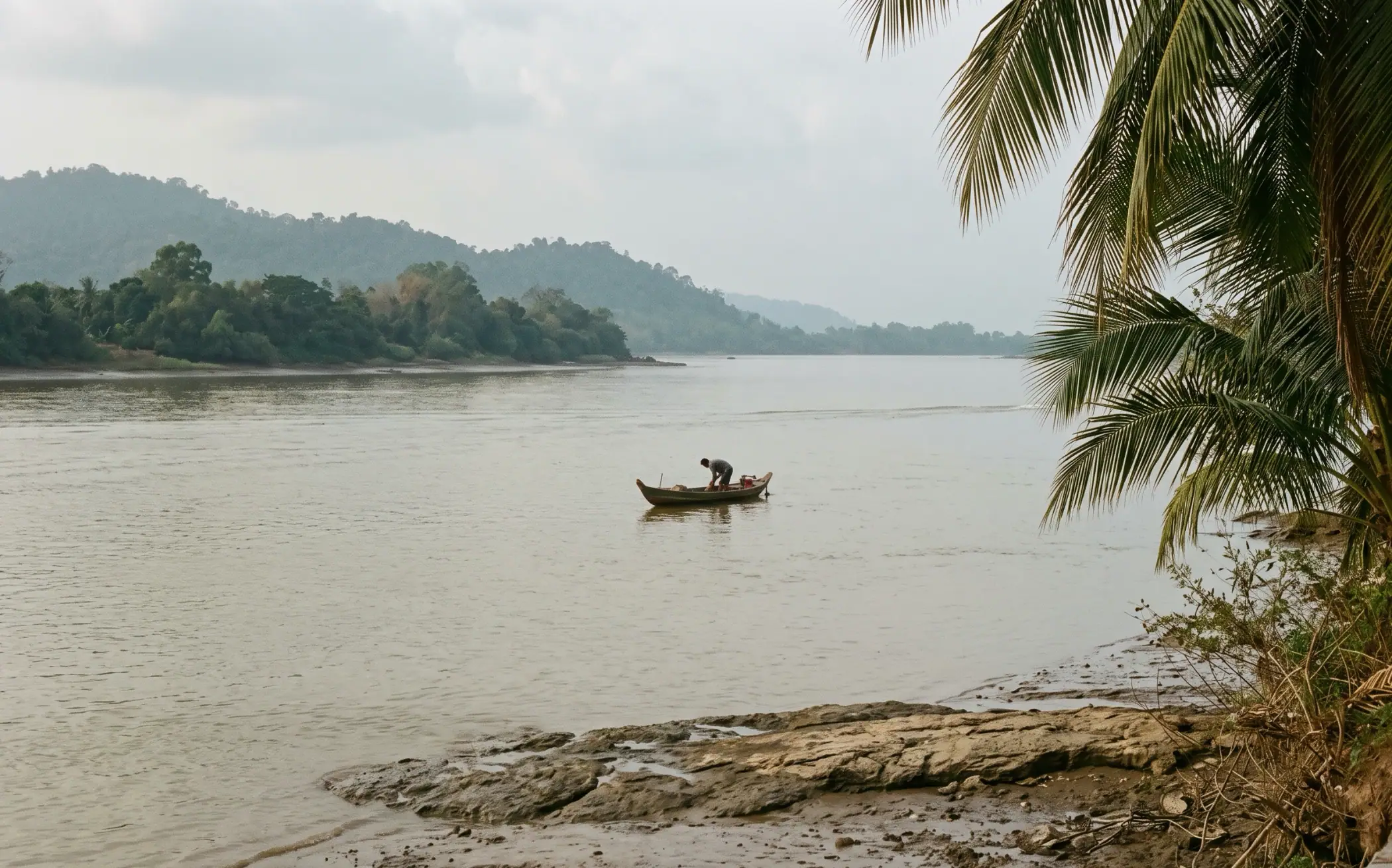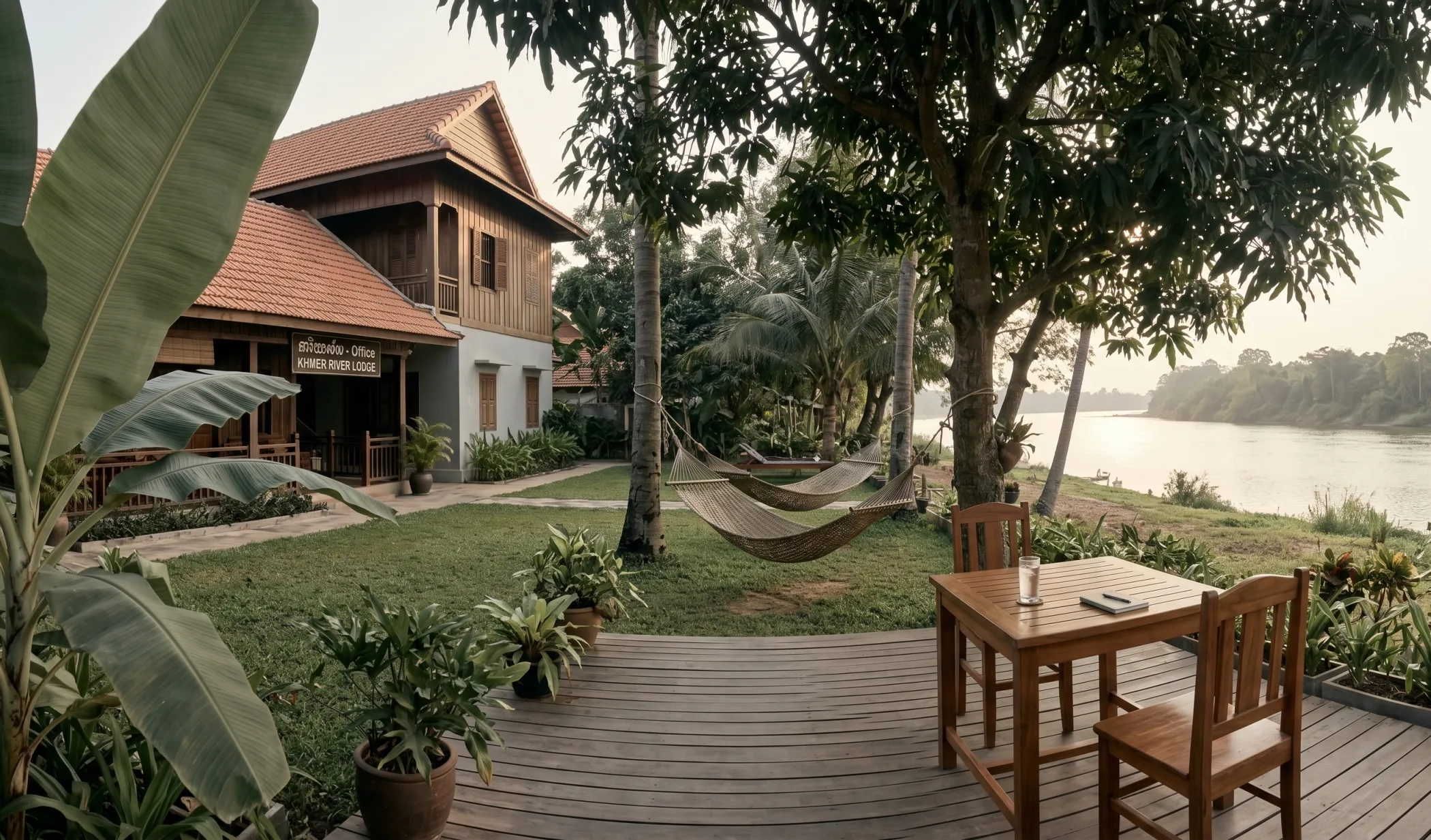
Kampot’s river is the thing that makes the town what it is, and most people experience it from the bank. From the terrace at Rikitikitavi. From a plastic chair at a street food stall. From the guesthouse hammock with a beer in the late afternoon. All of this is fine. None of it is the same as being on the water.
Six kilometres north of the old quarter, where a narrow waterway branches off the main channel of the Praek Tuek Chhu, there is a river loop that goes by two names. The Green Loop is the literal one. The Green Cathedral is the one that stuck - because of the way the palms and nipa palms and dense riverbank vegetation have grown toward each other across the water until their branches meet overhead, forming a long, green, vaulted tunnel that does, in low light, resemble the nave of something old and deliberate.
It takes one to two hours to paddle. It costs $5 to hire a kayak for the first hour. It is the best thing to do on a quiet morning in Kampot and one of the more genuinely beautiful experiences in the whole south of Cambodia.
Came here about the river rather than the kayak? Whether the water is clean, whether you can swim in it, why it runs brown at town and where the rapids are is all in the companion piece: what the Praek Tuek Chhu actually is. This page is the paddling.
The river: what you’re actually paddling
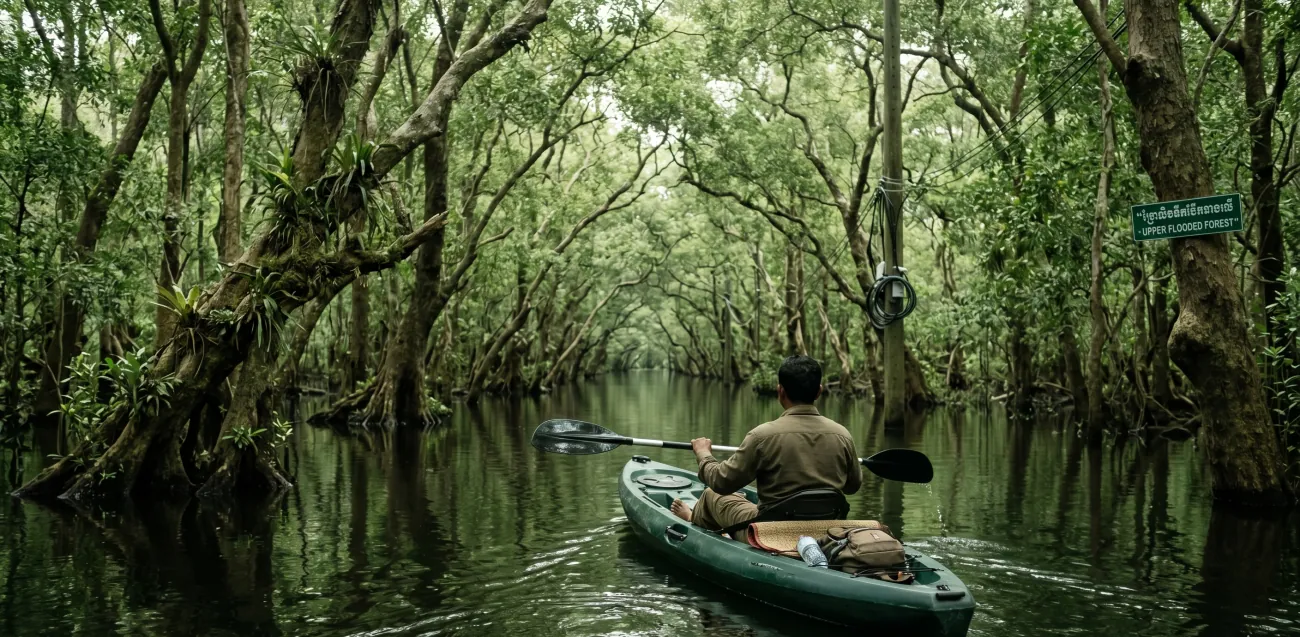
The loop branches off the main Praek Tuek Chhu about 6km north of Kampot town and runs for several kilometres through a landscape that alternates between dense canopy and open water. The experience has two distinct sections.
The first is the cathedral itself - the stretch where the vegetation closes overhead and the light filters through in shafts and the water is dark and still and very quiet. This is the part that appears in every photograph and the part most people come for. Dragonflies hang in the air. The sound of the main river disappears. It is one of those places that is better than its reputation, which is not something that can be said about every famous thing in Southeast Asia.
The second section opens out into something wider - closer to a slow lake than a creek. Lily pads extend across the surface. Waterfowl move between the reeds. Fishermen work from small boats along the edges. The light is different here: open sky, no canopy, the surrounding Bokor National Park hills visible above the treeline. Kingfishers move quickly from bank to bank. If you sit still for ten minutes, the river shows you things it doesn’t show you when you’re moving.
The loop returns to the main river channel, where you paddle a short distance back along the Praek Tuek Chhu to your hire point. The current on the main river is mild but present - hug the riverbank, stay clear of the longtail boat channel in the centre, and the crossing is straightforward.
Where to hire and what it costs
Several guesthouses line the approach road and the riverbank near the Green Cathedral entrance. All of them rent kayaks to non-guests for around $5 per hour. Some include it free for staying guests.
Champa Lodge, Bopha Prey Riverside Guesthouse, Meraki Kampot, and Retro Kampot are the most frequently mentioned hire points in recent visitor accounts. Bopha Prey sits directly at the entrance to the loop, which makes it the most convenient starting point if you want to be in the water quickly. Meraki and Retro Kampot are slightly further along the road and have a similar setup.
Most properties have both single and double kayaks. A single is easier to manage alone; a double is useful if you want to paddle with someone or if you’d rather have a guide at the back doing the work while you look at things. Life jackets are available - ask for one if you’re not a strong swimmer, and consider it in any case given that the loop has some deeper sections.
Guided tours: if you’d rather have company and local knowledge, several guides run half-day kayaking tours that include transport from town, the loop, snacks and cold drinks, and a sunset return. These run $15–$25 per person depending on the operator and what’s included. GetYourGuide and the Kampot expat Facebook groups both have current operator listings. The guides who have been doing this route for years know where the kingfishers perch and when the light is best and when to be quiet.
Timing: when to go and why it matters
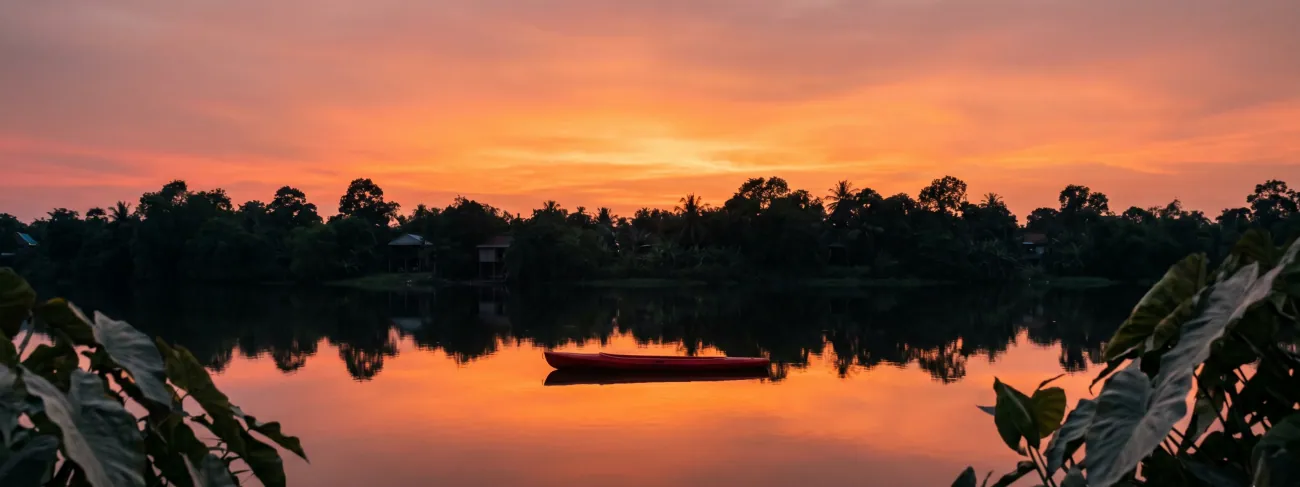
Two windows work well. The morning - leaving before 9am, when the temperature is manageable and the river is quiet and the light in the canopy section is cool and filtered - is the better choice for the cathedral itself. The canopy blocks direct sun, which makes it comfortable even in the hot season.
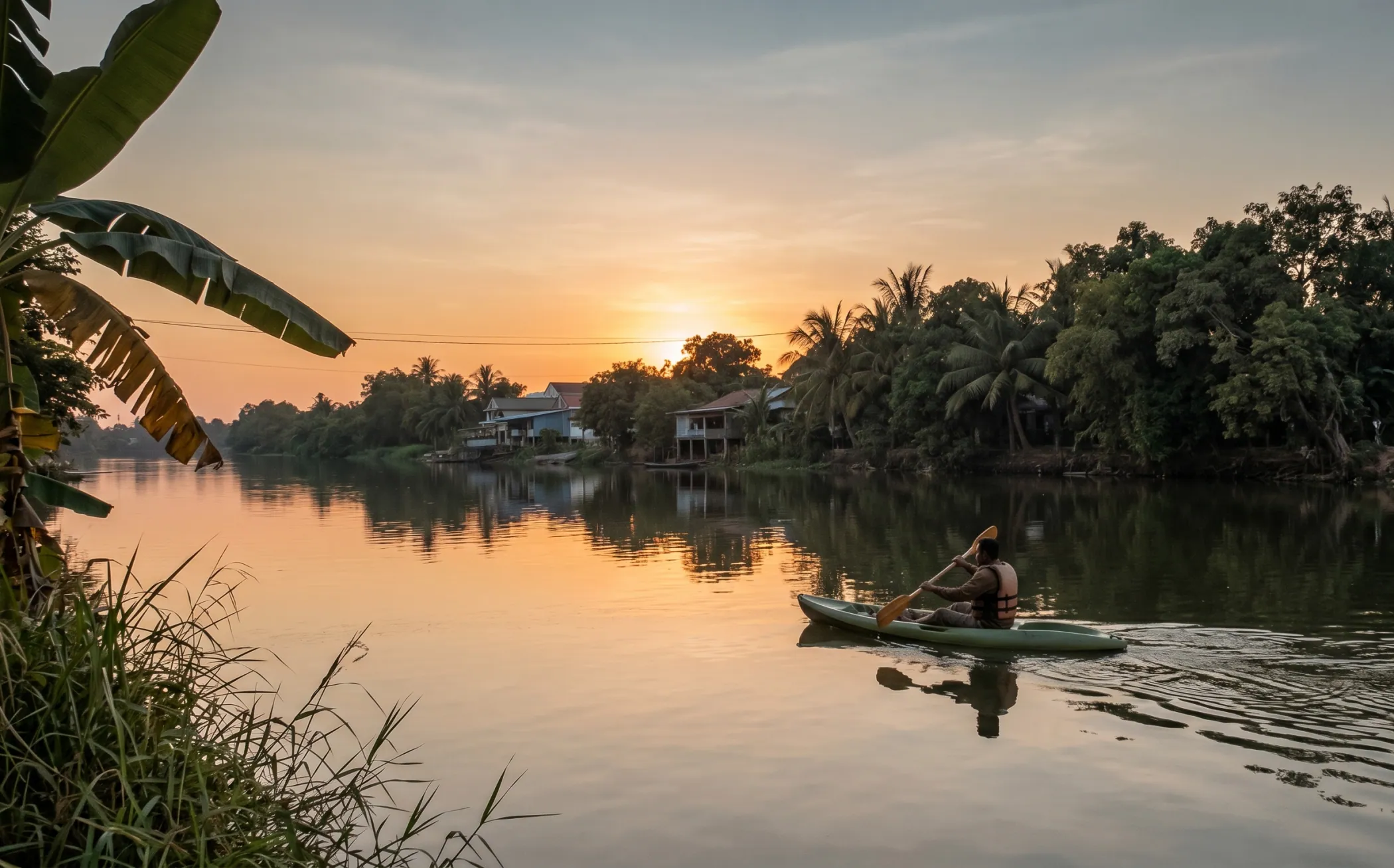
The late afternoon - departing around 4–5pm - is better for the open section and the return along the main river. The sunset light on the Praek Tuek Chhu from the water is the kind of light that makes sense of every cliché ever written about Cambodian riversides. The hills behind the town go pink. The water picks up the colour. It is worth timing at least one trip for this.
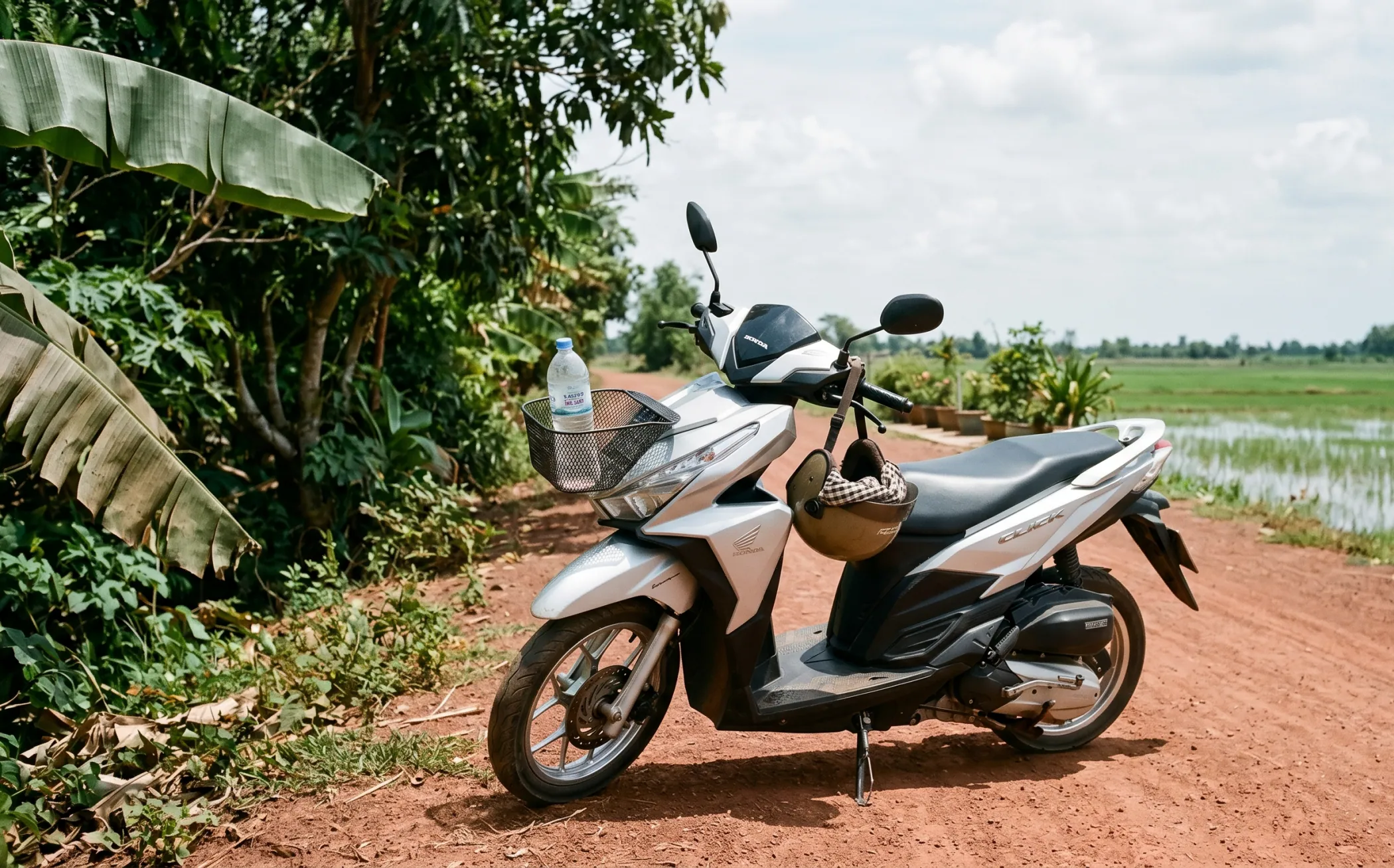
Avoid midday in March through May. The open section of the loop has no shade and the heat at that hour is punishing. The canopy section is cooler, but the 20-minute scooter ride out in the early afternoon heat is enough to make the whole thing feel like effort.
What to know before you go
The water quality: there is plastic in parts of the loop, worst in the wider open section, and it is a real and ongoing problem. The cathedral stretch is generally cleaner. Do not plan on swimming - visibility is close to nil and the channel is tidal. The experience is in the paddling and the looking. Why the water looks the way it does, and where you can actually swim is covered separately.
Navigation: the loop has a few small islands and branches that can disorient people on their first pass. All the vegetation looks similar after a while. Google Maps has the loop marked, and most hire properties will sketch the route on a piece of paper. The concrete bridges you pass under are the clearest navigation markers - two of them indicate you are approaching the return to the main river. When you reach the main Praek Tuek Chhu, turn left and stay close to the bank to paddle back to your hire point.
What to bring: water, more than you think you need. A hat that won’t blow off. A dry bag or zip-lock bag for your phone if you want to take photographs from the kayak without anxiety. A change of clothes - you will get wet in some degree, either from the paddle splash or from the inevitable moment where the kayak lists while you’re trying to photograph a dragonfly.
Modest dress: the waterway passes through several rural villages and fishing communities. The standard advice is to wear a cover-up over swimwear rather than paddling in a bikini - the same sensibility that applies anywhere in rural Cambodia.
If you want more: the rapids and SUP
For stronger paddlers, the Tuek Chhou rapids are about 8km north, up the main river and above the tidal limit - fresh water over rock, genuinely fast in the wet season and barely moving by March. Ask at any hire point whether conditions are suitable before heading up, and read the note on the dam upstream first: the level there can rise without much warning.
Stand-up paddleboarding is available from some riverside operators closer to town, including along the main riverfront. SUP on the Praek Tuek Chhu in town is a different experience from the Green Cathedral - more exposed, more boat traffic, but with the old quarter and the riverfront as the backdrop. Worth doing once for the view of the town from the water.
The Green Cathedral is one of those places that rewards arriving without too much expectation. It is not dramatic. It is not remote. It is a quiet river loop in the countryside north of a small town, accessible in fifteen minutes on a scooter. What it offers is the specific quality of moving through a green and silent place at your own speed, with nothing particular required of you except to pay attention.
That turns out to be enough.