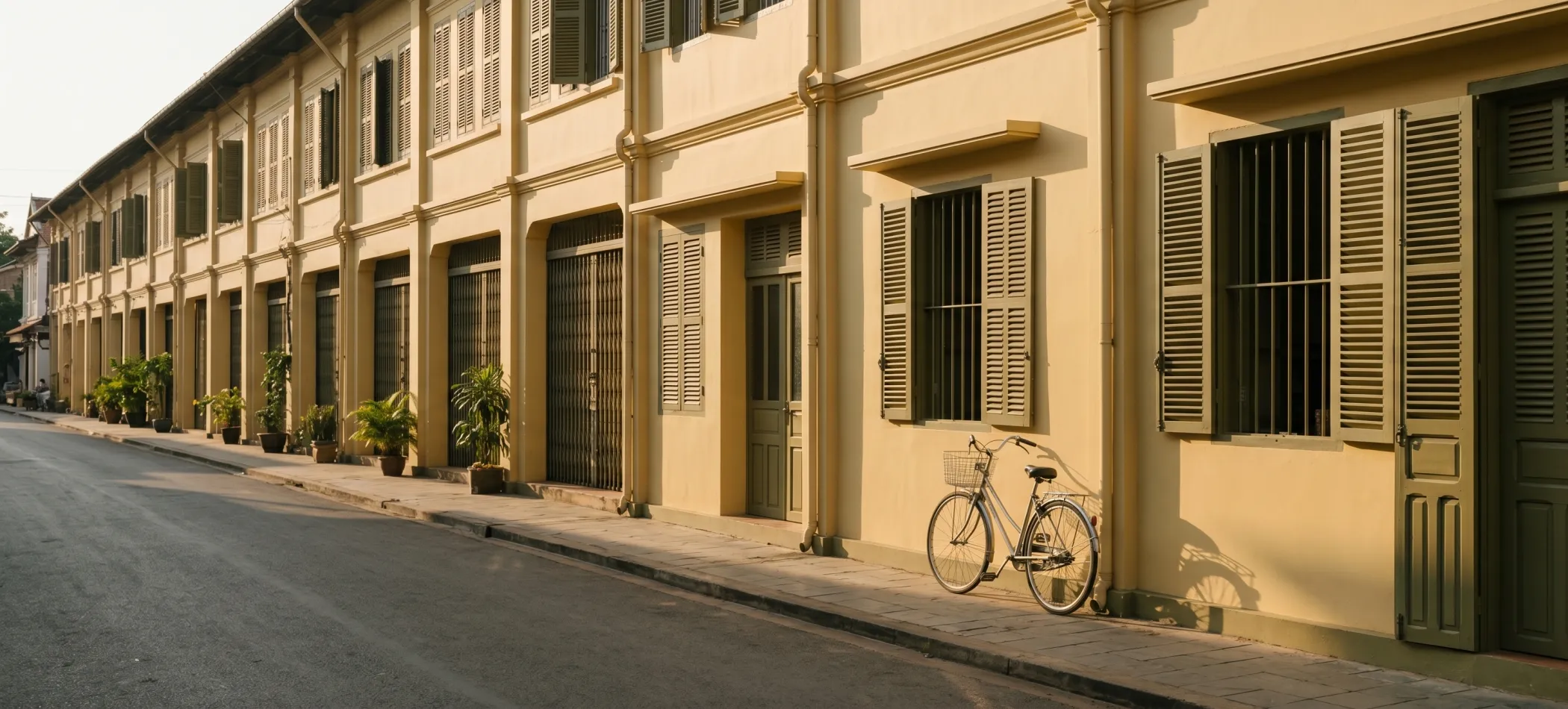
Kep is thirty kilometres from Kampot and a different place entirely. Kampot has the river, the old quarter, the restaurants, the sense of a town with a life of its own. Kep has the sea, the crab market, a national park that most visitors skip, and the ruins of a resort town that was abandoned with almost everything still in it.
You can be there in forty minutes on a scooter. You can do it justice in a day. And if you time it well - leaving Kampot before eight, arriving at the crab market while the fishing boats are still unloading - you will have the best version of the day, not the crowded one.
Getting there: the road
The standard route is National Road 33 east from Kampot. It is a pleasant drive - flat, well-surfaced, passing rice paddies, salt fields, and the occasional cluster of houses before the coast comes into view. Allow forty to forty-five minutes by scooter; a tuk-tuk takes a little longer. If you are hiring a tuk-tuk for the day (the right call if you don’t have a scooter), negotiate the full day return from Kampot for $20–$25 and agree on a rough schedule before you leave. Most tuk-tuk drivers who do this run regularly will know all the stops.
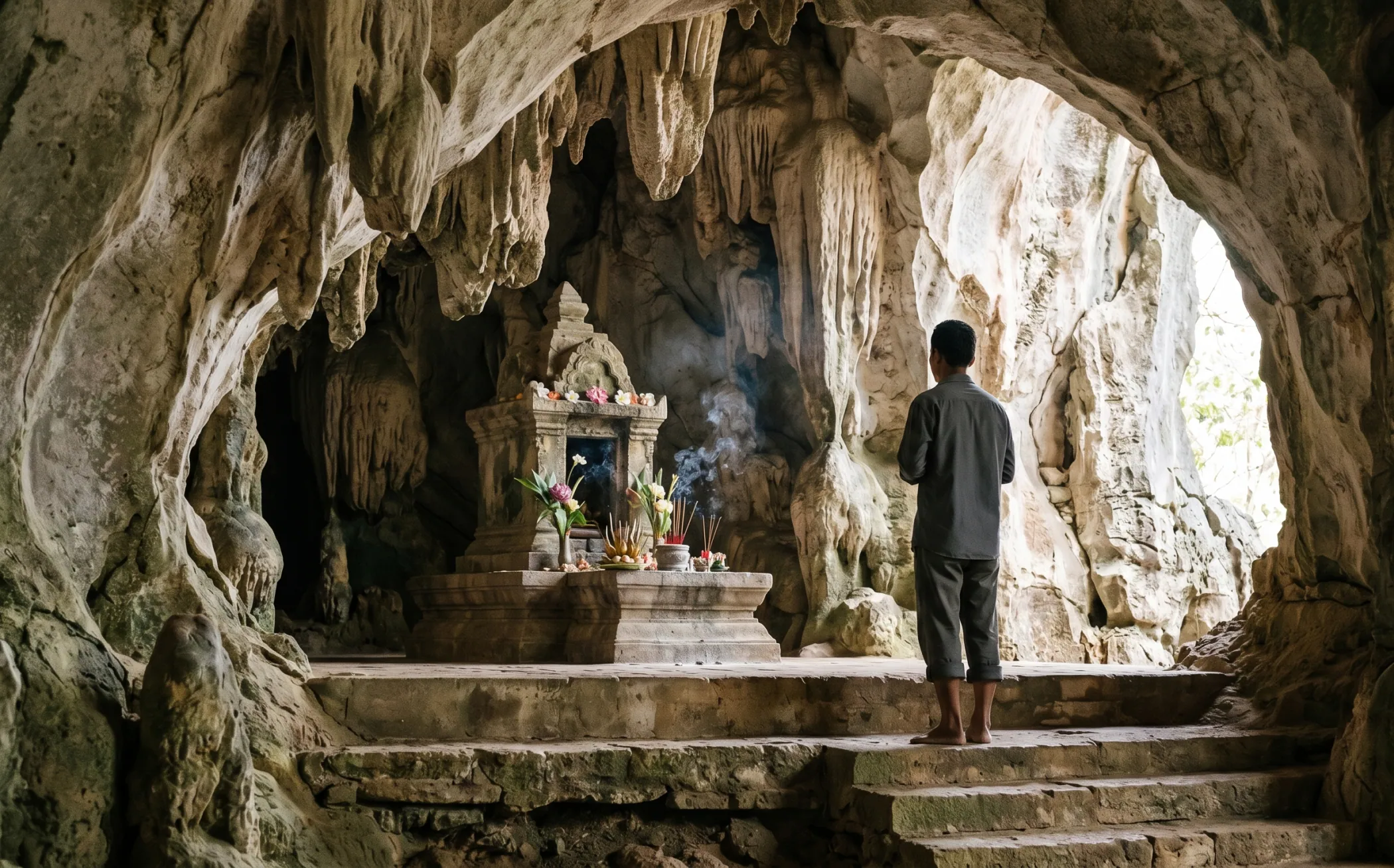
The old road via Kampong Trach is slower and more atmospheric if you have time - it passes through villages and countryside that the main road bypasses, and the limestone hills there are also where the Phnom Chhngok cave temple sits, ten minutes off the route. Worth knowing about for the return journey if you want to see something different.
The crab market: how it works and when to go
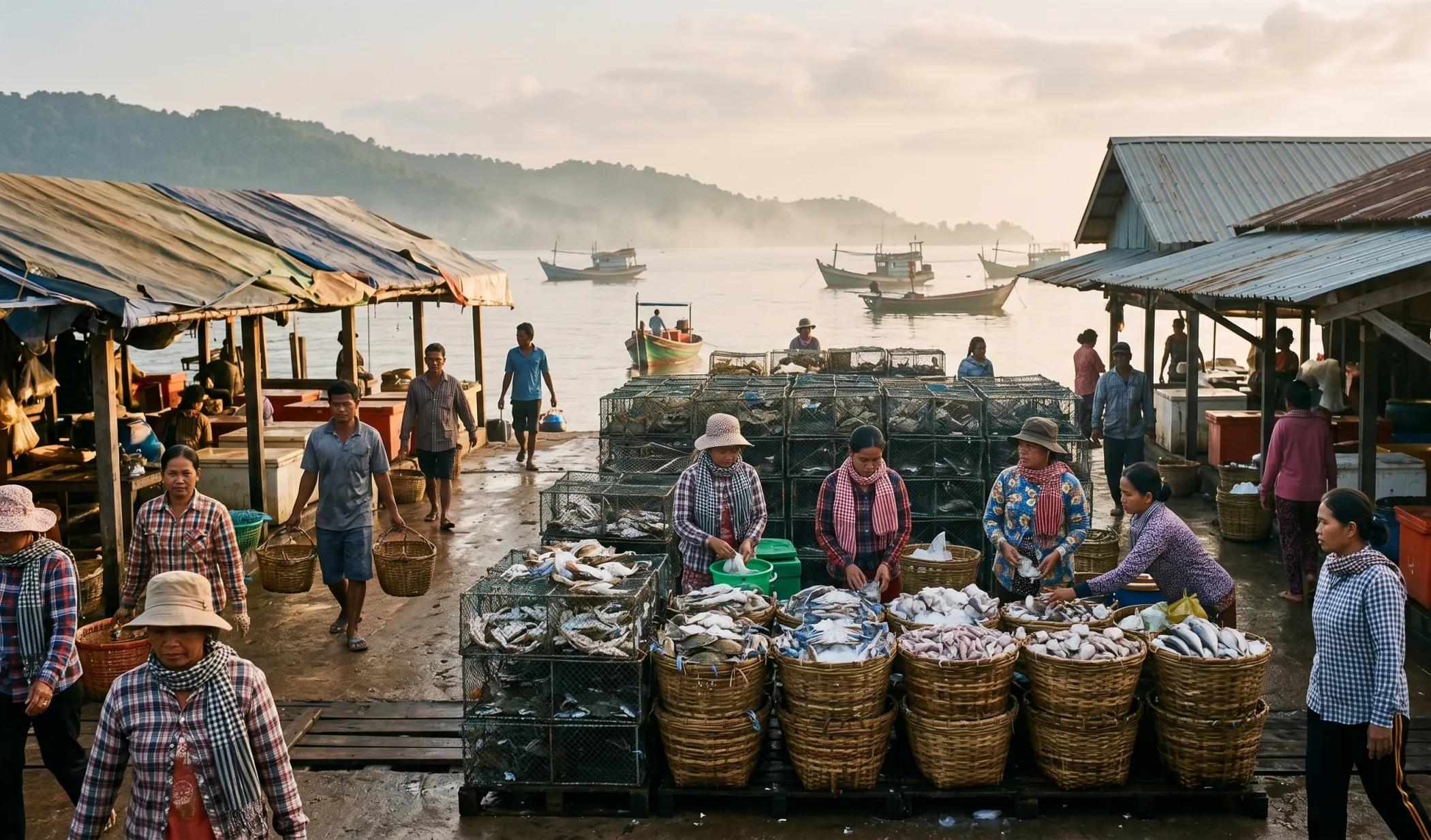
The crab market - Psah Kdam in Khmer - is a covered market on a wooden pier that extends over the water along the Kep shoreline. Fishing boats offload their catch directly below it. Women sell live crabs by the kilo from buckets along the pier; restaurants behind the market cook them to order. The whole operation is compact and continuous throughout the day, but it is best before 10am.
After 10am, the tour groups arrive from Phnom Penh. The market is still perfectly good then - the crab is equally fresh - but the atmosphere shifts from something local and functional to something managed for visitors. Arriving early means you are there when it still belongs to the people who work it.
How ordering works: you can buy directly from the women on the pier and have them cook the crab at one of the market stalls for a small additional fee - this is the cheapest and most direct approach. Alternatively, sit at one of the restaurants behind the market, order from a menu, and they will buy and cook for you at a slight markup. Both work. The restaurants have the advantage of a proper table, shade, and a sea view.
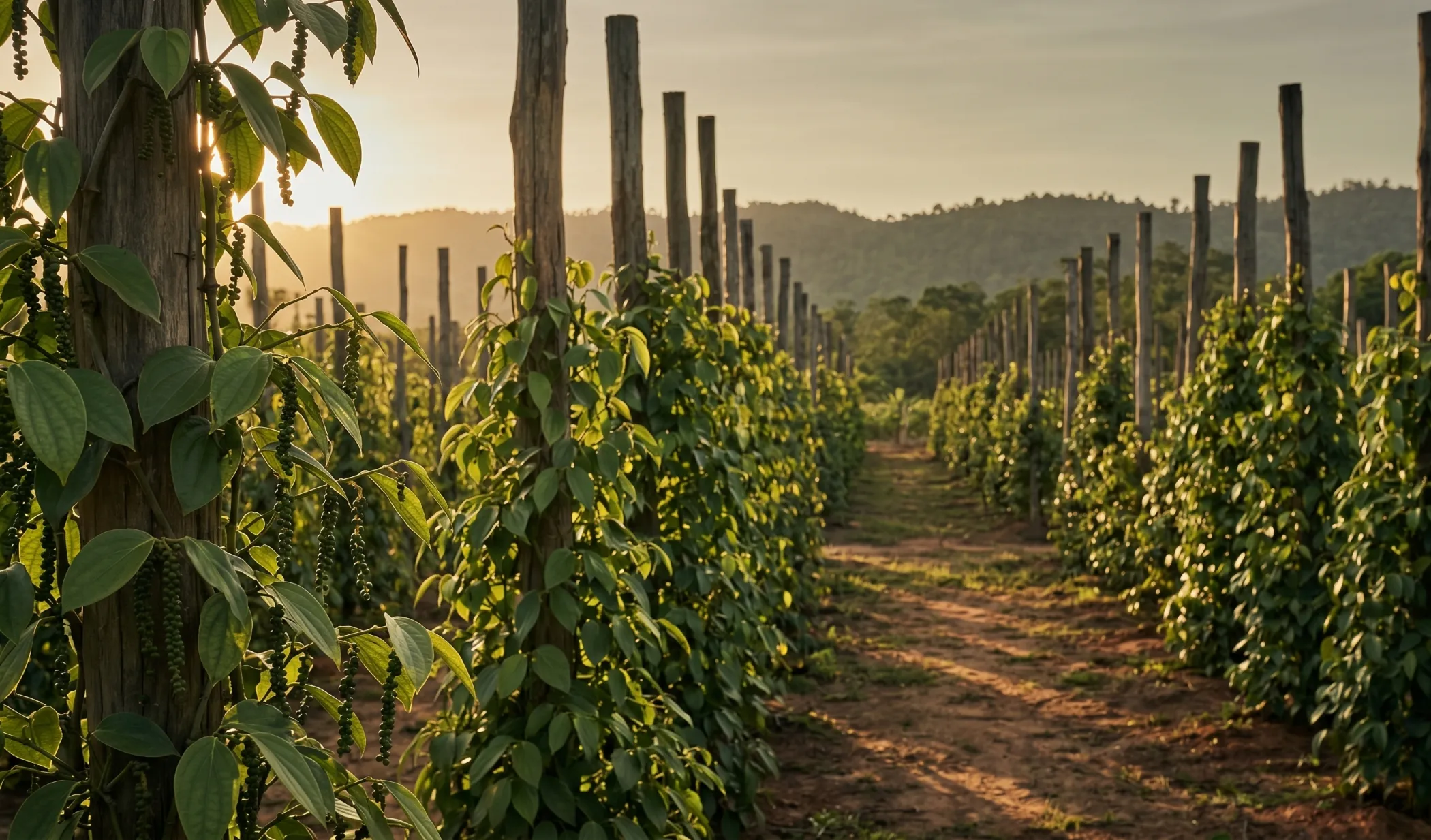
What to order: the signature dish is blue swimmer crab stir-fried with fresh green Kampot pepper - one of the few dishes in the region where you taste the pepper as clearly as the seafood. A plate of crab runs $6–$10 depending on the size of the crabs and the season. Shrimp and squid are also excellent and cheaper; both are pulled from the same waters that morning.
One honest note on sustainability: overfishing of blue crabs has been an issue in the Kep area for some years. A number of higher-end restaurants in Kep have stopped serving Kep crab specifically in response. It is worth knowing about, not as a reason to avoid the market, but as context for why the crab you’re eating is not infinitely available.
Kep National Park: the walk most people skip
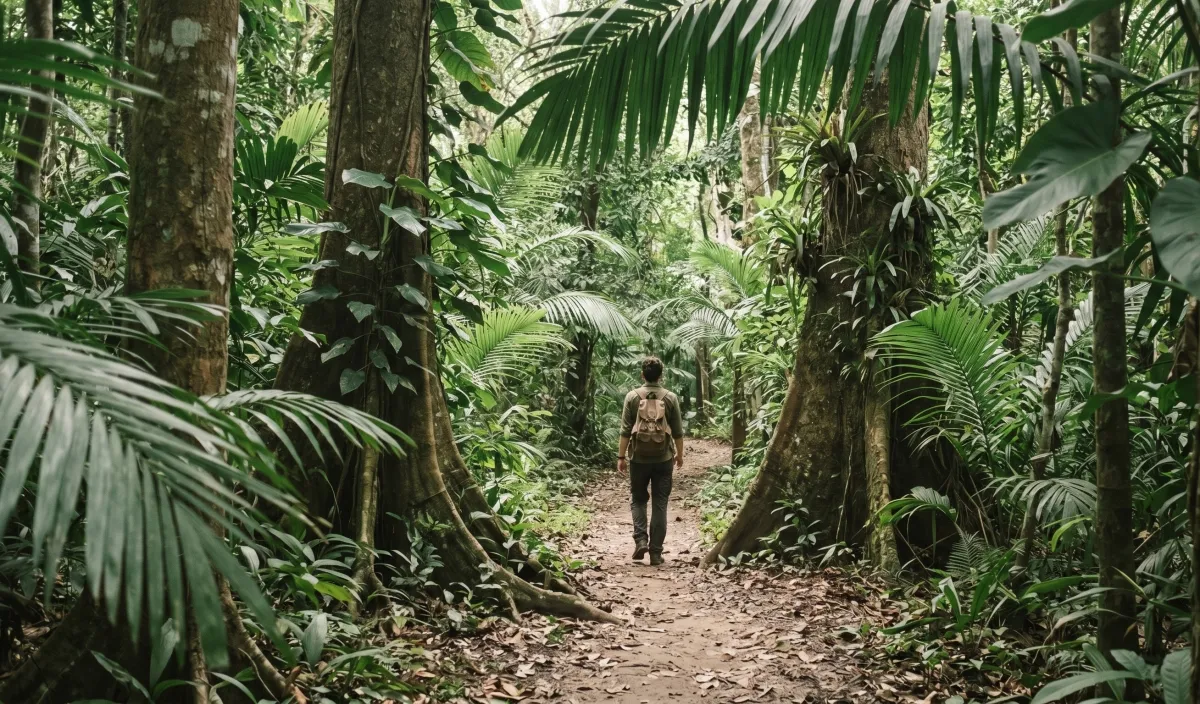
Kep National Park is the part of the day trip that most itineraries reduce to a footnote, which is a mistake. It is one of the more rewarding things to do in the entire region: shaded forest trails, wildlife including long-tailed macaques and kingfishers, views of Phu Quoc Island and the Vietnamese coast from the western ridge, and the ruins of abandoned villas half-reclaimed by the jungle.
The park covers 11.52 square kilometres and has an 8-kilometre main circuit that is well-marked with yellow signs throughout. The main entrance is behind Veranda Natural Resort; there is a second entrance near Kep Lodge. Entrance fee is $1 per person. The circuit takes two to three hours at a walking pace, less if you are moving quickly, more if you stop at the viewpoints.
Do it in the morning, before the heat peaks. The trail is shaded for most of its length, but the exposed sections and the climb to Sunset Rock are uncomfortable after noon. Bring water - there are no shops on the trail, though Led Zep Café (a small café inside the park, about 300 metres from the main entrance) sometimes sells cold drinks and has free maps. Wear proper shoes. Do not attempt this in flip-flops.
The highlight is Sunset Rock, a viewpoint on the western ridge with panoramic views over the Gulf of Thailand and - on clear days - the outline of Phu Quoc Island 15 kilometres offshore. The route to it from the main trail involves a short but steep climb worth the effort. Get there and stop. The view is the reason to come.
The villas: what you are actually looking at
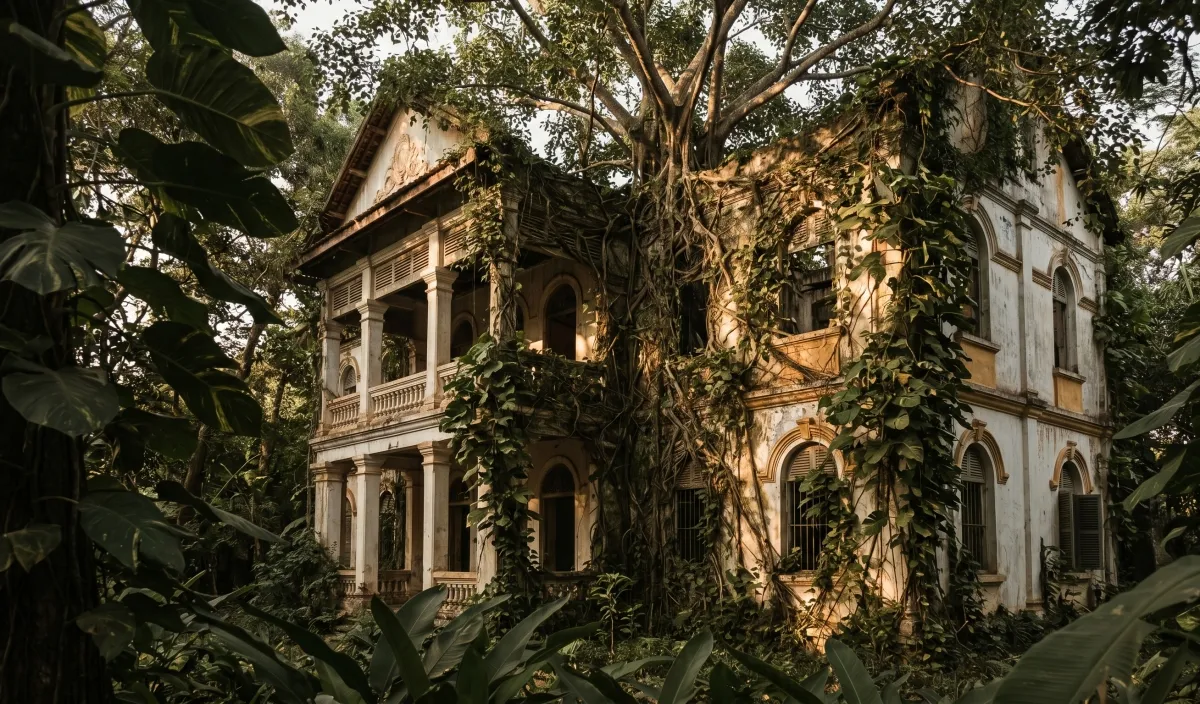
Driving through Kep’s hillside roads, you pass structures that stop you in ways other ruins don’t. They’re not ancient. They’re mid-20th century. Most of them are in better structural shape than you’d expect.
Kep was established as a French colonial resort in 1908 and was known as Kep-sur-Mer. After Cambodia’s independence in 1953, it became the focus of something more ambitious: a building programme overseen by architect Vann Molyvann and others who were developing a new Cambodian modernism - a movement that came to be called New Khmer Architecture. Stilted houses with wide verandas, concrete forms that borrowed from Bauhaus and Le Corbusier and filtered them through Khmer spatial sensibility. Hillside villas for diplomats, artists, and the Phnom Penh elite. Catherine Deneuve came here. There was a casino.
A 2012 survey documented 157 abandoned villas from this era. More have deteriorated or been demolished since. The ones that remain sit on the hillside roads above the beach - roofless in many cases, thick with vegetation, identifiable mainly by their shapes and the confidence of their concrete forms. They were not bombed. They were simply left, in 1975, when the Khmer Rouge cleared the town and its residents, and then abandoned for nearly three decades while the area remained a Khmer Rouge stronghold. Neglect, looting, and jungle did the rest.
There is no formal tour. You drive the hillside roads slowly and find them yourself. A few have been partially restored - Knai Bang Chatt, a luxury resort near the beach, is built from restored mid-century villas and gives you some sense of what the architecture looked like with its original intentions intact. Most are not restored. Most are just there, on a hillside above the sea, slowly being taken back.
Lunch and the afternoon
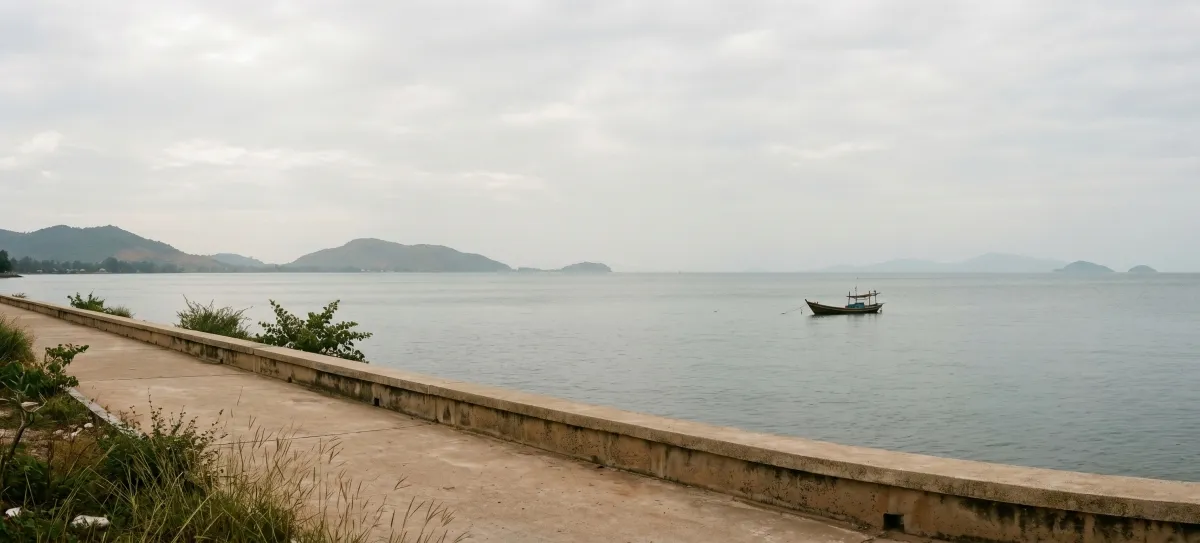
After the crab market and the national park, the day calls for a table somewhere with a sea view and no particular urgency. The restaurants along the waterfront - most of which are simple, family-run places with extensive menus of seafood and Khmer dishes - provide exactly this.
Kimly Restaurant is the best-known name along the crab market strip and consistently recommended for its crab and seafood. Prices have climbed with its reputation; it is still good value by any outside benchmark. La Baraka and Toucan are slightly more Western in orientation and worth knowing about if you want something beyond Khmer. Most waterfront restaurants are open from late morning until whenever the customers stop coming.
Kep beach is a short walk from the crab market and worth a brief stop, but be clear-eyed about what it is: a shallow, sheltered bay that is popular with Cambodian families on weekends for swimming and picnics, and does not have the water clarity or sand quality that the word “beach” might suggest if you are coming from elsewhere. The light on it in the afternoon is pleasant. It is not the reason you came.
If you have more time: Koh Tonsay
Koh Tonsay - Rabbit Island - is a 20-minute boat ride from Kep pier. It is a small island with a single beach, simple thatch bungalows, no wifi, and electricity only in the evenings. Boats run throughout the day from the pier near the crab market; a return ticket costs around $8–$10.
If you are visiting Kep as a day trip from Kampot, Koh Tonsay is better as an overnight extension than a quick add-on. The island is worth the time it takes to actually settle in. An hour there before catching a return boat is not enough.
Getting back
Leave Kep before 4pm if you want to avoid riding back in the dark. The road is well-surfaced and not heavily trafficked, but the last fifteen minutes of the drive back into Kampot can be disorienting without daylight. The return journey, if you take the countryside road rather than the highway, gives you the paddy fields and the Elephant Mountains at the end of the afternoon - a different light than the morning and, in the dry season, a different shade of orange altogether.
Kep rewards arriving early, moving at its own pace, and leaving before the day gets too long. One good morning at the market and a couple of hours in the park is usually enough to understand what makes it worth the thirty kilometres.
Whether that sends you back to Kampot satisfied, or keeps you in Kep for a night, is a question the day answers itself.