The town of Kampot is roughly four kilometres across at its widest point. You can walk from the old quarter to the market in fifteen minutes. Without a scooter, that is the Kampot you get: the walkable centre, plus whatever is reachable by tuk-tuk.
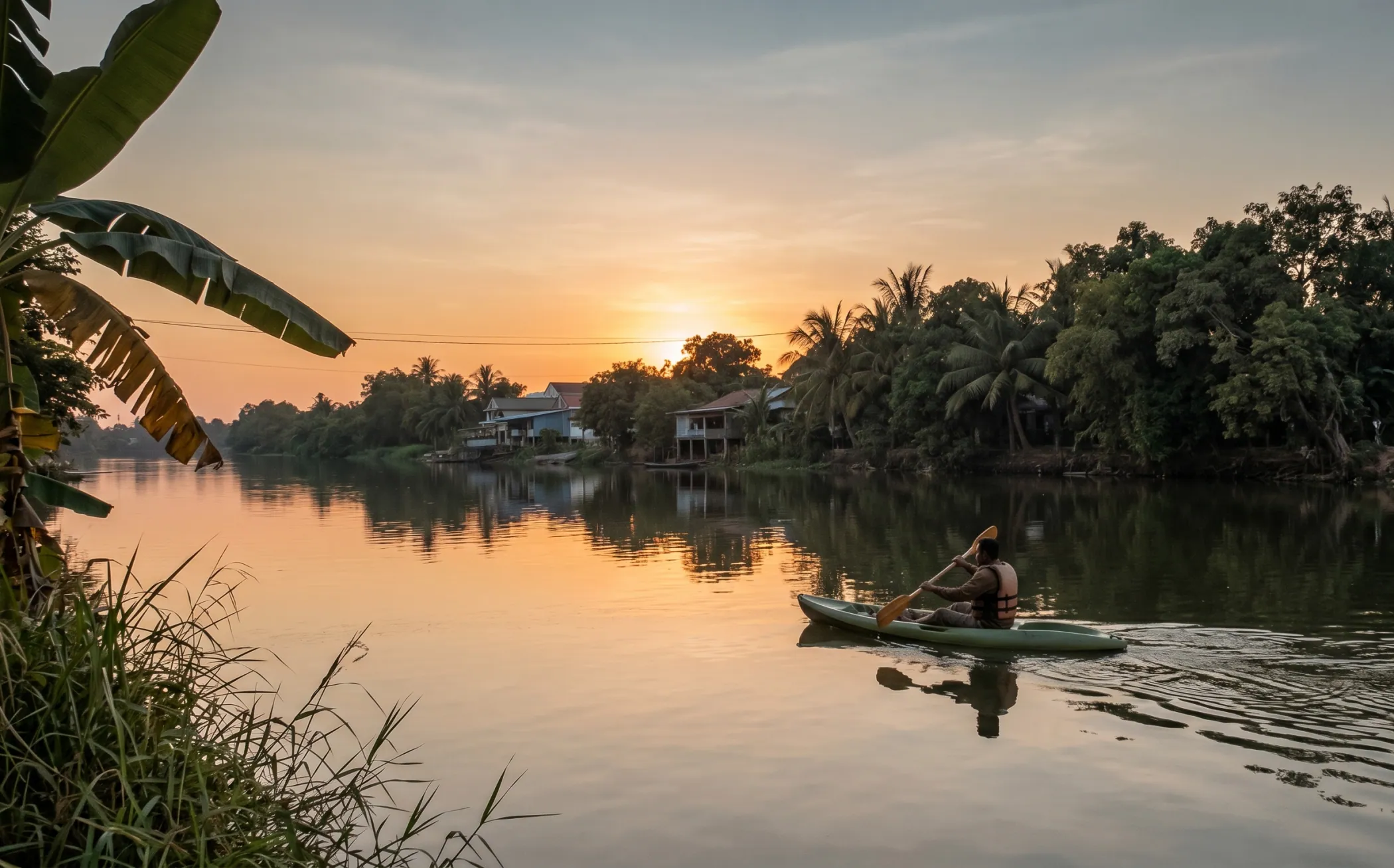
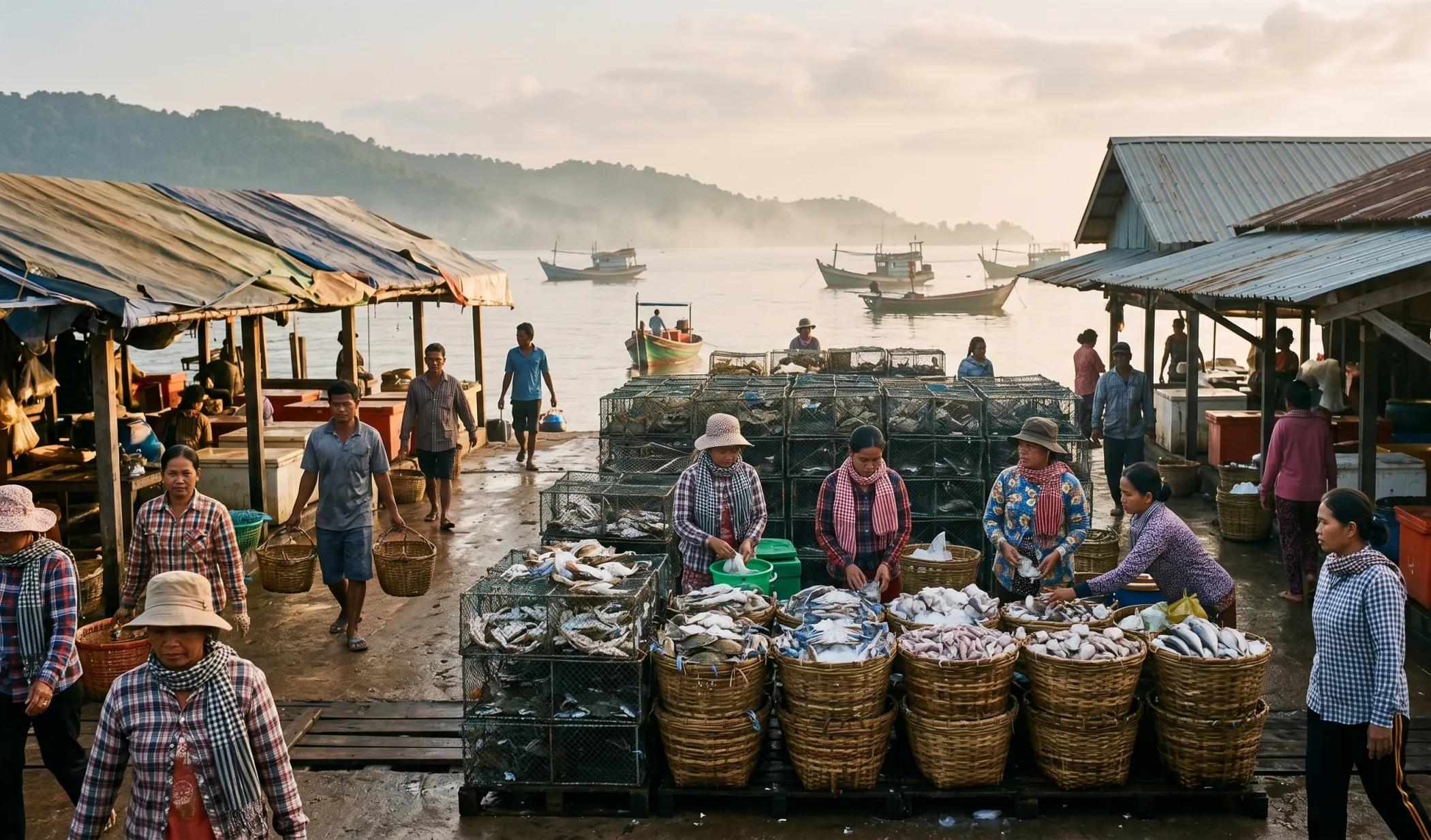
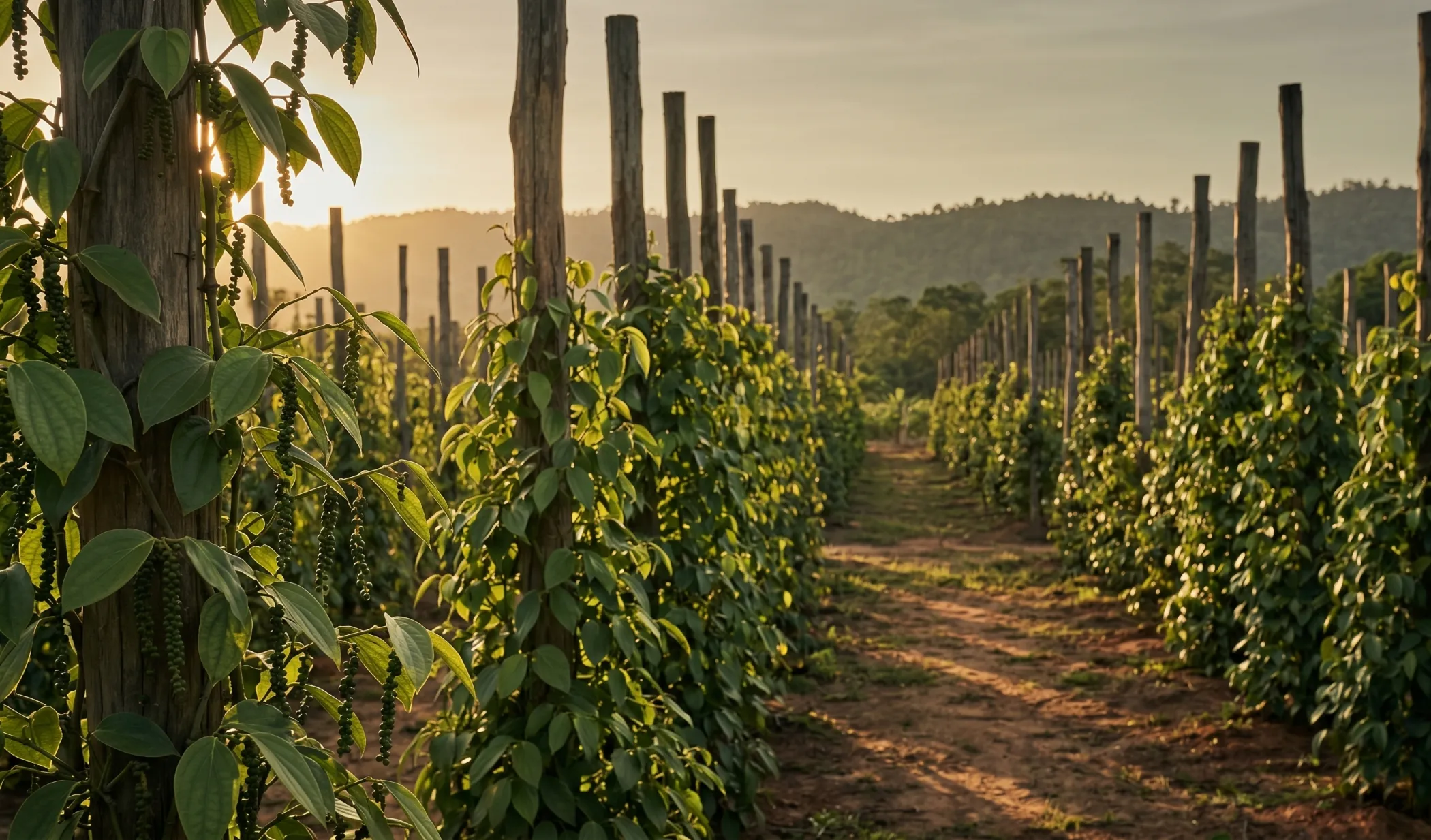
With a scooter, the town expands. The pepper farms are twenty minutes east. The Green Cathedral is fifteen minutes north. Kep is forty minutes along a flat road through rice paddies. Bokor Mountain is forty-five minutes of winding ascent through forest. The river road stretches north along the bank and reveals guesthouses, restaurants, and stretches of countryside that most visitors never see. A scooter does not just give you transport - it gives you a version of Kampot that is two or three times the size of the one you can access on foot.
This guide covers everything you need to make the decision: rent or buy, which type, what to pay, what the licence situation actually involves, and what to do when something goes wrong.
Renting: daily and monthly rates
Most guesthouses and guesthouse-adjacent rental shops in Kampot rent scooters from their front desk or from a shop next door. Daily rates for a standard semi-automatic 110cc run $5-8. For a larger or newer bike - a Honda Click 125, a Honda Vario, or similar - expect $8-12 a day.
For stays of a week or longer, ask about a weekly or monthly rate. The daily price almost always drops with negotiation. A month on a semi-auto typically runs $60-100 depending on the bike’s condition, age, and how firmly you negotiate. A Honda Click or equivalent for a month runs $80-120.
What to check before you take a bike: test the brakes on both wheels - front and rear separately. Check the horn works (it is used constantly in Cambodia, not as aggression but as communication). Look at the tyres for obvious wear or embedded objects. Make sure the lights work front and rear. If the rental shop won’t let you check these things, go to a different rental shop.
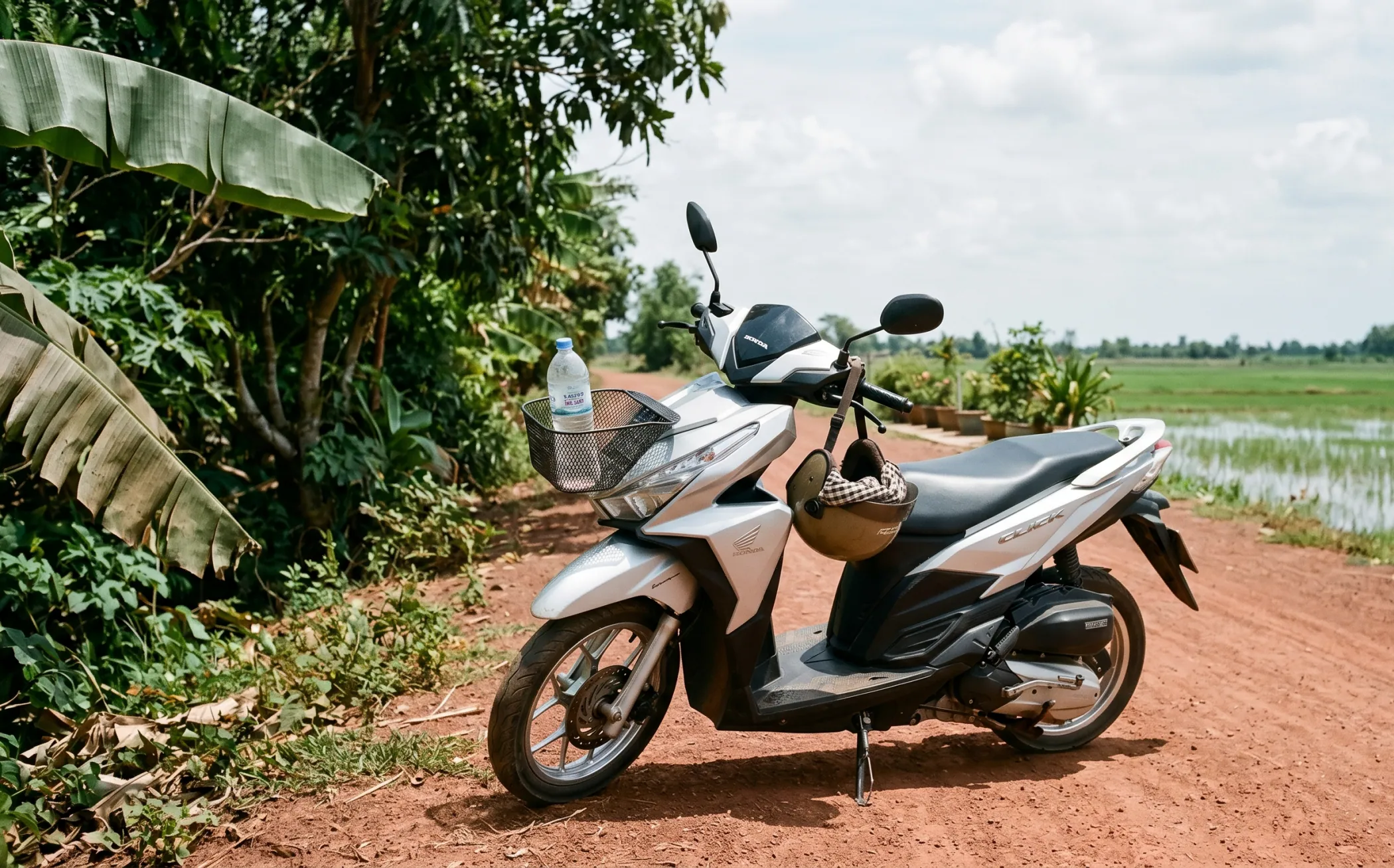
Helmets: a helmet should be provided with any rental. Wearing it is both legally required and strongly advisable. Cambodia’s roads are generally manageable at town speeds, but the road surface in Kampot has potholes, unexpected speed bumps, and the occasional vehicle pulling out without warning. A helmet is not optional.
Where to rent: the shops people rate
The guesthouse front desk is the easy answer and usually a fine one. If you would rather deal with a shop whose bikes are its actual business, these are the ones Kampot’s Google reviews keep returning to, grouped by where they are in town. The bar is a rating of 4.0 or better from at least 15 reviews, checked in October 2026. Ratings drift and shops change hands, so glance at the current score before you walk over. Nearly every shop holds your passport as the deposit, which is standard in Cambodia; if you would rather not, ask about a cash deposit before you choose. The table is the short version, ranked by rating; the notes that follow are the long one.
| Shop | Where · closes | Rating |
|---|---|---|
| Motorbike Kampot | North of Durian roundabout · closed Sun | 5.0 (220) |
| T-DA Motor Bike Rental | South of the old quarter · to 7pm | 4.9 (146) |
| Dirt Bike Adventure & Rentals | Kep road, 1km east · to 7pm | 4.9 (69) |
| Heng Heng Motorbike Rental | Street 3, north of roundabout · to 6pm | 4.5 (15) |
| Romantic 168 | South of the old quarter · no hours listed | 4.4 (16) |
| Romantic 169 | Street 724a · to 7pm | 4.3 (45) |
| Tree Travel Tours | Old Market Street · to 8.30pm | 4.2 (100) |
| Monika Motor Rental | Street 714 · to 10pm | 4.0 (52) |
North of the Durian roundabout, by the river. Motorbike Kampot is the best-reviewed rental in town by a distance - 5.0 from 220 reviews - and it is run by an American-Khmer couple, David and Keo, which matters to people who are uneasy about leaving a passport with a stranger. Bikes are described as new, and you leave with a list of places to ride to. Closed on Sundays, and they prefer a two-day minimum. 088 875 2454. A few streets east, Trakana Motor Rental runs out of Trakana Guesthouse - only six reviews, all five stars. Monika Motor Rental on Street 714 stays open until 10pm and stocks the semi-automatic Yamaha PG-1, which reviewers rate for countryside roads; at 4.0 from 52 reviews it is the lowest score on this list, and the critical reviews are about bikes going out with faults, so check the lights before you leave. 015 252 191. Heng Heng Motorbike Rental on Street 3 is the cheap option: reviewers report $5-6 a day for a 110cc. Closes at 6pm. 081 838 465.
The old quarter. Tree Travel Tours on Old Market Street is the one you will walk past: 4.2 from 100 reviews, scooters and bicycles both, around $5 a day for a semi-auto and $3-4 for a bicycle, and a guide for the Bokor climb if you fancy doing it on a push bike. They hold your passport and quote a $1,000 replacement charge if a bike is stolen. Open until 8.30pm.
South of the old quarter, Streets 724a and 726. Three rental shops within a hundred metres of each other, a block back from the river. T-DA Motor Bike Rental is the standout, 4.9 from 146 reviews, open until 7pm. 012 245 303. Romantic 169 on Street 724a is a tour agency that also rents (4.3 from 45) and will handle a visa extension while you are there; most reviews are warm, but at least one month-long renter was left with a dead bike and a dismissive reply, so inspect carefully and take the photographs. 010 988 096. The similarly named Romantic 168 nearby (4.4 from 16) is the old-school version - an older owner, a Honda Click for about $7 a day according to one reviewer, happy to top up the oil when you call in. 097 825 0168. Kampot Adventure Motorbike Rental on Street 726, German-owned, is the one for taller riders: 150cc bikes for around $9 a day. Only nine reviews, 4.6, with one complaint about the owner being hard to reach at return time.
East, out on the Kep road. About a kilometre east of the centre on National Road 33, Dirt Bike Adventure & Rentals (4.9 from 69) is the specialist operator for the full-manual option described below: proper motorcycles, Honda CRF-type trail bikes, plus guided enduro tours, run by a French- and English-speaking owner. Closes at 7pm. 077 443 007. Campot Cross Two Wheels next door rents PG-1s and Honda Cross-type bikes and has 11 reviews, all five stars.
South-east, Street 704. Good Day Scooter Rental is attached to a guesthouse, open until 10pm, with 125cc automatics at around $7 a day. 4.9, but from only seven reviews. 087 559 996.
West of the river. Nothing on the Kampong Bay side has enough reviews to stand behind. Rent from your guesthouse, or ride over the old bridge.
Which type of scooter: the honest comparison
Three types cover the vast majority of what’s available in Kampot.
Semi-automatic 110cc (Honda Wave, Suzuki Smash, various Chinese equivalents): the standard rental and the most common bike on Cambodian roads. Has a manual gear shift (foot-operated) but no clutch lever - you change gears without clutching, which is easier than a full manual. Forgiving, reliable, cheap to run, easy to repair. Top speed around 80km/h but most comfortable at 40-60km/h on Kampot roads. The right choice for anyone who has ridden a scooter before and doesn’t need to carry two people regularly.
Automatic 125cc (Honda Click, Honda Vario, Yamaha NMAX): twist-and-go automatic, no gears to manage. More powerful and more comfortable than the semi-auto for longer rides. Significantly better for the Bokor Mountain road, which involves a long sustained climb. Storage under the seat is generous. The right choice for people who want easy town riding and occasional longer trips, or who have never ridden a manual or semi-manual before.
Full manual (Honda CRF, various 150-250cc trail bikes): for people who know how to ride a proper motorcycle and want to go off-road or into the mountains with more capability. Not the right first bike for Kampot and not what most rental shops stock. Available through specialist operators.
For most people visiting or living in Kampot, the semi-auto or the Honda Click are the correct choices. The semi-auto if cost is the priority; the Click if comfort and ease are.
Buying: the second-hand market
If you’re staying longer than two or three months, buying a scooter is almost always better value than renting. The maths are simple: a month’s rental at $80 multiplied by six months is $480, which is most of the cost of a decent used semi-auto.
Where to find second-hand bikes in Kampot: the Facebook group “Kampot Buy Sell” is the main local marketplace and has a consistent stream of scooters listed by departing expats, guesthouses offloading their fleets, and locals. Bikes are also listed on Khmer24, Cambodia’s main classifieds site. Asking at guesthouses is worth doing - they often know who is leaving and selling.
What to pay: a used semi-auto in roadworthy condition runs $400-600. A used Honda Click or Vario in good condition is $700-1,000. Prices above $1,000 for a used automatic are possible for newer, low-mileage examples. The golden rule: have the bike checked by a mechanic before handing over money. Mechanics in Kampot charge almost nothing for a pre-purchase inspection and will tell you plainly if something is wrong.
What to watch for: rust on the frame, worn chain (stretch it and check slack), brakes that feel soft or unresponsive, engine that starts reluctantly or runs roughly, smoke from the exhaust. Any of these are either a repair job or a negotiating point - not necessarily a reason to walk away, but worth pricing before you buy.
Selling when you leave: the market for used scooters in Kampot is active enough that you should be able to sell without much trouble. Post in Kampot Buy Sell two or three weeks before you leave. Price at the lower end of market and it will go quickly. Most bikes hold their value reasonably well if maintained.
The licence question, plainly stated
Cambodia’s licence rules for scooters are genuinely confusing, partly because the law and its enforcement don’t always match. Here is the honest picture.
The law: Cambodian law technically does not require a licence to ride a motorcycle under 125cc - but this exemption applies to Cambodians. Foreign riders are expected to carry either a Cambodian driving licence or a valid 1949 International Driving Permit (IDP) with motorcycle endorsement. Cambodia officially recognised the 1949 IDP in 2020. An IDP costs around $25 from official issuers in most home countries and is worth obtaining before you arrive.
In practice: enforcement varies significantly. In Kampot, police checkpoints are less frequent than in Phnom Penh or Siem Reap. Many expats ride for months without being stopped. When stops do happen, the typical outcome is either a wave-through or a fine that is negotiated down - the official fine for riding without a licence ranges from $10-50, but $5-10 is the common real-world resolution. This is not a recommendation to ride without documentation. It is an honest description of how it often plays out.
The insurance issue is more serious than the fine: most international travel insurance and health insurance policies void motorcycle coverage if the rider does not hold a valid motorcycle licence and appropriate documentation at the time of an accident. This means that if you crash without proper documentation, you may be personally liable for medical costs that could run to tens of thousands of dollars. The fine from a police checkpoint is trivial compared to this exposure. Get the IDP. Carry it.
Long-term residents: if you are staying in Cambodia for more than a few months and riding regularly, obtain a Cambodian driving licence. The process involves submitting your home country licence, passport, and visa at the Ministry of Public Works and Transport office in Phnom Penh or through a local agent. First-time licence costs approximately $60; renewal is around $25/year. It resolves the legal ambiguity entirely and is worth the trip to Phnom Penh to handle properly.
Riding in Kampot: what’s different from home
Kampot’s traffic is light by Cambodian standards and considerably lighter than Phnom Penh or Sihanoukville. The town centre streets are manageable even for people who have not ridden in Asia before. A few things that catch people off guard:
Road hierarchy is informal: size generally has right of way, but not always. Tuk-tuks, trucks, and buses pull out without warning. Stay aware of what is beside and behind you, not just in front.
Speed bumps appear suddenly: often unpainted, often just before intersections or at village entrances. Hit one at speed and you will notice. Slow down when approaching any road marking or change in road surface.
Potholes after rain: the roads around Kampot are generally good, but the approach roads to the Green Cathedral and several countryside routes develop potholes and mud after heavy rain. In the wet season, allow more time and lower your speed on anything unpaved.
Driving at night: the river road and countryside roads are unlit. Night riding is manageable but requires more care than daytime - livestock on the road, unlit vehicles, and poor road surface visibility all increase the risk. If you’re unfamiliar with the roads, avoid them after dark until you’re not.
When something goes wrong
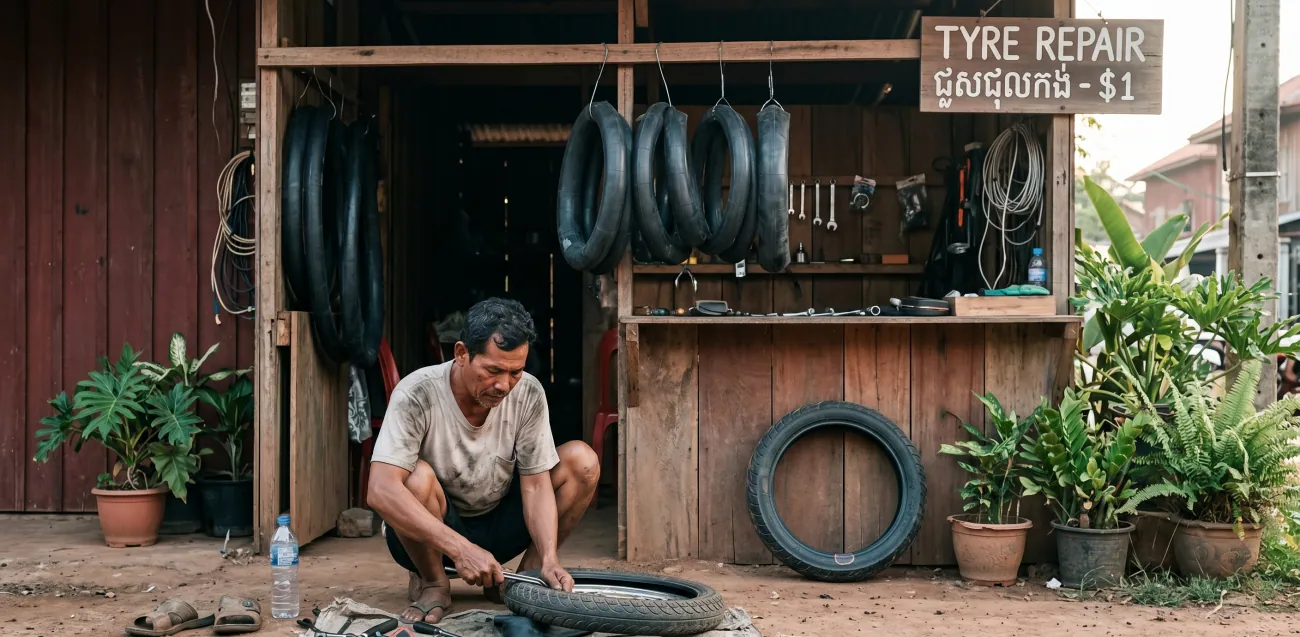
Tyre punctures: the most common mechanical issue in Cambodia, and the least stressful. Roadside tyre repair shops are present throughout Kampot and on most main routes - you will rarely be more than a kilometre from one. The repair takes ten minutes and costs $1-2. Push the bike if necessary; do not ride on a flat.
Breakdowns: for anything more serious, a Google Maps search for “motorbike mechanic Kampot” will return several options close to town. Mechanics are inexpensive by any standard - a carburettor clean is $3-5, a brake cable replacement is $2-4, an oil change is $3-5 including the oil. Most repairs that would cost $150 in Europe cost $15-30 here.
Accidents: stop, stay calm, do not move the bike until you have documented the scene if anything serious has happened. Call your insurance provider’s emergency line. In any accident involving injury, contact the police (117) and your guesthouse or a trusted local contact who can translate.
If your rental bike has a problem: document it before you return it. Photograph any existing damage before you take the bike out. Disputes about damage on returned rental bikes are a known issue in Cambodia - not endemic, but present. Five minutes of photographs at the start avoids the conversation at the end.
Kampot is not a difficult place to ride a scooter. The roads are quiet, the distances are short, and the learning curve for anyone who has ridden elsewhere is minimal. The town rewards having your own transport in a way that few places this size do - because what’s interesting about Kampot is not in the centre but on the roads radiating out from it.
Get the IDP before you leave home. Get the bike on your first or second day. Then go and see what’s out there.