Kampot has no airport. It has one railway line, which runs one train a day in each direction, and two roads that matter: National Road 3 from Phnom Penh, and National Road 33 east to Kep and the Vietnamese border. Everything below is a variation on those three facts.
The one thing to unlearn before you start: Kampot is not two hours from Phnom Penh on the new expressway. The Phnom Penh–Sihanoukville Expressway runs west through Kampong Speu and Koh Kong, and the junction it offers for Kampot sits well past the town, in Sihanoukville territory. Taking it means overshooting and doubling back. The road to Kampot is National Road 3, which is sealed, flat, mostly two lanes, and takes about three hours in a car once you have cleared the capital.
Times, fares and departures below were checked against the operators’ own listings on 12 October 2026. They move, so treat the table as the shape of things rather than a timetable.
| From | Usual choice | Time · cost |
|---|---|---|
| Phnom Penh | Shared van, every half hour until late morning | 3–3.5h · $6–8 |
| Phnom Penh | Giant Ibis coach, 8am or 2.45pm | 4h · $10 |
| Phnom Penh | Train, 7am daily | 4h15 · $11–12 |
| Phnom Penh | Private car | 2.5–3h · $50–80 |
| Techo airport | Private car direct, or airport bus into town then a van | 2.5–3h · $70–80 direct |
| Sihanoukville | Shared van, late morning, or the 2pm train | 2.5–3h · $10 |
| Kep | Tuk-tuk, or a $5 van | 35–45 min · $5–15 |
| Ha Tien (Vietnam) | Van across the Prek Chak border | 1–2h · from $10 |
| Siem Reap | Giant Ibis night bus, 10.30pm | 11h · sleeper |
From Phnom Penh
The 148 kilometres between the capital and Kampot are covered by more operators than any other route to the town, which is why it is cheap. You are choosing between speed, comfort and departure time, and the honest ranking is below.
| Option | Departs · takes | Cost |
|---|---|---|
| Shared van (Kim Seng, E-Booking Express, Vibol, Capitol) | Every 30 min, 6–11.30am · 3h scheduled | $7–8, $6 online |
| EVGo electric six-seater | Hourly from 6am · 3h | $8, $6 online |
| Giant Ibis coach | 8am and 2.45pm · 4h | $10 |
| Sleeper bus (E-Booking Express) | 5.15am · 3h | $9–11 |
| Train (Royal Railway) | 7am · 4h15 | $11–12 |
| Private car | When you like · 2.5–3h | $50–80 |
The vans are how most people actually travel. Fifteen-seat Toyota minibuses leave Phnom Penh every half hour through the morning, take three hours on the schedule and nearer three and a half once the city has had its say, and cost $7 or $8 at the counter, usually $6 if you book on BookMeBus or a similar app the day before. Kim Seng Express has the most departures and the most reviews; E-Booking Express and Vibol Express run the same road at the same price. They are quick, air-conditioned and tightly packed, with little room for luggage and no toilet stop worth planning around. If you are tall or carrying a surfboard’s worth of bags, the van is not the comfortable choice. It is the fast one.
EVGo runs electric six-seaters on the same schedule for the same money. Six seats instead of fifteen is the whole argument, and it is a good one.
Giant Ibis is the civilised option and the slow one. Two departures a day, at 8am and 2.45pm, from the company’s own terminal on Street 106 by the Night Market in Phnom Penh, with free pick-up from partner hotels if you ask in advance. The coach takes four hours - the operator’s own timetable says so, and it is right - and costs $10, which buys a reclining seat with more legroom than the vans, a pastry, water, a cold towel and wifi that works until the countryside begins. There is no toilet on board and no toilet stop. In Kampot it drops you at the Giant Ibis office on Street 724, just off the Durian roundabout and about 250 metres from the river, with tuk-tuks waiting. If you have not been to Cambodia before, this is the one to take.
The sleeper bus at 5.15am is a curiosity on a three-hour route: a 30-berth night bus that happens to run in the morning. It works if you want to lie down, which after a red-eye into Phnom Penh is not nothing.
A private car is $50–$80 depending on who arranges it, how new the car is and how hard you ask. A hotel will quote the top of that; a driver you meet on the street or through a Kampot guesthouse will quote the bottom. Two and a half to three hours, door to door, and the only option that leaves when you are ready rather than when the schedule says. For a family or three people sharing, it is the same money as the coach.
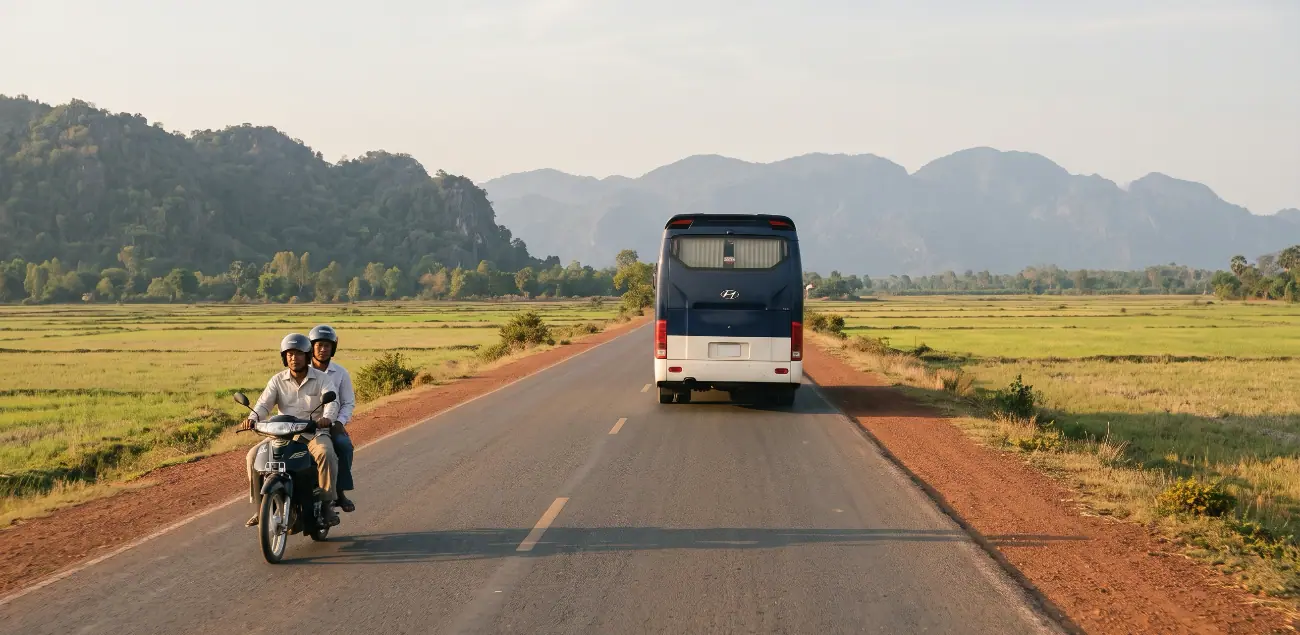
Going back the other way, the vans run from Kampot from 6.30am to 6.30pm, and Giant Ibis leaves its Kampot office at 8.30am, 2.45pm and 7pm. The 7pm is the one to know about: it is the only sensible way to be in Phnom Penh late in the evening without a private car.
The train
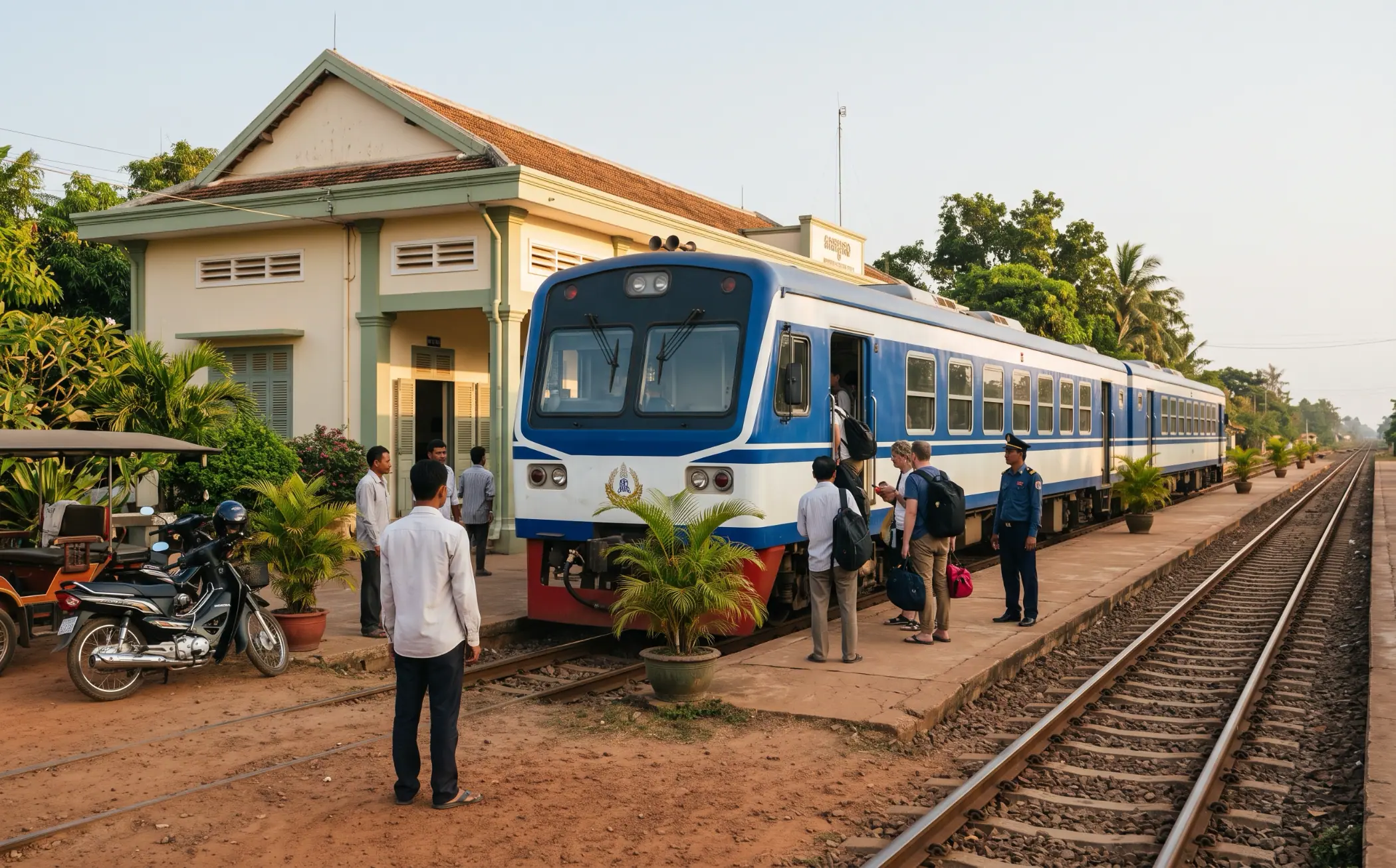
Royal Railway runs one train a day each way on the southern line between Phnom Penh and Sihanoukville, and Kampot is the stop that matters in the middle of it. It leaves Phnom Penh at 7am, calls at Takeo and Kep, and reaches Kampot at 11.15am; it carries on to Sihanoukville for 1.30pm. Coming back, it leaves Sihanoukville at 2pm, Kampot at 4.15pm, and gets into Phnom Penh at 8.30pm. Phnom Penh to Kampot is $11–$12, Kampot to Sihanoukville $8–$9. The carriages are the ex-Japanese KiHa diesel sets the company bought from Hokkaido, air-conditioned and perfectly comfortable, and the line runs through the rice country that the road only skirts.
Two warnings. The train is late more often than it is on time, by anything from twenty minutes to an hour, and the reviews on every booking site say so; do not plan a tight connection off the back of it. And the schedule has changed several times in the last few years - weekends only, then twice a day, now once - so check it the week you travel rather than the month before. Tickets are sold at the stations, through BookMeBus and Baolau, and through the company’s own booking page. They are not refundable or changeable.
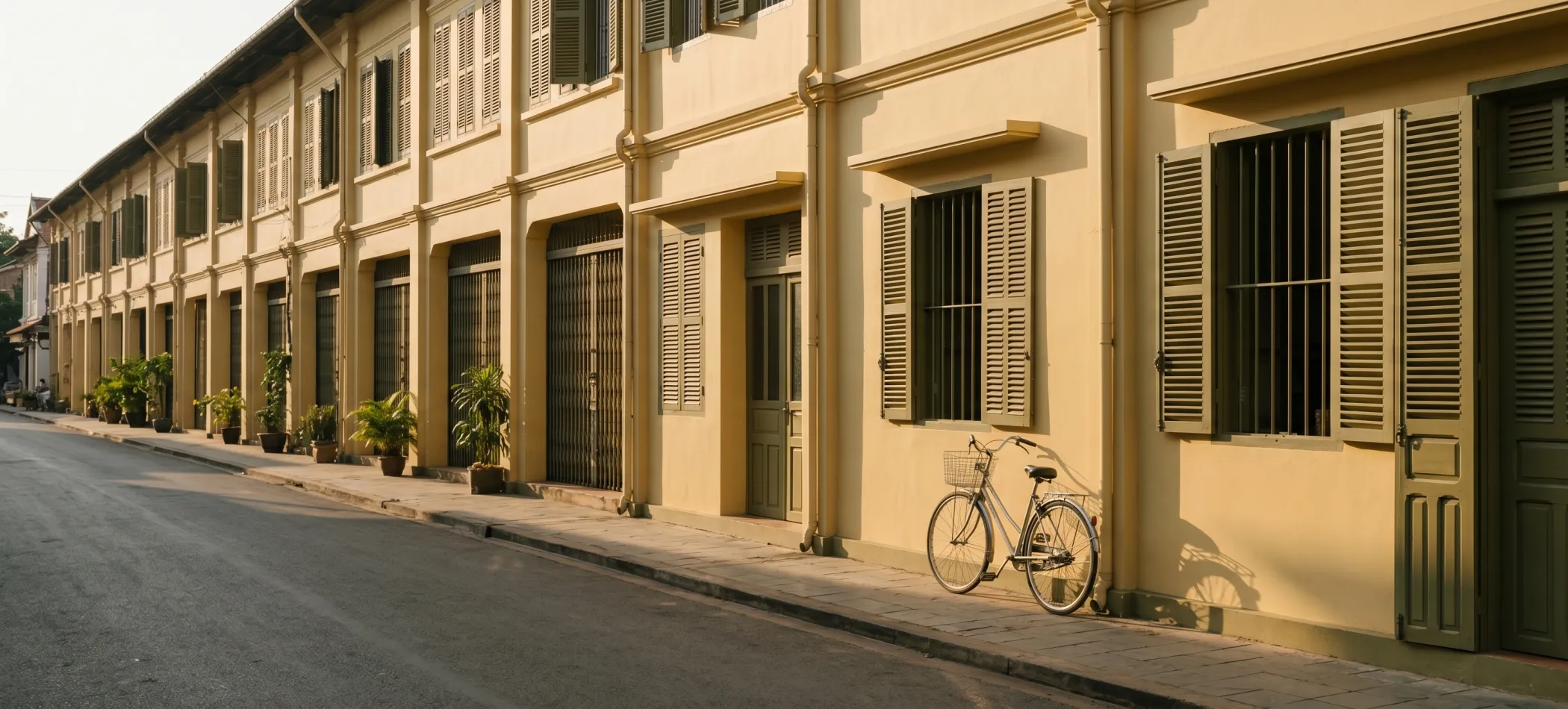
Kampot station is on the southern edge of the old quarter, a colonial building with the stillness of a place that once mattered more. It is a ten-minute walk to the river. If the timing works and you are not in a hurry, this is the best way to arrive.
From the airport
Phnom Penh’s airport is now Techo International, which opened in September 2025 about 20 kilometres south of the city. It is in the right direction for Kampot, which is the only useful thing about its location.
Direct by car is the simple answer. The private transfer companies quote $70–$80 for a sedan from the airport to your door in Kampot, two and a half to three hours, and because the airport sits south of the city you skip most of the Phnom Penh traffic that makes the journey from the centre longer. For two or more people arriving on an international flight, this is what to book. Arrange it before you land; the airport taxi rank will quote more.
The cheaper route is into the city and out again. The Airport Express Bus runs from outside arrivals to Kouch Kanong Circle on the north side of the city from 5.30am to 11.30pm for a few thousand riel, and takes an hour and a half or more. A tuk-tuk on PassApp or Grab is about $8 and an hour; a car about $15–$20. From there you want one of the van counters for the morning departures, or the Giant Ibis terminal for the 2.45pm. Count on five hours for the whole thing. If your flight lands after about 11am, you have missed the morning vans and the practical choices are the 2.45pm Giant Ibis or a night in Phnom Penh, which is not the worst outcome - see Phnom Penh or Kampot for what the capital is for.
Sihanoukville’s airport is the other option on paper, two and a half hours from Kampot by car. It has a thin schedule of flights, mostly to Kuala Lumpur, Ho Chi Minh City and Siem Reap, and the car from there costs about the same as from Techo. It only makes sense if your flight already goes there.
From Sihanoukville
Shared vans from Sihanoukville leave late in the morning - Kampot Transports and Rith Travel at 10.30 and 11.30am, Vibol Express at 11.30 - and take two and a half to three hours for $10. The train leaves Sihanoukville at 2pm and reaches Kampot at 4.15pm for $8–$9, which is both the nicest and the slowest-feeling option, because the road is quicker than the line here. A private car is about $60. Coming from the islands, the morning ferry into Sihanoukville connects with the late-morning vans with time to spare; the afternoon ferries do not connect with anything, and you are looking at a car or a night in Sihanoukville.
From Kep
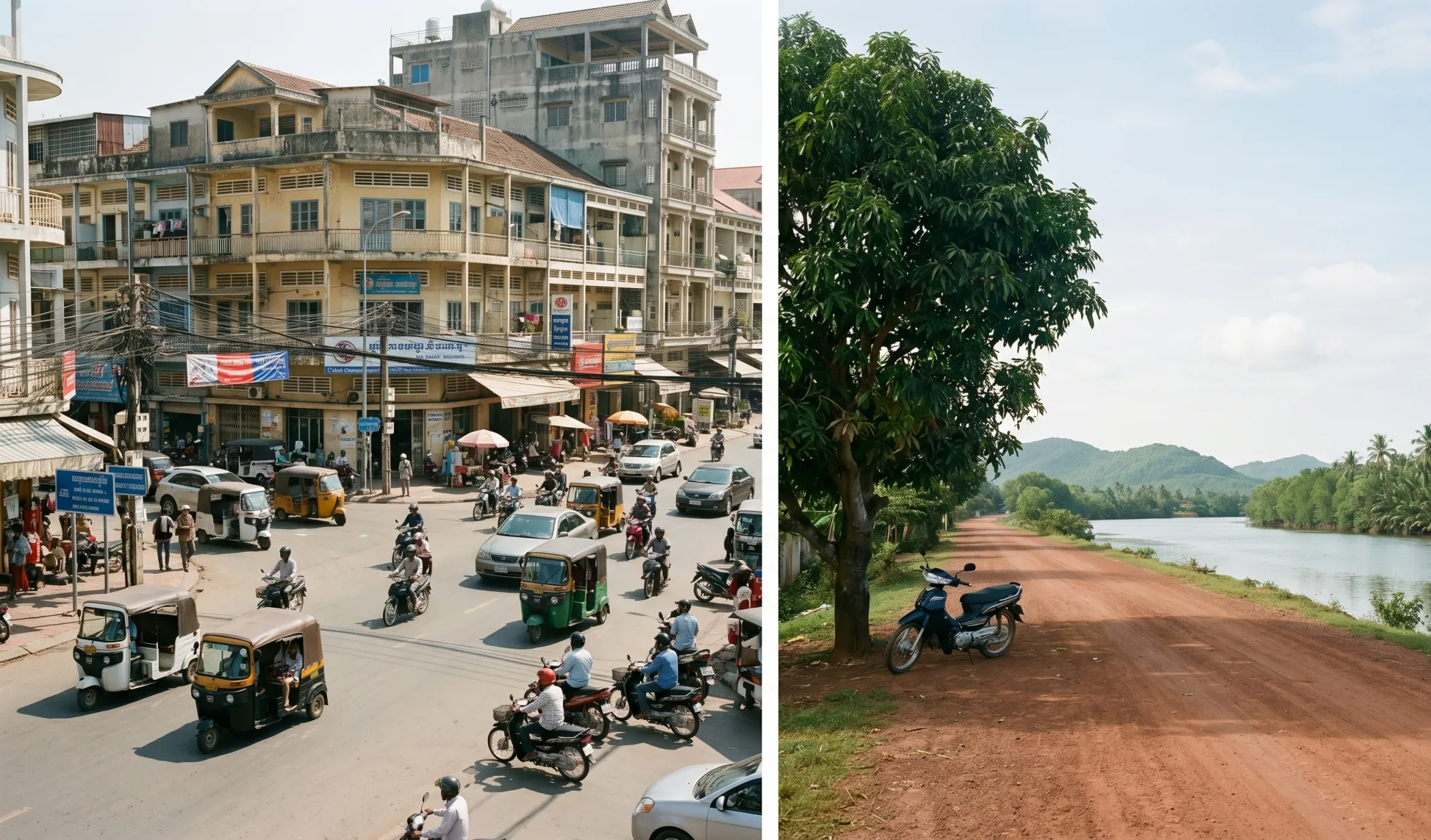
Thirty kilometres along National Road 33, flat and sealed the whole way. A tuk-tuk is $10–$15 one way and takes 35 to 45 minutes; the first quote will be $15 or $20 and most drivers settle at $10 or $12 for two people. PassApp works in both towns if you would rather not negotiate. The vans that run through Kep from the Vietnamese border charge $5 to Kampot and take about half an hour - Kampot Transports and Rith Travel around 8am and 10am, VET at 7.45am. The train calls at Kep too, for a few dollars, though its once-a-day timing rarely suits a day trip. The Kep piece covers the road in the other direction and what to do when you get there.
From Vietnam
The Prek Chak crossing, 38 kilometres east of Kampot, connects to Ha Tien on the Vietnamese side and, through it, to Phu Quoc and the Mekong Delta. Vans run the Kampot–Ha Tien route about a dozen times a day from around $10–$14, an hour to the border and another hour or so with the formalities; Kampot Transports and Champa Tourist are the names you will see. Two things to have in order before you book. Cambodia’s e-visa is valid at Prek Chak, but the Vietnamese e-visa must name Ha Tien as the entry point, and the border does not reliably issue visas on arrival. And the border closes in the evening, so the 1pm van is the last one worth catching.
From Siem Reap
Giant Ibis runs a sleeper bus from its terminal behind the Old Stadium in Siem Reap at 10.30pm, arriving at its Kampot office around 9.30am. Eleven hours, proper bunks, a couple of fifteen-minute driver-swap stops and no toilet stop. There is no hotel pick-up for the night bus. The daytime alternative is a bus to Phnom Penh and then any of the options above, which is a longer day but a better night’s sleep.
Arriving: where you end up
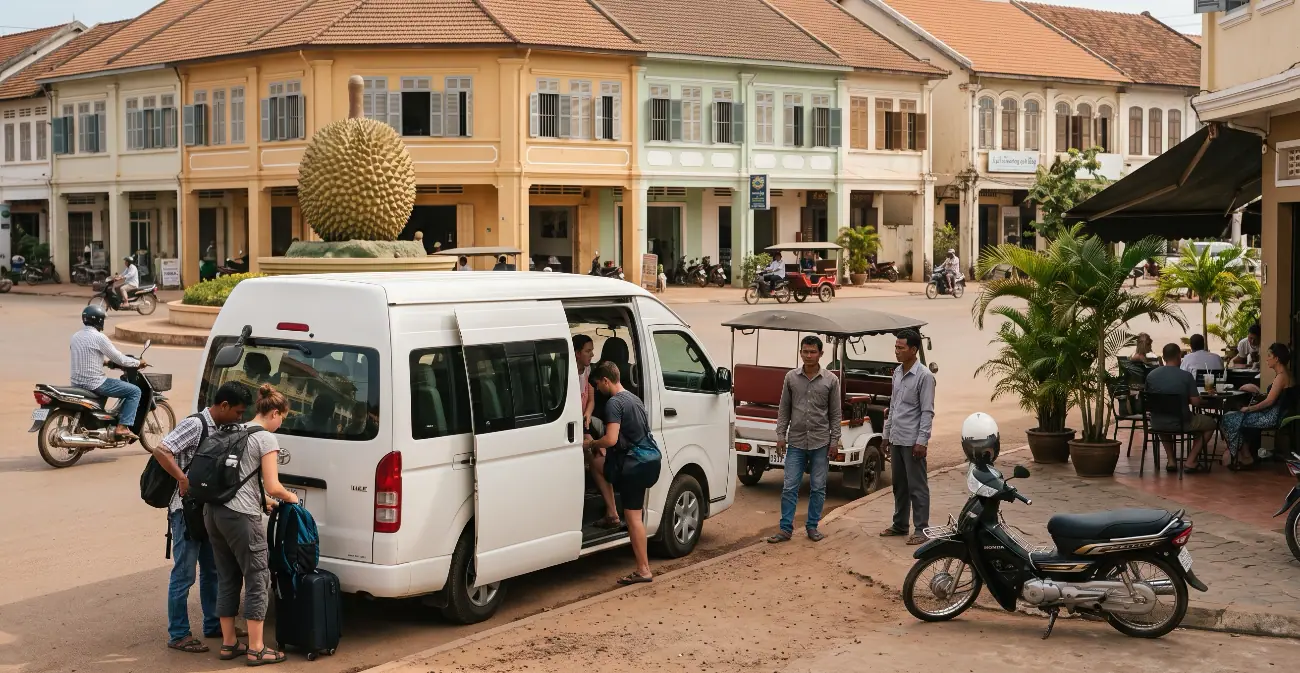
Kampot is small enough that it barely matters, but for the record: the bus station is on National Road 33, the Kep road, about a kilometre east of the old quarter. Giant Ibis uses its own office on Street 724 by the Durian roundabout, 250 metres from the river. The vans mostly stop at their own offices around the roundabout and the station; ask where when you book, and if you are staying along the river road north of town, say so, because some will drop you on the way. Tuk-tuks meet every arrival and charge $2–$3 to anywhere in town, more to the river road. PassApp works here.
Once you are in, the town is four kilometres across and the scooter is how it opens up. The three-day guide picks up from there.