The electricity bill is the thing nobody warns you about.
You rent a one-bedroom place on the river road, it’s furnished, the price feels right, and then July comes and you’ve been running the air-con through the night and the bill is $120. Nobody lied to you. Nobody mentioned it either.
This is that kind of guide: the one that mentions it. Kampot is genuinely affordable - that much is true. But affordable means different things depending on what life you’re actually trying to live here. The backpacker who rents a fan room and eats at the market is living on $600 a month. The family with two kids in school, a two-bedroom house, and regular trips to a western supermarket is spending $3,000. Both are real. Both are Kampot.
What follows is a breakdown organised around three real scenarios, drawing on numbers from people who have been paying bills here for at least a year. The ranges are honest. Where something can surprise you, I’ve said so.
Rent: in town vs the river road vs the countryside
Kampot’s rental market sorts itself into three bands, which correspond roughly to three geographies.
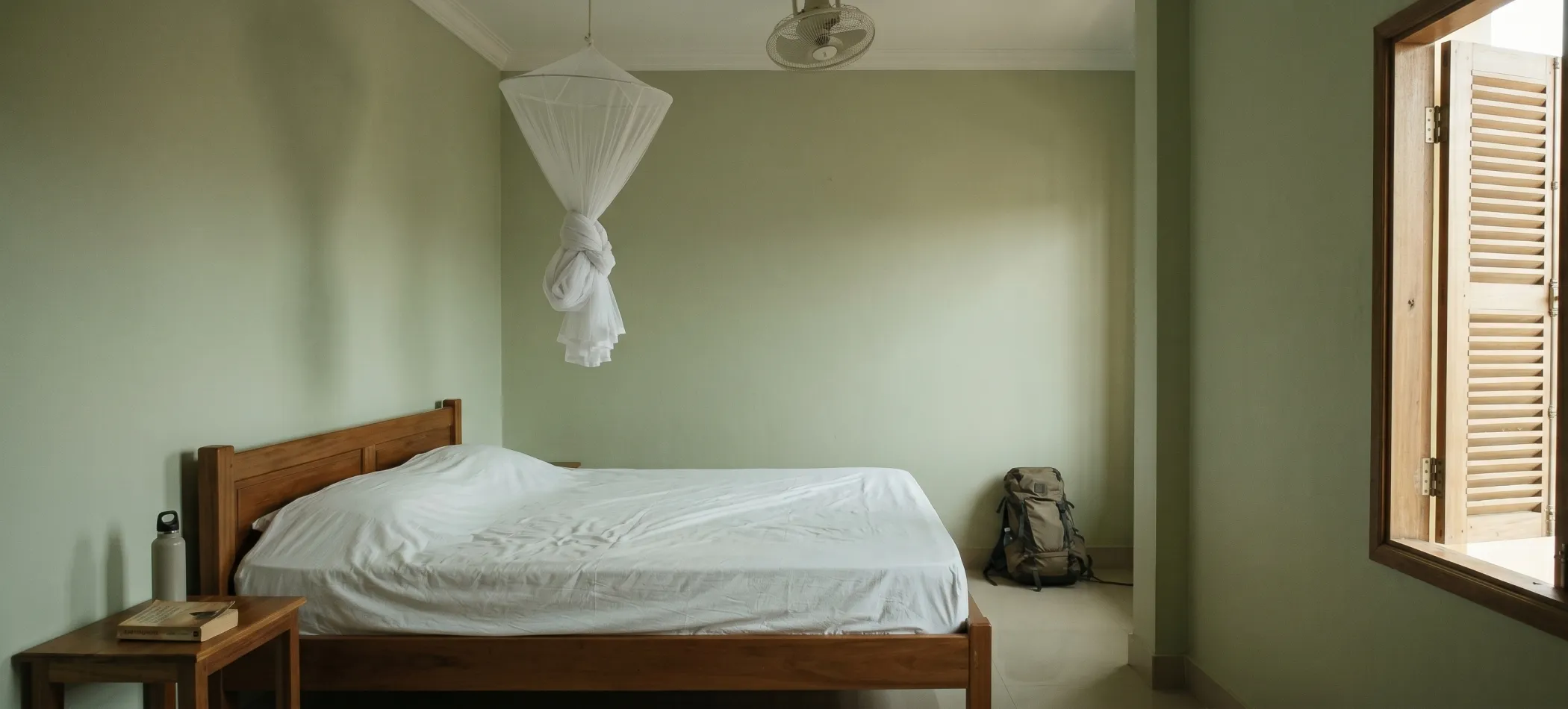
In town - the old quarter and the streets within walking distance of the river - you’ll find the most variety. Simple rooms above a shop go for $150–$200 a month, usually with a fan, sometimes with a shared bathroom. A proper one-bedroom apartment - tiled floors, air-con in the bedroom, functioning kitchen - runs $250–$350. Furnished is standard. The landlord almost always includes a fridge, a bed, and a hot-water shower; what varies is the quality of each. The longer neighbourhood breakdown lays out the trade-offs zone by zone.
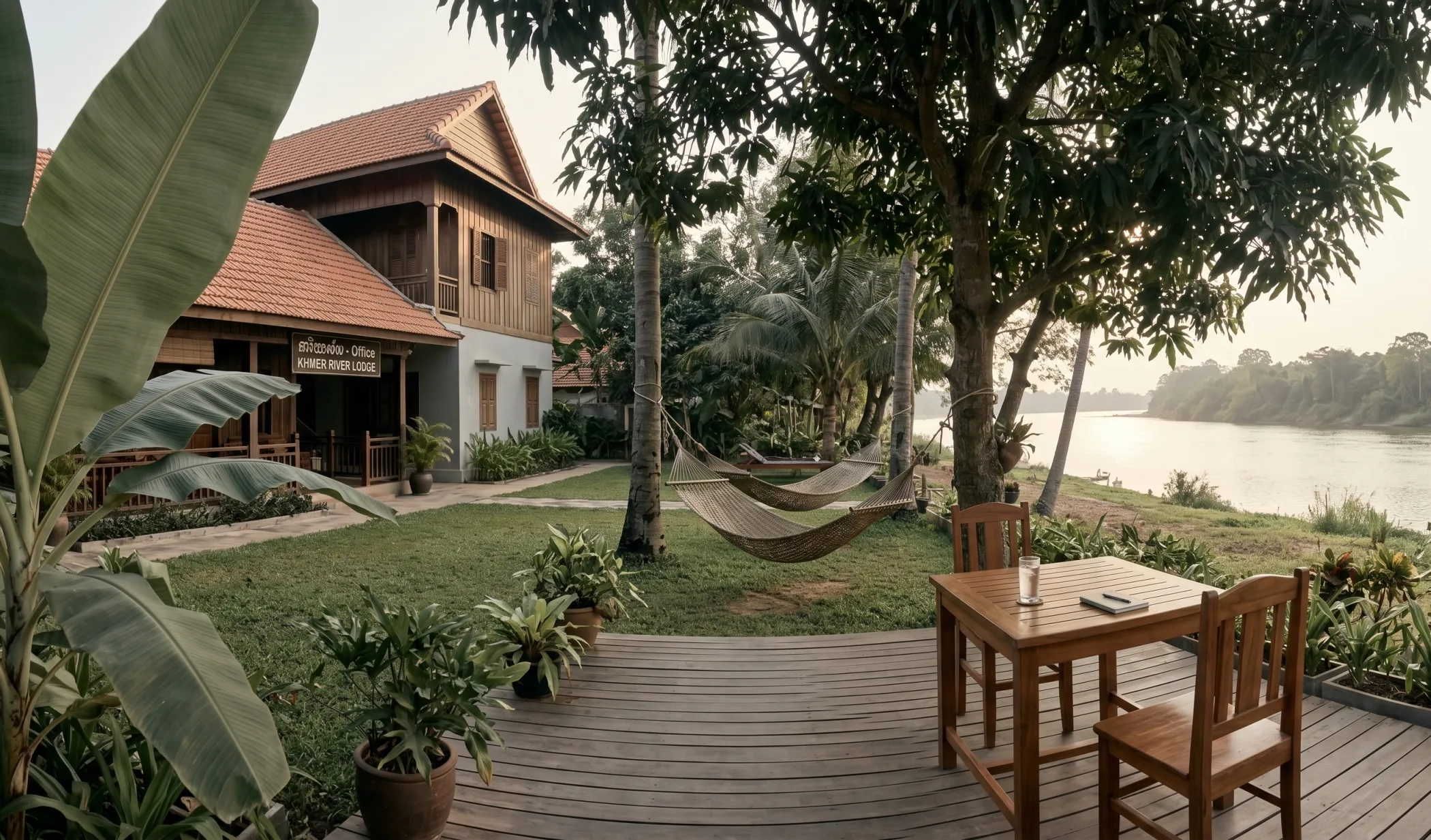
The river road north of town (the stretch heading toward Kampong Bay bridge) is the bungalow zone that most people picture when they imagine living in Kampot. Riverside bungalows and small villas with garden access start around $300 and climb to $500–$600 for something with a pool or a genuine view. The trade-off is distance: you’re 3–8km from restaurants and the market, which means you’re either on a scooter or spending on tuk-tuks for every errand. The river road is beautiful. It is also the place people leave when they get tired of tuk-tuking everywhere.
The countryside east of town - the pepper farm road, the villages beyond the new bridge - is where you find value that feels almost implausible by Western standards. Two-bedroom houses with a garden, sometimes a small pool, for $400–$600 a month. These suit people who have their own transport, work from home, and don’t mind the fact that the nearest decent café is a fifteen-minute scooter ride away. Several long-term expat families end up here.
One consistent thing across all three: Kampot is still a place where you find places by word of mouth and Facebook groups more than by property sites. The listings on formal platforms tend to skew toward the upper end of the market. The $250 one-bedroom in a good location often goes to whoever asked first at the guesthouse or messaged the right person in the right Facebook group at the right time.
Utilities: electricity is the surprise
Water costs almost nothing - $3–$5 a month, typically. Internet is fast and cheap; a 50+ Mbps fibre connection runs $20–$30 a month and is usually negotiated directly with your landlord or a local provider. Mobile data is around $5–$8 a month for a local SIM with generous data.
Electricity is different. Cambodia’s grid rate sits around $0.15–$0.25 per kWh depending on location and whether you’re metered directly by Electricité du Cambodge (EDC) or going through a landlord who resells power. Kampot and provincial towns sometimes use downstream resellers with slightly higher rates. The number on your lease matters: always ask the per-kWh rate before you sign.
What it means in practice:
- No air-con, fans only: $20–$40 a month. Manageable in the dry season; challenging in April and May.
- Bedroom AC at night only: $60–$90 a month. This is where most people settle.
- AC running most of the day: $100–$150 a month. If you work from home in an air-conditioned room, this is realistic.
Running air-con all day every day in a Cambodian summer is not unusual for people accustomed to European or Gulf climates. If that’s you, budget $120–$150 monthly for power and factor it into your rent calculation - a $250 apartment with a $130 electricity bill is effectively a $380 apartment.
Food: the gap between eating Khmer and eating like you’re in Europe
Kampot has one of the more interesting eating scenes for a town its size - a function of the pepper farms, the river, and several decades of expat cooks setting up quietly on side streets. But the cost gap between eating locally and eating like a Western tourist is real and worth understanding.
Eating Khmer: a bowl of kuy teav (noodle soup) from the market costs $1–$1.50. A rice and fish dish at a family restaurant on a side street is $2–$3. If you eat this way most of the time - which is easy to do, because the food is good - your food bill for a month sits around $150–$200, eating three meals a day.
Eating at expat restaurants: Kampot has a dozen places that could sit comfortably on a European high street - wood-fired pizza, proper burgers, Khmer tasting menus. These run $6–$15 per main course. An evening out with a couple of drinks lands at $15–$25 per person. Budget $300–$500 a month if you eat out regularly at this level.
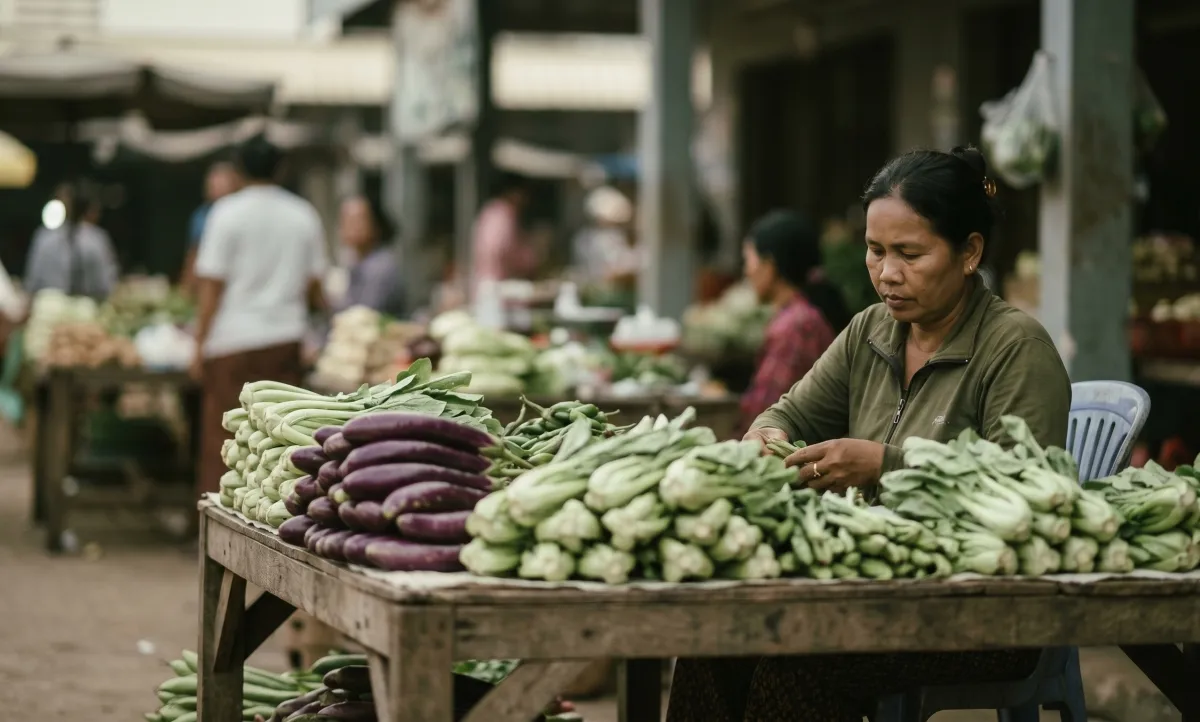
Cooking at home: the central market has excellent fresh produce at market prices. A week’s shopping - vegetables, fruit, fish, eggs, some meat - runs $25–$40 depending on how much you’re cooking. Western imports (olive oil, good cheese, wine, decent coffee beans) are available at a handful of shops and at Macro in Phnom Penh on a supply run. They cost what they cost: imported goods are not cheap anywhere in Southeast Asia.
Groceries for a couple cooking at home most nights: $200–$300 a month, depending on how much you lean on imports.
Transport: scooter ownership vs rental vs tuk-tuk dependency
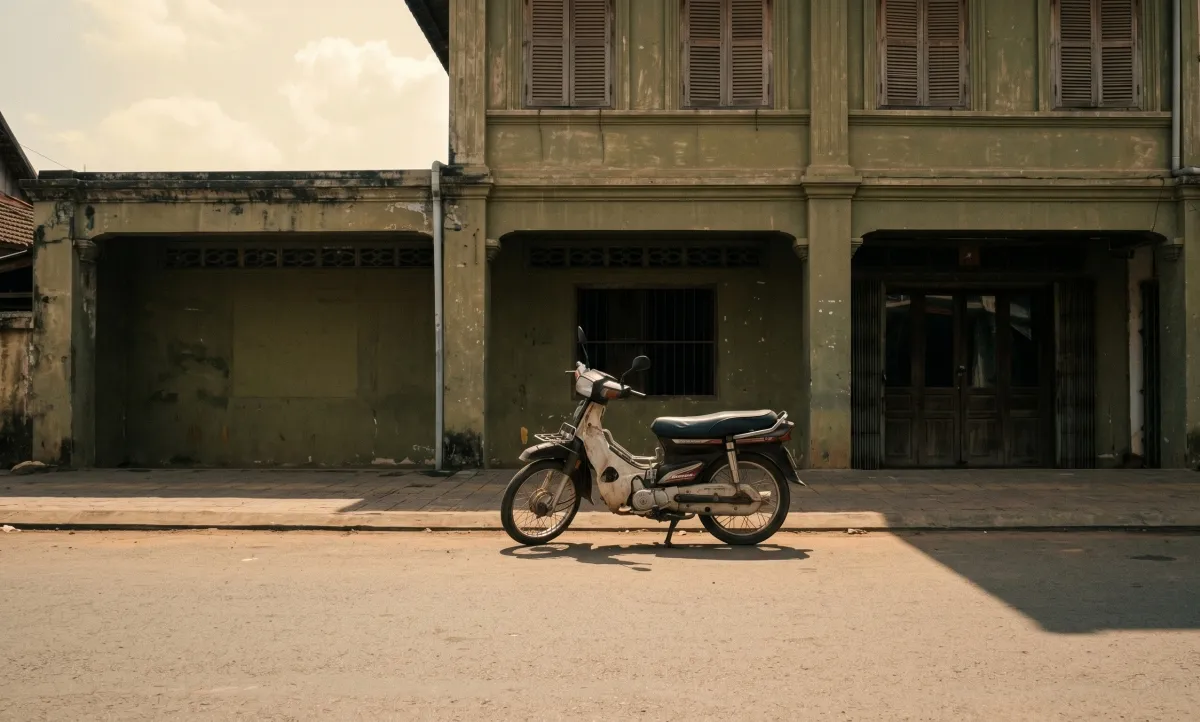
Kampot is a scooter town. If you’re here for more than a month, not having your own transport is a tax on everything - your time, your independence, and your wallet.
Scooter rental: $60–$80 a month for a semi-automatic 110cc. $80–$120 for a larger manual or a Honda Click. This is the default for most new arrivals and anyone staying less than six months.
Buying a scooter: a used semi-auto runs $400–$600. A second-hand Honda Click or Beat in decent condition is $700–$1,000. Fuel costs around $1–$1.20 per litre; a Kampot tank costs $4–$5 and lasts most of a week of local riding. Maintenance is cheap - most small repairs are $5–$15 at a local mechanic.
Tuk-tuks: a ride within town is $1.50–$2.50. Grab and PassApp (Cambodia’s ride-hailing apps) work in Kampot and give you a price up front. If you don’t have a scooter and you’re doing several trips a day, $60–$100 a month on tuk-tuks is realistic.
Car: a small number of long-term residents have cars, usually families. Ownership costs (tax, maintenance, occasional repair) add $100–$200 a month on top of the vehicle purchase price.
Healthcare: what’s here, what costs what
Kampot has basic medical care that handles everyday things well. GP consultations at a local clinic run $15–$30. Dental is surprisingly good and cheap - a clean and check is $20–$30; a filling is $30–$60 at a reputable dentist in town. Pharmacies are well-stocked and you can get many things over the counter that require prescriptions elsewhere.
For anything serious - suspected fracture, unexplained illness, anything that needs imaging or specialist input - you’re looking at a three-hour drive to Phnom Penh, where Royal Phnom Penh Hospital and Calmette Hospital both have international-standard emergency care.
Most long-term residents carry international health insurance with medical evacuation coverage. A decent policy for a 35-year-old runs $80–$150 a month. For a family with children, $200–$350 a month. This is not optional if you have any sense; it is the line item people most regret skipping.
(For a full healthcare breakdown - which clinics handle what, which hospital in Phnom Penh to use, and how to manage a medical emergency from Kampot - see the separate healthcare guide.)
School fees: the four options and what they charge
This is the biggest variable for families. The honest picture: Kampot does not have a full international school in the conventional sense.
Peppercorns School is the main expat option in Kampot town - a parent-run school using a UK/Australian curriculum for children aged 2 to 11. It has been here for years and parents consistently speak well of it. Fees are significantly lower than Phnom Penh international schools; expect to pay in the range of $150–$300 per month per child depending on age and hours.
Kep International School, 30 minutes away, teaches a New Zealand curriculum up to grade 6 and runs a bus service from Kampot. It is English-medium, takes expat children without Khmer, and includes French and Khmer instruction. Fees are comparable to Peppercorns.
Homeschooling is common among expat families in Kampot, particularly for secondary-age children who have outgrown Peppercorns. Online schools (UK, Australian, and American options all exist) cost $1,500–$4,000 a year and give parents flexibility.
Khmer state schools are free and some families use them - particularly those with Khmer partners or children who arrive young enough to acquire the language naturally. The language barrier is real; it is not the right choice for most newly-arrived expat children.
For secondary education (grade 7+), the honest answer is that Kampot currently requires either homeschooling, online school, or a boarding arrangement in Phnom Penh or abroad. This is a real constraint for families who arrive with teenagers.
The honest monthly totals: three scenarios
These are not aspirational minimums. They are honest middle estimates for each profile.
Profile 1 - Living simply
Solo person. Rented room in town, $220/month. Eats mostly Khmer, cooks some meals. Scooter rental, $70/month. No gym, modest social life.
| Category | Monthly |
|---|---|
| Rent | $220 |
| Electricity | $35 |
| Food (mostly local) | $180 |
| Transport (scooter rental + fuel) | $85 |
| Healthcare (basic, no insurance) | $30 |
| Phone / internet | $25 |
| Misc (entertainment, personal) | $100 |
| Total | ~$675 |
This is the realistic floor. It assumes no visa costs amortised in (add $50/month if you’re averaging a 12-month EB extension), no travel, and no significant emergencies.
Profile 2 - Comfortable expat
Solo person or couple. One-bedroom apartment with air-con, $320/month. Mix of local and expat restaurants. Own scooter (bought). Health insurance. Regular evenings out.
| Category | Monthly |
|---|---|
| Rent | $320 |
| Electricity | $90 |
| Food (mix of local + expat) | $350 |
| Transport (scooter fuel + maintenance) | $50 |
| Health insurance | $120 |
| Phone / internet | $25 |
| Entertainment / social | $200 |
| Misc | $120 |
| Total | ~$1,275 |
This is what most working expats without children actually spend. The range is wide depending on how many evenings end at a restaurant rather than a home kitchen.
Profile 3 - Family
Two adults, two children. Two-bedroom house outside town, $500/month. Own car or regular car hire. Both children at Peppercorns or Kep International. Health insurance for the family.
| Category | Monthly |
|---|---|
| Rent (2-bed, furnished) | $500 |
| Electricity (larger house, AC) | $130 |
| Food (family, some western) | $600 |
| Transport (car costs + fuel) | $200 |
| School fees (2 children) | $500–$600 |
| Family health insurance | $280 |
| Phone / internet | $35 |
| Misc (kids activities, social) | $300 |
| Total | ~$2,700–$2,900 |
Families who want western food, reliable transport, and school for their children are spending real money. $3,000 a month is not outlandish for a family living comfortably here. It is also roughly half what the same family would spend in most Western European cities.
A few things that are cheaper than expected
Eating out, even at nicer places, stays reasonable. A good dinner for two with wine at one of Kampot’s better restaurants is $30–$40. That same dinner in London or Amsterdam is $90–$130.
Dental care. Most expats are mildly surprised that they can get quality dental work done locally, for a fraction of what it costs at home. This is Cambodia-wide, not Kampot-specific, but worth knowing.
Domestic help. If you want a cleaner or a cook, it’s accessible and normal here in a way it isn’t in most Western countries - $80–$120 a month for a few hours a week of cleaning. This is not something most people budget for going in and many find they value it enormously.
A few things that are more expensive than expected
Electricity with air-con, as established.
International food and wine. If you want good olive oil, decent red wine, imported cheese, or European-brand anything on a regular basis, the costs add up. Cambodia doesn’t produce these things. They arrive via import and they’re priced accordingly.
Anything involving Phnom Penh. A medical appointment, a visa extension through an agency, a trip for a specific bureaucratic requirement - once you factor in transport (bus is $8 each way, tuk-tuk from the bus station, a night in a guesthouse if needed), the incidental costs of being in a bigger city accumulate.
The visa itself. A 12-month EB extension costs $290–$310 typically, through an agent. That’s roughly $25/month amortised. Not painful, but not free either.
The number people most often settle on, when asked what they actually spend in Kampot as a single person living a full life - good food, occasional travel, health insurance, their own transport - is somewhere around $1,200–$1,500 a month. Below that, you’re making real trade-offs. Above that, you’re adding luxuries.
Whether that’s cheap or not depends entirely on what you’re comparing it to.