Most people who move to Kampot rent, and most of them rent somewhere they found in a Facebook group or by asking at the guesthouse where they were staying. That is not a failure of the market; it is the market. The formal listing sites carry a thin, expensive and often years-old slice of what is available, and the agents who operate here are few. The useful knowledge is how the informal system works, what things cost, and where the money leaks.
The figures below come from the cost-of-living guide, which is built from what residents actually pay, cross-checked in October 2026 against the two current guides that publish Kampot rents and against what is on the listing sites. They are asking prices for furnished places; the price you pay after a conversation is usually a little lower, and the price you pay with a year’s lease lower again.
| Area | What is typical | Asking rent |
|---|---|---|
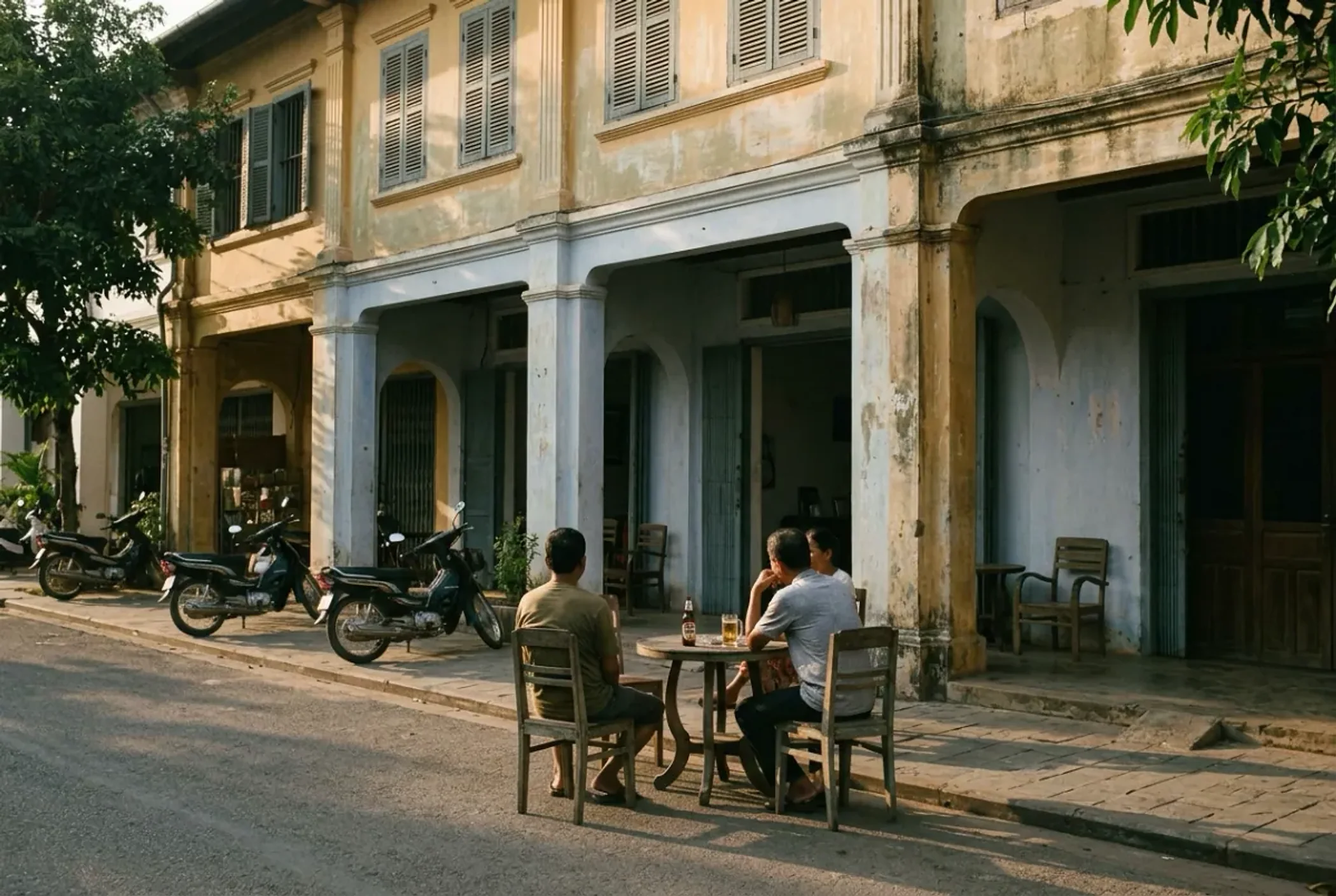
| In town: the old quarter and the streets near the river | Rooms above shops; one-bed apartments with tiled floors and air-con in the bedroom | Rooms $150–$200; one-bed $250–$350 |
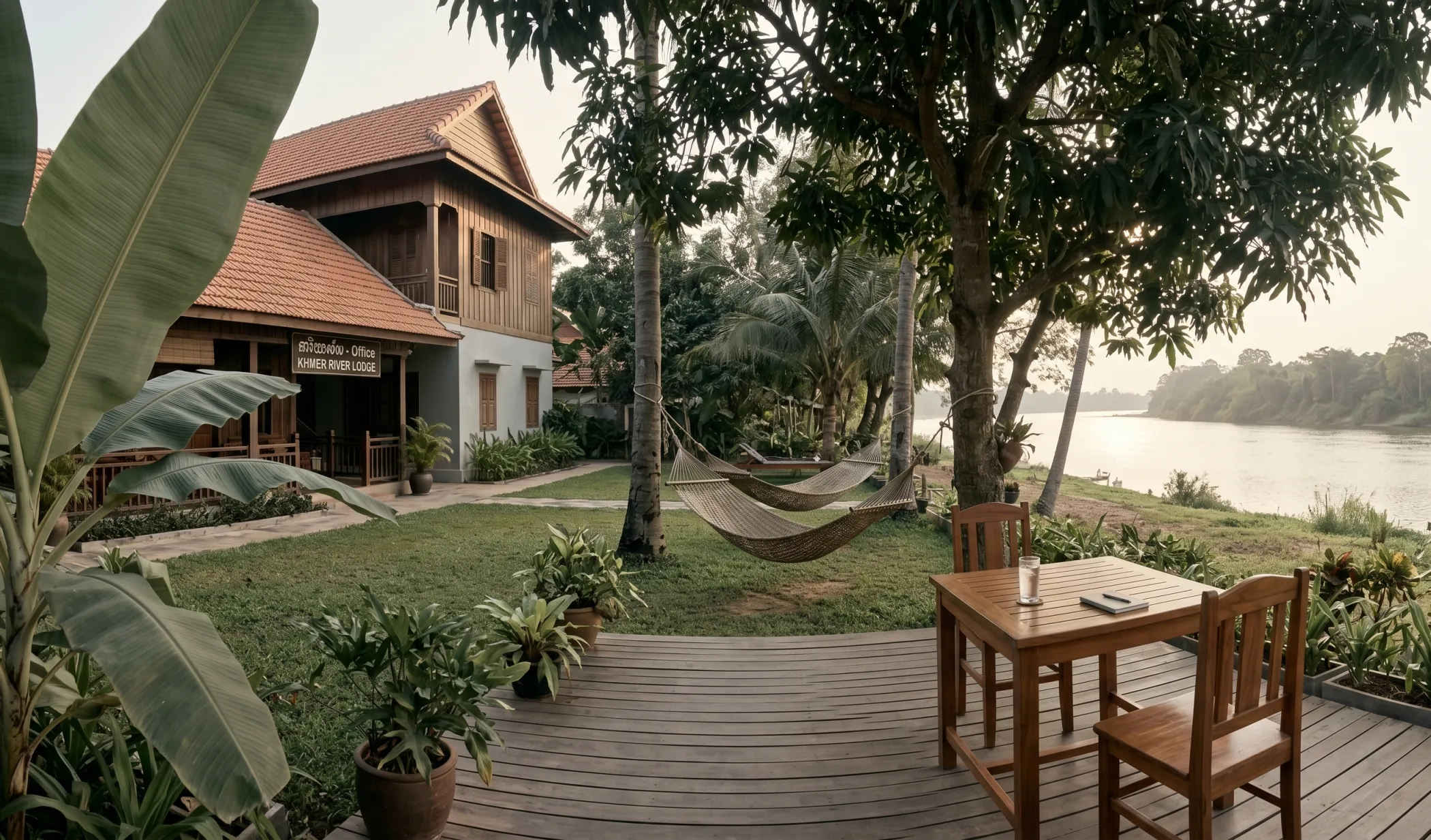
| River road north of town | Riverside bungalows and small villas with gardens; 3–8km from the market | From $300; $500–$600 with a pool or a real view |
| Countryside east: the pepper-farm road, past the new bridge | Two-bedroom houses with gardens, sometimes a small pool | From about $400 |
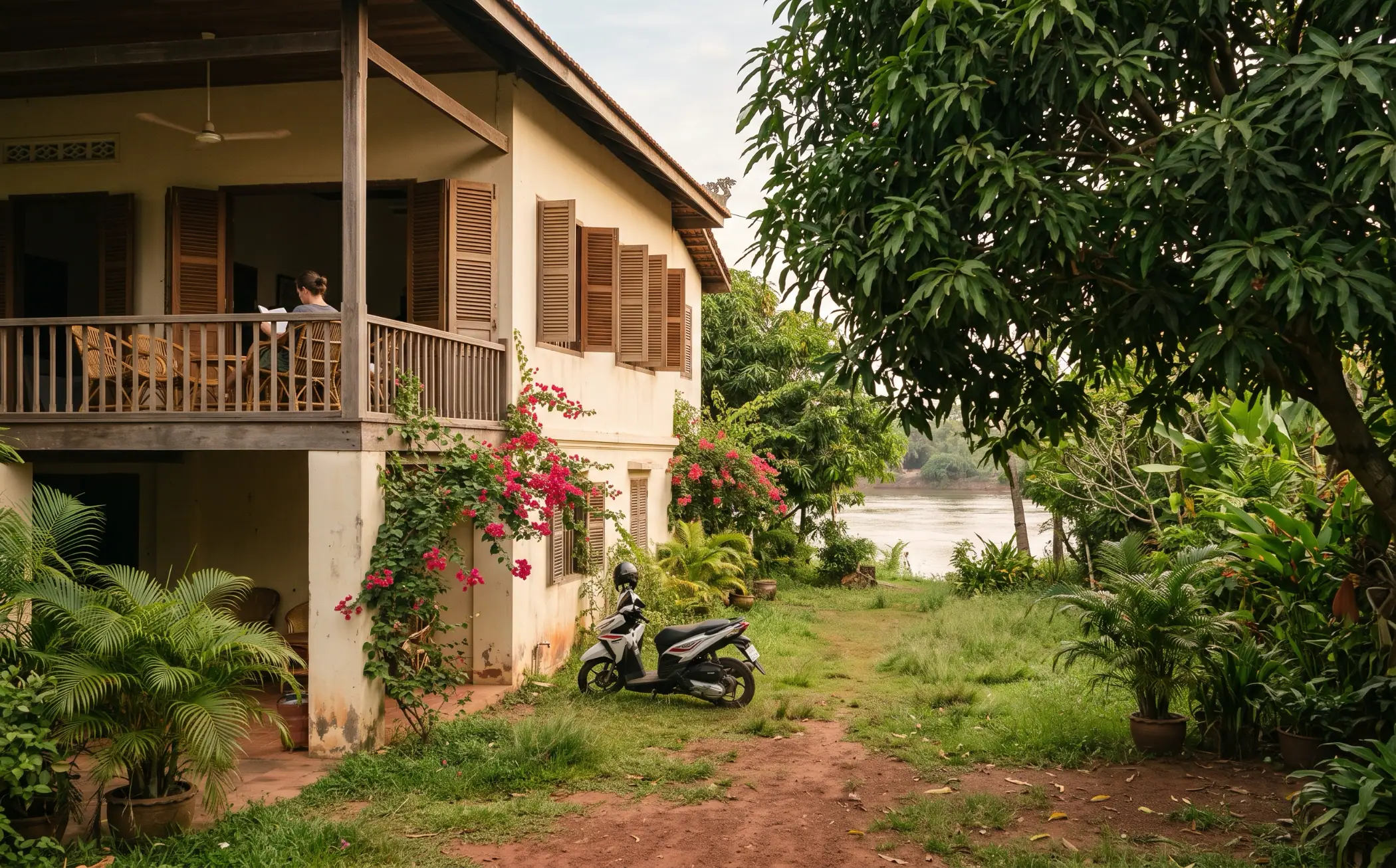
| Across the river: Kampong Bay | Local-style houses and shophouse floors; fewer listings reach the groups | Usually lower than town for the same house |
What you get for the money
Kampot’s rental stock comes in three kinds, and the price difference between them is mostly about what is included and how far from the market you are.
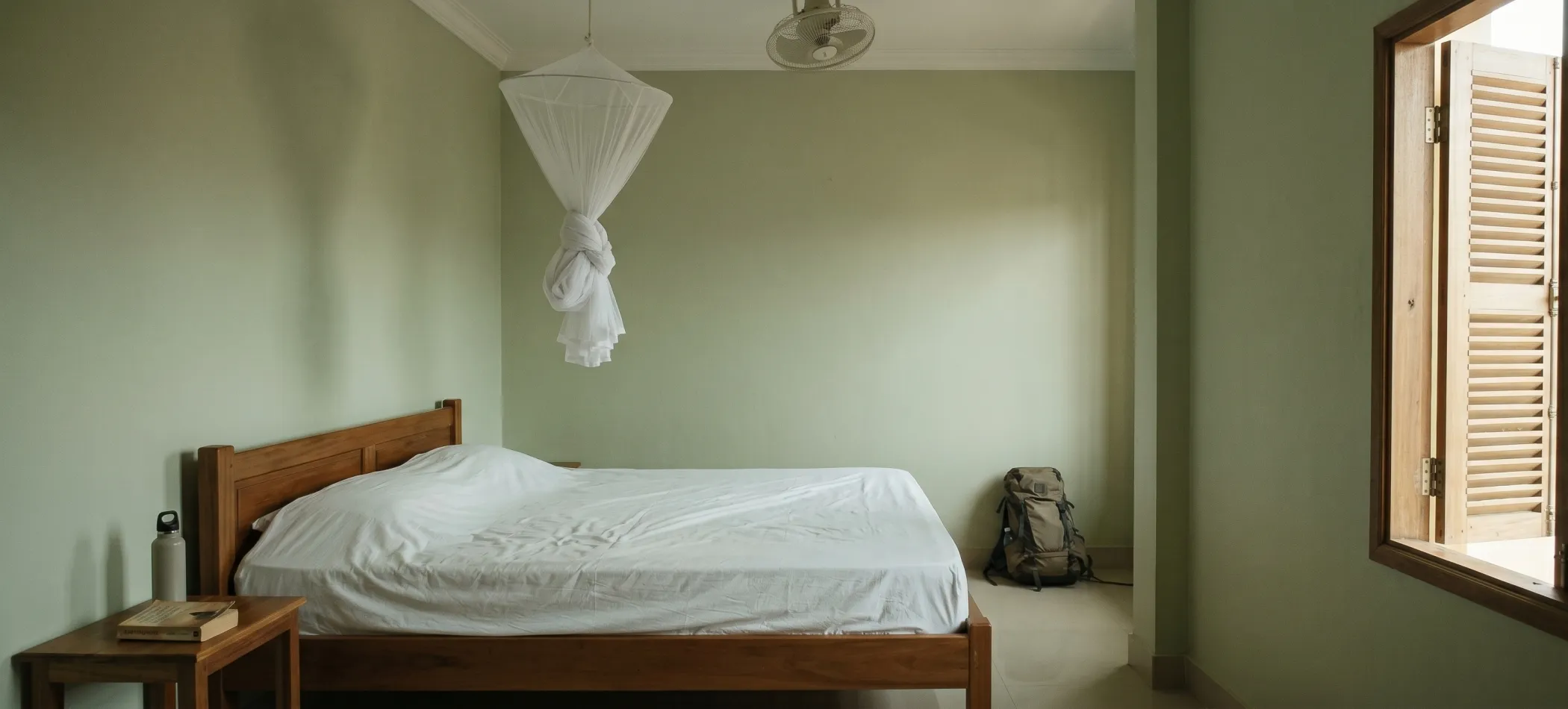
A room by the month is the entry point and the way most people start: a guesthouse room or a room above a shop, fan or air-con, sometimes a shared bathroom, $150–$200 in town. Guesthouses will quote a monthly rate if you ask, and in the wet season they will quote a good one. It is the right first month, because it costs nothing to leave.
An apartment or a shophouse floor is the middle: tiled, furnished, a fridge, a bed, a hot-water shower and a split air-conditioner in the bedroom, $250–$350 in town. “Furnished” here means the landlord’s furniture, which ranges from new to a bed frame and a plastic wardrobe; look at it rather than reading it. Kitchens are often a counter, a sink and a gas ring, and a proper oven is rare.
A house with a garden is what people picture when they think about living here, and it is the real bargain: a two-bedroom house with a yard on the river road or out east for $400–$600, often with a veranda, sometimes a pool, usually a dog that came with the house. The trade is distance. You are on a scooter for every errand, and the neighbourhood guide is honest about who tires of that and who doesn’t.
Wifi is nearly always arranged separately: 50Mbps-plus fibre is $20–$30 a month from a local provider and is sometimes already in the house. Water is a few dollars. Electricity is the one to read about before you sign, below.
Where to look
| Source | Good for | Watch for |
|---|---|---|
| Facebook groups: Kampot Noticeboard and its spillover group | Nearly everything; housing goes here before anywhere else | Posts go fast; message, don’t comment. Scams are rare but ask to view before paying anything |
| Asking at your guesthouse | The $250 one-bed in a good spot that never gets listed | You are relying on one person’s circle |
| Walking the streets you like | Houses with a phone number on the gate, which is how local landlords advertise | Khmer-only conversations; take a friend or a translator app |
| realestate.com.kh and Khmer24 | A sense of the top of the market; the one or two agencies with Kampot stock | Listings are often years old and skew expensive |
The expat community piece has the full list of groups and how they work. The short version: join Kampot Noticeboard before you arrive, read it for a fortnight to learn the prices, then post what you want. Say the budget, the area, the length of stay and whether you have a pet. Landlords and other tenants will answer within hours.
Agents exist but are not how the town works. The few that list Kampot stock are paid by the landlord, typically half a month’s rent, so using one costs you nothing; it just rarely finds you the good place.
How the deal works
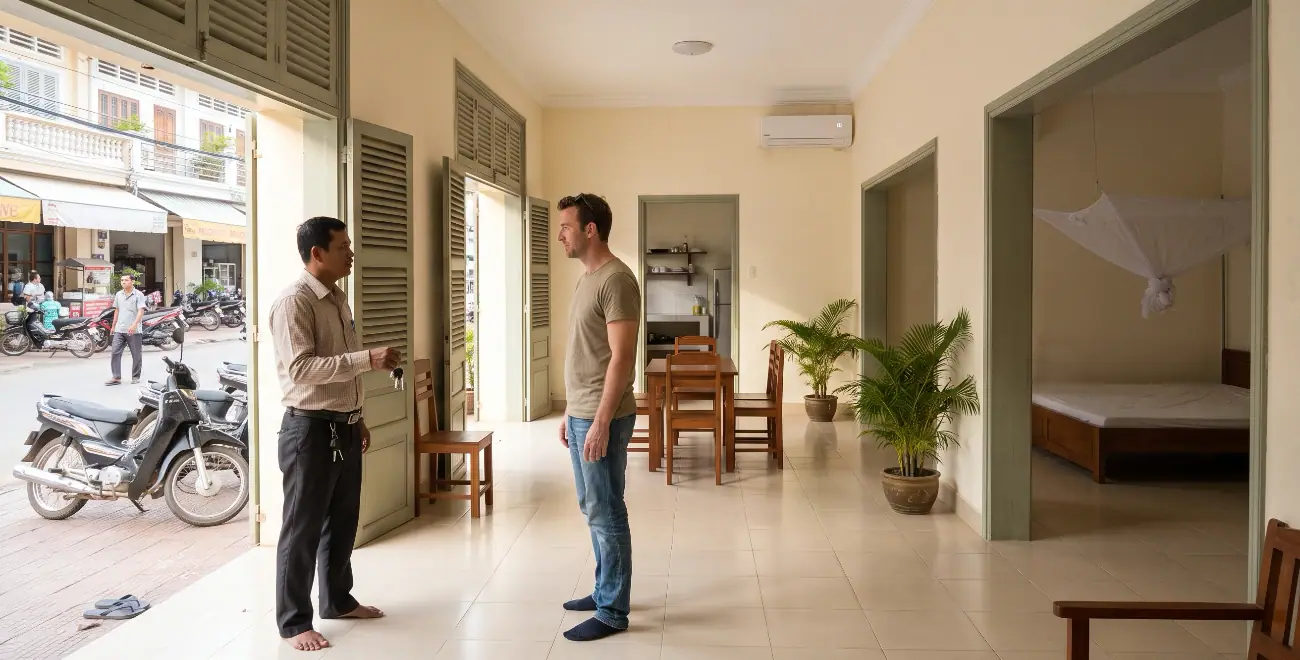
Deposit. One month’s rent is the norm for a six-month lease, two months for a year. It is refundable at the end, less damage, which is why you photograph everything on the day you move in and send the photos to the landlord so the date is on record. Get a receipt for the deposit in writing, in both names.
Lease length. Six months is the usual minimum, twelve is common, and a year’s lease is the lever for a better monthly rate. Month-to-month exists, at a premium of 10–20 per cent, and is the right choice for your first stretch. The first month is paid up front with the deposit.
The contract. A simple one- or two-page agreement in English and Khmer, both versions binding, is normal and worth insisting on: names, dates, rent, deposit, what is included, the electricity rate per kWh, the water arrangement, who pays for repairs, and what happens if either side wants out early. A landlord who will not put the electricity rate in writing is telling you something.
Repairs. The landlord fixes the structure, the plumbing and the appliances they supplied; you fix what you break. Ask for anything you want changed before you sign, because the appetite for improvements drops the day after.
Electricity. This is the line that decides whether a cheap house is cheap. Electricité du Cambodge sells to households at a tiered rate, starting around 610 riel per kWh at low use, about 15 US cents, and rising with how much you use. If the house has its own EDC meter and the bill comes to you, that is what you pay. If the landlord has one meter and sub-meters the tenants, they set the rate, and 1,000 riel per kWh (25 cents) is the common figure, with 1,200 and 1,500 not unknown. On a house that runs air-con at night, the difference between 610 and 1,000 riel is $30–$40 a month, every month. Ask which arrangement it is, read the meter together on the day you move in, and get the rate in the contract.
Water. The real cost is $3–$5 a month on the town supply. A flat water charge of $20–$30 is a known trick; decline it and ask for the metered bill.
Pets. Allowed more often than not, especially in houses; expect to be asked for an extra month’s deposit.
What the landlord cannot do is as important: raise the rent mid-lease, keep the deposit without an itemised reason, or enter without notice. None of this is exotic. It is the same contract you would want anywhere, written down because the handshake version is what goes wrong.
The viewing: a checklist
| Check | Why it matters here |
|---|---|
| Run the shower and the kitchen tap at the same time | Water pressure on upper floors and at the end of the river road is a real problem |
| Look at the air-conditioner’s age and ask when it was last cleaned | An old unit doubles the electricity bill |
| Find the electricity meter and ask whose name is on the bill | Decides whether you pay 610 or 1,000 riel per kWh |
| Test the wifi on your phone, in the bedroom | Fibre reaches most of town; the countryside is patchier |
| Ask what happens in September | Low-lying houses near the river flood in a heavy wet season; the neighbours will tell you |
| Stand outside at 6am and at 9pm | The wat’s loudspeaker, the karaoke bar, the roosters and the dogs are all louder than they look |
| Check the gate, the ground-floor windows and whether there is a night guard | Petty theft from gardens and unlocked ground floors is the common crime |
| Ask who else lives in the building or compound | A landlord next door is a mixed blessing; a family above is usually a good one |
| Ask whether the landlord uses the FPCS app | See below. If the answer is a blank look, think twice |
The paperwork: FPCS and your visa
Every foreigner’s address in Cambodia is supposed to be registered on the Foreigners Present in Cambodia System, run by the immigration department, and the legal duty to do it sits with the landlord, not with you. It is done through the FPCS app or website with your passport and visa pages, and the EB visa guide explains why it matters: an extension application without a matching FPCS record is the most common avoidable rejection. Guesthouses and established rental houses do it routinely. Some private landlords do not, occasionally because registering a tenant makes the rent visible to the tax office. Ask at the viewing, and if the landlord is new to it, offer to sit with them while they do it; it takes ten minutes.
Keep your own copies: the signed contract, the deposit receipt, the move-in photos, and a screenshot of your FPCS registration. That is the whole file.
What goes wrong
The deposit is the usual argument, and the photographs settle it. Leaving early is the next: a landlord who has let you go month-to-month will usually let you leave with a month’s notice; one who gave you a year’s rate will reasonably keep the deposit if you go at month four, so decide which deal you are making. Houses get sold under tenants, which in a town with this much turnover happens more than you would think, and the contract clause about early termination is what protects you. And the turnover cuts the other way: the good places come up because someone left, which is why reading the groups for a fortnight before you commit is worth more than any agent.
The honest word on buying
Foreigners cannot own land in Cambodia, and a house is land. What a foreigner can own outright is a strata-title apartment above the ground floor, of which Kampot has very few. The arrangements people use to get round this, a Khmer nominee on the title or a company structure, carry real risk and are not a decision to take from an article. Nearly everyone who lives here rents, including people who have been here a decade and could afford to buy, and the rents above are the reason it is not a hardship. If you reach the point of wanting to own, talk to a lawyer in Phnom Penh before you talk to anyone selling.