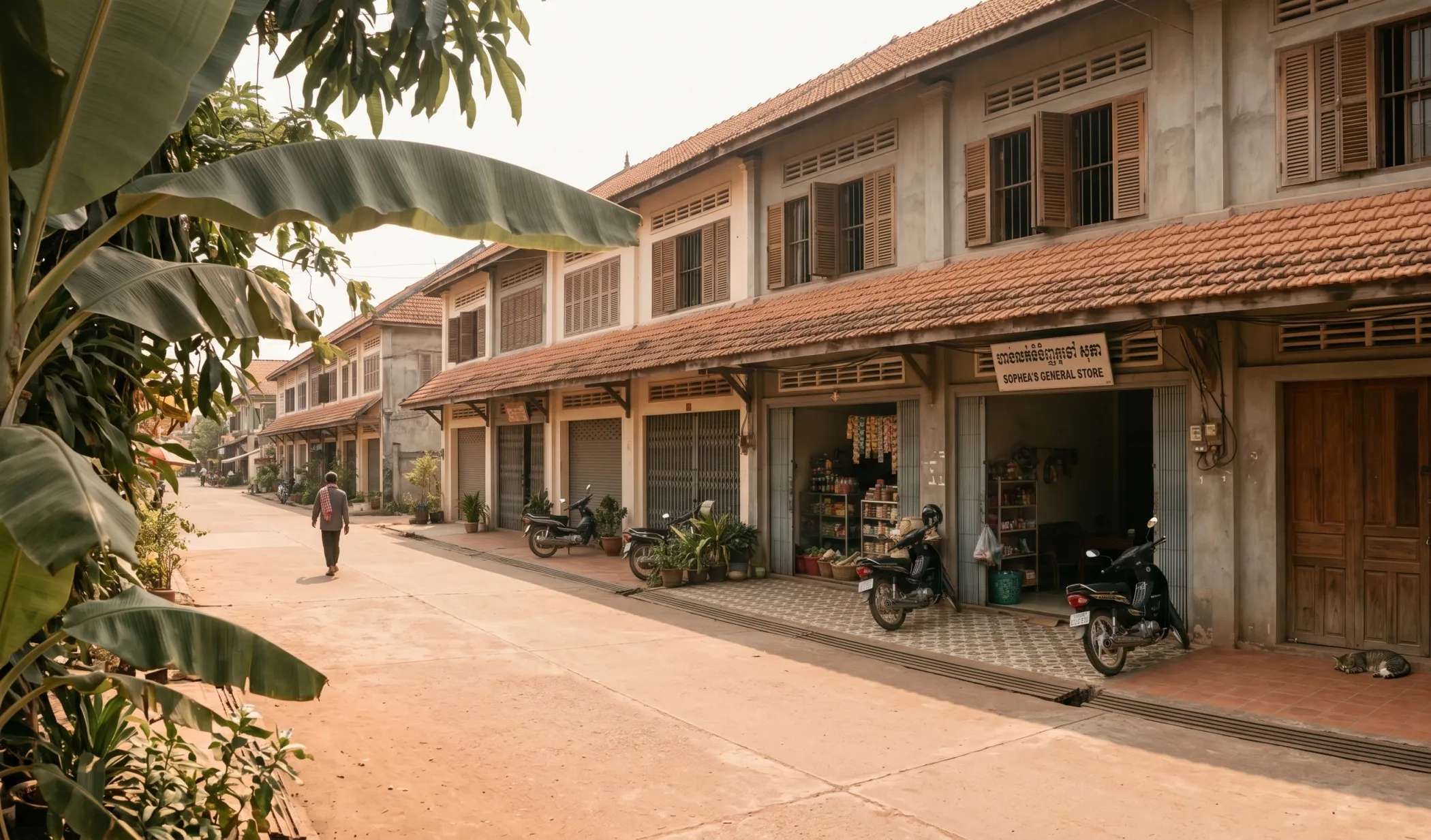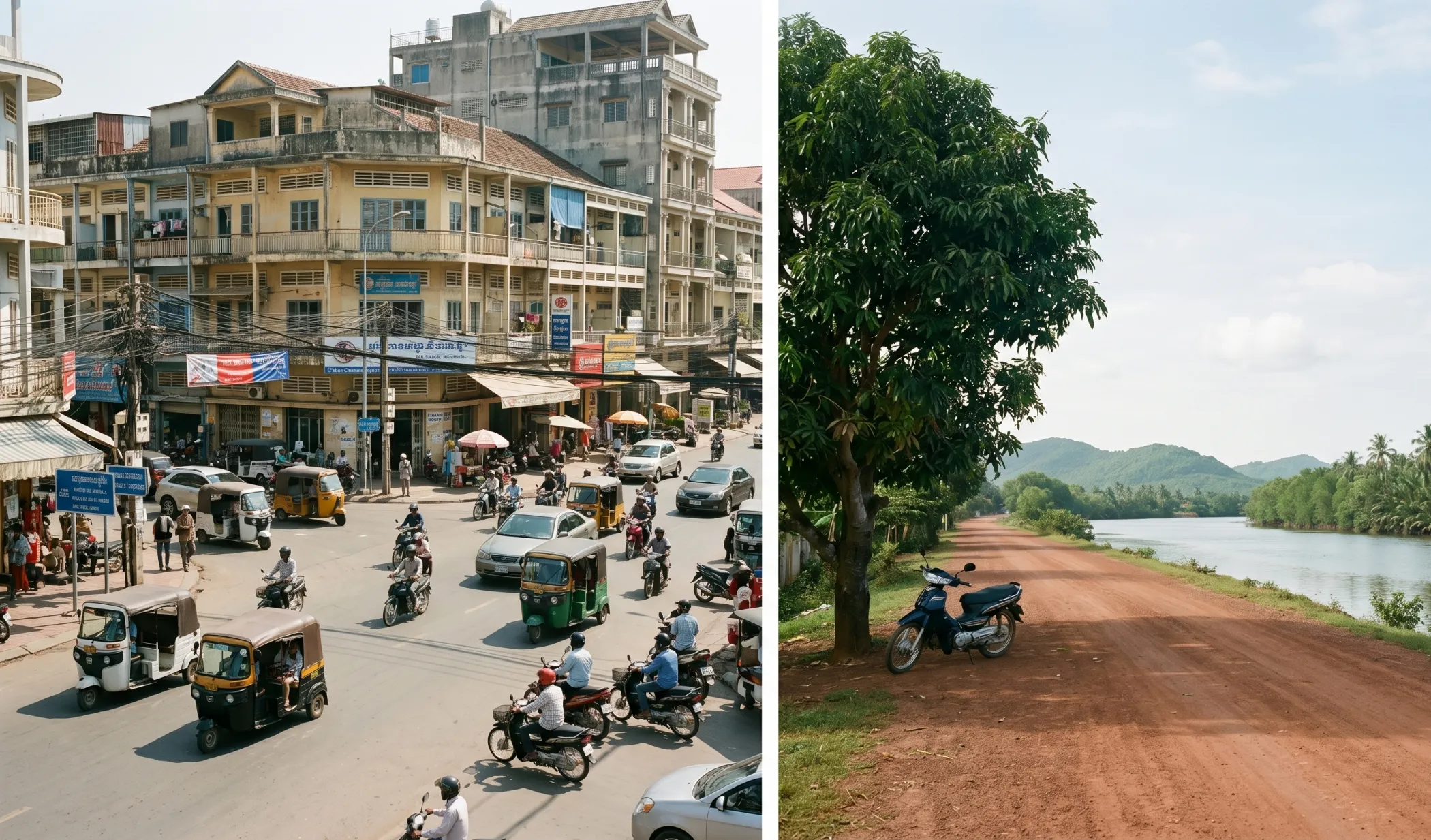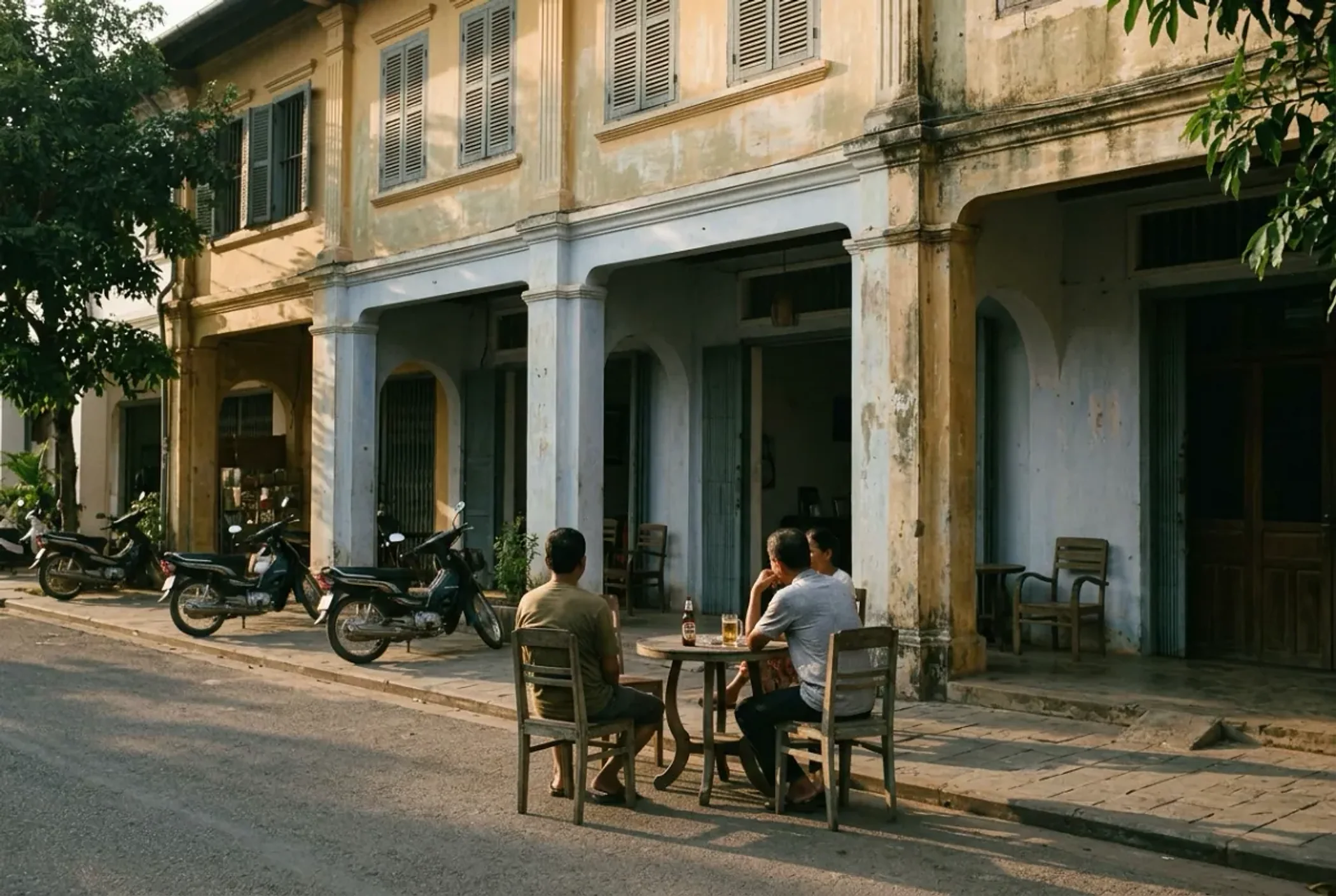
The short version, for anyone deciding whether Kampot has enough of a community to be worth moving to:
- It is small. Small enough that within a month you will recognise most of the foreign faces, and they will recognise you.
- It runs on Facebook. Not forums, not meetup apps, not a Discord. Four or five groups carry almost all of the town’s practical information.
- It skews long-stay. A substantial share of the foreigners here own something - a guesthouse, a bar, a kitchen, a plot of land - and have been here ten years or more.
- It is not a nomad hub. There are coworking spaces, but there is no scene built around them. If that is what you want, Kampot is the wrong town.
- Turnover is the thing nobody warns you about. People leave. More on that below.
The rest of this is the detail.
Who actually lives in Kampot
Nobody has a reliable figure, and anyone quoting one to you is guessing. Cambodia does not publish usable long-stay foreigner counts by town, and the population turns over enough that a number would go stale inside a year. What can be described is the shape of it.
Roughly five groups, overlapping:
- Long-stay residents and retirees. Often in Cambodia for a decade or more, frequently arrived via Sihanoukville or Phnom Penh and moved here when those places got loud. Many are on the EB visa route.
- Small business owners. Guesthouses, bars, bakeries, kitchens, tour operations. This is the group that gives Kampot its character - the town has a long-standing reputation for attracting artists, musicians, chefs and offbeat entrepreneurs who open something strange and keep it open for years.
- Remote workers. A real but modest population, and not concentrated in any one place.
- NGO, teaching and medical staff. Sonja Kill Memorial Hospital draws international medical staff, and there are teaching and development roles in and around the province.
- Foreign-Khmer families. Often the most rooted people in town, and the least visible online.
Geographically, the foreign population is concentrated along the riverside and in the old quarter, and thins out very quickly once you go inland. That is worth knowing before you pick a neighbourhood - a house twenty minutes out is cheaper and quieter, and will also change how much of the community you see in an ordinary week.
The Facebook groups that run the town
This is the practical answer to “how do I plug in”, and it is genuinely how the town works. Housing goes up here before it goes to an agent. So do moving sales, lost dogs, job posts, event notices and a reliable quantity of argument.
| Group | What it is actually for |
|---|---|
| Kampot Noticeboard | The main one. Events, housing, recommendations, disputes. Moderated. |
| Kampot Noticeboard 2 | The spillover group, looser rules. |
| Expats and Locals living in Kampot | More mixed Khmer and foreign membership, less moderated. |
| Kampot and Kep Classifieds | Buying, selling, renting. Vehicles and furniture. |
| Kampot Buy, Sell and Swap | Moving sales, which in a town with this much turnover is a real market. |
| Kampot Builders Guide | Land, construction, the realities of building here. |
Beyond the town, Cambodia Expats Online is the long-running national forum - more argumentative than useful on a given day, occasionally the only place a specific visa or paperwork question has been answered properly. Expats Network Cambodia and Cambodia Expats are the national Facebook equivalents.
That is not a small point. There is no local forum that matters, no town newsletter, no app. Someone who has left Facebook will hear about a flat three days after it went, and will find out about events afterwards. Several long-term residents keep an account purely for this and use it for nothing else.
Where people actually meet
Worth separating two things that get conflated in most write-ups of Kampot.
The riverside bar strip is mostly transient. Naga House, The Magic Sponge, the hostel bars including the Mad Monkey that opened in June 2026 - these are backpacker venues, and the crowd in them turns over every few nights. Good for a specific kind of evening. Not where you meet people who will still be here in a year.
The resident pattern is quieter and more daytime. In practice it clusters around:
- Cafés, in the morning. The town’s café culture does a lot of the social work that a coworking space does elsewhere. The breakfast and morning food map is a reasonable guide to where people actually sit.
- Ecran Movie House, which runs a daily film programme at 7.30pm on a proper screen, air conditioned. A genuine fixture rather than a tourist thing.
- Simple Things, the vegetarian café and yoga studio downtown - the yoga timetable is one of the few regular, recurring things in town that puts the same people in a room weekly.
- The markets, and people’s houses. Past a certain length of residence, the social life moves indoors and stops being findable from outside. This is the part that makes Kampot feel closed for the first two months and then abruptly does not.
The Kampot Arts and Music Association (KAMA) has been the vehicle for a lot of the town’s cultural programming, and the Kampot Writers and Readers Festival ran here through the second half of the 2010s and put the town on a different kind of map. Whether either is active in a given year varies; ask in the Noticeboard rather than trusting an old listing.
Working here: internet, cafés and the coworking question
Café and guesthouse wifi in Kampot typically runs 30 to 50 Mbps, which is fine for calls, ordinary work and anything that is not a large upload. Power cuts happen; a laptop with a decent battery handles most of them, and anyone dependent on a desktop or a router should budget for a UPS.
The dedicated options:
- Fibre House Kampot - coworking and coliving on 350 Mbps fibre, private rooms and dedicated desks. The most serious connection in town.
- Nomad Working Space and Frexi - the two names that come up most for day-use coworking.
The honest framing, though: Kampot has coworking spaces, not a coworking culture. Nobody here is going to a Tuesday night founder meetup, because there isn’t one. The remote workers are dispersed through cafés and houses, and you meet them the same way you meet everyone else, slowly. If your plan depends on walking into a room full of people doing the same job as you, that argument is worth reading properly before you commit to a lease.
The turnover problem, and who Kampot does not suit
Turnover
The thing that is genuinely hard about a small expat community is not getting in. It is that the people you get in with leave. Visas lapse, businesses fail, relationships end, parents get ill, and a town of this size loses a noticeable fraction of its foreign population every year. Anyone who has been here three years has a list of people they were close to who are now in Portugal or back in Melbourne.
Nobody mentions this in the brochure version. It is the single most common reason people who liked Kampot end up leaving it.
Who it does not suit
- Anyone who wants anonymity. In a community this size, your business is known. That cuts both ways: help arrives fast when something goes wrong, and so does gossip.
- Anyone who does not drink, at least at the start. A disproportionate share of the easy entry points are bars. It is entirely possible to build a life here without that, via yoga, the markets, cycling, the school gate - it just takes longer.
- Anyone who needs a professional peer group. There is no industry here. If your sense of self is tied to being among people who do what you do, this will grind.
- Families needing options. Schooling is workable but the choice is narrow. The numbers and the four school options are worth reading before anything else.
Arriving: what to do in your first fortnight
- Join the Noticeboard and Classifieds groups on day one, before you need anything. Read for a week before posting.
- Get a scooter. Kampot without one is a materially smaller town, socially as well as practically. What to rent, what to buy, what it costs.
- Open a local bank account. It removes a recurring low-grade friction from everything else. How that works for foreigners.
- Register where the hospital is before you need it, and sort insurance. Sonja Kill, the pharmacies, and when it has to be Phnom Penh.
- Rent short before you rent long. Three months somewhere adequate will teach you which part of town you actually want, and the cost of living breakdown will tell you what you should be paying.
- Come back in the wet season before you commit. Kampot in July is a different town to Kampot in January, and plenty of people have signed a lease on the strength of the dry season alone. What the rains are actually like.
The community is here, it is easier to join than it looks from outside, and it will take about two months longer than you expect. That is roughly the same answer as any small town anywhere, which is either reassuring or not, depending on why you are leaving the last one.